<< Back to online CE course catalog
| Course Number: | Orthopedics 201 | CE Hours: | 2 Hours |
| Course ID: | 624 | Price: | $40 |
| Category: | Orthopedics CE Courses | ||
| Instructor: | Dr. John H. Riggs III, MBA, DC, DIANM | ||
| Register Now — $40 State CE Guidelines | |||
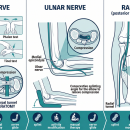
Upper extremity entrapment syndromes are among the most frequently encountered peripheral nerve conditions in chiropractic clinical practice. Driven by the demands of modern occupational and athletic activities, these syndromes present with overlapping symptom patterns that require a precise, anatomy-based diagnostic approach. Orthopedics 201 provides a focused, evidence-informed examination of the anatomical and physiological mechanisms underlying median, ulnar, and radial nerve entrapments throughout the upper limb.
The course covers the full diagnostic pathway — from nerve anatomy and clinical presentation through validated orthopedic testing — and delivers practical conservative management protocols appropriate for chiropractic practice. Emphasis is placed on accurate differential diagnosis, distinguishing carpal tunnel syndrome from cubital tunnel syndrome and radial tunnel syndrome, as well as understanding the anatomical basis of posterior interosseous nerve entrapment. Clinicians will leave with a structured framework for applying evidence-based orthopedic testing, building individualized conservative management plans, and counseling patients on prevention and self-care strategies.
Patient education is integrated throughout, equipping practitioners to address ergonomic modification, activity management, and home exercise instruction — critical components in reducing recurrence and improving long-term outcomes for patients with repetitive-strain and entrapment-related nerve conditions.
Upon completion, the participant will be able to:
Dr. John H. Riggs III, MBA, DC, DIANM
Board-Certified Diplomate in Neuromusculoskeletal Medicine (DIANM), MBA, Doctor of Chiropractic — Los Angeles College of Chiropractic (1988). Former Chair, Texas Board of Chiropractic Examiners Enforcement Committee. Author of 21+ peer-reviewed publications in JMPT and JACO. Lead Orthopedics Faculty, CCEDseminars. Postgraduate Faculty, Texas Chiropractic College. Active licenses in Texas and Michigan.
What upper extremity entrapment syndromes are covered in Orthopedics 201?
The course addresses the three most clinically significant upper extremity nerve entrapments encountered in chiropractic practice: carpal tunnel syndrome (median nerve at the wrist), cubital tunnel syndrome (ulnar nerve at the elbow), and radial tunnel syndrome including posterior interosseous nerve entrapment. Each condition is examined through its anatomical basis, clinical presentation, validated orthopedic testing, and conservative management pathway.
What orthopedic tests are taught for diagnosing upper extremity nerve entrapments?
Orthopedics 201 covers evidence-based orthopedic testing relevant to each entrapment site. For carpal tunnel syndrome, this includes Phalen's test, Tinel's sign at the wrist, and the carpal compression test. For cubital tunnel syndrome, the elbow flexion test and Tinel's sign at the medial epicondyle are addressed. Radial tunnel syndrome testing covers resisted supination and the middle-finger extension test for posterior interosseous nerve involvement. Proper technique and clinical interpretation are discussed for each test.
Is Orthopedics 201 approved for chiropractic CE credit?
Orthopedics 201 is an online chiropractic continuing education course offering 2 CE hours in the orthopedics category. CE approval and acceptance vary by state licensing board. Practitioners should review their state's CE requirements before enrolling. CCEDseminars provides current state-specific guidelines at the State CE Guidelines page.
How does this course support conservative management of nerve entrapments?
The course dedicates a full module to conservative treatment strategies and patient education for upper extremity nerve entrapments. Clinicians will learn to build individualized management protocols incorporating manual therapy principles, ergonomic counseling, activity modification, and home exercise instruction. Patient education strategies focus on reducing aggravating factors associated with repetitive occupational tasks and sports activities, supporting both symptom resolution and long-term recurrence prevention.
Watch a Free Preview on YouTube
Get a look at our play lists — subscribe for new chiropractic CE content every week.
Watch on YouTubeAlaska, Colorado, Connecticut, Delaware, District Of Columbia, Idaho, Illinois, Indiana, Iowa, Kansas, Maine, Maryland, Massachusetts, Michigan, Minnesota, Missouri, Montana, Nebraska, New Hampshire, New Jersey, New York, North Carolina, North Dakota, Ohio, Oregon, Puerto Rico, Rhode Island, South Carolina, South Dakota, Tennessee, Texas, Utah, Vermont, Virginia, Washington, West Virginia, Wyoming,
British Columbia, Manitoba, New Brunswick, Nova Scotia, Ontario, Yukon,
Argentina, Australia, Bahamas, Belgium, Bolivia, Cayman Islands, Chili, Columbia, Costa Rica, Cyprus, Denmark, Dominican Republic, Ecuador, Fiji, Finland, Germany, Greece, Guam, Hong Kong, Hungary, Iceland, Iran, Israel, Italy, Jamaica, Japan, Jordan, Korea, Lebanon, Libya, Liechtenstein, Malaysia, Mexico, Nambia, Netherlands, New Zealand, Northern Ireland, Norway, Panama, Peru, Philippines, Saint Kitts & Nevis, Saudi Arabia, Singapore, South Africa, Spain, Sweden, Switzerland, Taiwan, Thailand, Trinidad & Tobago, United Arab Emirates, United Kingdom, Venezuela, Virgin Island, Zimbabwe,
 Login
Login