Adjusting & Manual Therapy

Adjusting & Manual Therapy 211: Partner Assisted Stretching | Chiropractic CE | CCEDseminars

<< Back to online CE course catalog

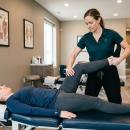
Chiropractor performing partner assisted leg stretch on patient lying supine on treatment table in a modern chiropractic office
Online Course Format:  Online
Course Tuition:   $40.00
Credit Hours ( CE ):  2
Contributor:  Donald Ozello, DC, CCN, CCSM
CLICK HERE for a list of states, provinces and countries this course is accredited in.

Online Chiropractic CE Course Description & Course Details

ONLINE | RECORDED
CourseAdjusting & Manual Therapy 211: Partner Assisted Stretching
InstructorDonald Ozello, DC, CCN, CCSM
CE Hours2 Hours
FormatOnline — Self-Paced, Available On Demand
Price$40.00
PACE Provider#34015544

Expand your clinical skill set with Adjusting & Manual Therapy 211: Partner Assisted Stretching — a 2-hour online CE course taught by Dr. Donald Ozello, DC, CCN, CCSM. This course delivers step-by-step instruction in evidence-informed partner assisted stretching techniques applicable to every region of the spine and the upper and lower extremities. You will learn how to properly execute passive stretches, PNF techniques (Hold Relax, Contract Relax, and Hold Relax Agonist Contract), Post-Isometric Relaxation, Post-Facilitation Stretch, and the Mulligan Traction Straight Leg Raise — giving you an expansive, clinically ready toolkit to improve patient outcomes.

Dr. Donald Ozello DC CCN CCSM headshot

Donald Ozello, DC, CCN, CCSM

Certified Chiropractic Sports Medicine | Certified Clinical Nutritionist

Dr. Donald Ozello is a Certified Chiropractic Sports Medicine practitioner and Certified Clinical Nutritionist with extensive clinical experience in manual therapy and sports chiropractic. He has treated elite athletes including professional MMA fighters and NFL players. A prolific educator, Dr. Ozello has authored dozens of chiropractic CE courses through CCEDseminars focused on sports injuries, rehabilitation, and adjusting and manual therapy techniques.

"CCED helps me stay sharp, up to date, and legally compliant. Their webinars are a must for any chiropractor who wants to grow their practice the right way."

— Reon Bailey, DC

"I've learned more here than in many live seminars. Thank you for making me a better doctor."

— Rob Rosenbaum, DC

Course Description

Partner assisted stretching is a powerful clinical tool that enables chiropractors to deliver targeted, effective soft tissue care across every region of the body. In Adjusting & Manual Therapy 211: Partner Assisted Stretching, Dr. Donald Ozello presents detailed video-supported instruction on the most effective manual stretching protocols used in evidence-based chiropractic practice today.

The course begins with partner assisted hamstring stretching, covering techniques for targeting the biceps femoris and the semimembranosus/semitendinosus muscle groups in both hip-and-knee-flexed and knee-extended positions. You will then progress through PNF methods — Hold Relax (HR), Contract Relax (CR), and Hold Relax Agonist Contract (HRAC) — and learn how Pre-Contraction Stretching techniques, including Post-Isometric Relaxation (PIR) and Dr. Janda's Post-Facilitation Stretch (PFS), differ in their neurophysiological mechanisms and clinical application.

From there, the course moves through a comprehensive regional survey: Mulligan Traction Straight Leg Raise for hamstrings; cervical spine passive and PIR stretching; thoracic and lumbar spine Hold Relax protocols; partner assisted lumbar side-lying stretch; piriformis stretching in supine and side-lying positions; hip flexor and TFL PIR; passive bilateral pectoralis minor stretch; PIR for pectoralis major, latissimus dorsi, glenohumeral internal and external rotation, horizontal adduction (cross-body stretch); assisted external rotation at the wall; and oblique PIR in basic and advanced progressions on the fitball. Evidence-based stretching guidelines regarding PNF timing relative to exercise are also addressed.

Learning Objectives

Upon successful completion of this course, the participant will be able to:

  1. Describe the anatomical targets and procedural steps for partner assisted hamstring stretching, including biceps femoris and semimembranosus/semitendinosus-specific variations.
  2. Differentiate PNF stretching techniques — Hold Relax (HR), Contract Relax (CR), and Hold Relax Agonist Contract (HRAC) — and apply each to appropriate clinical scenarios.
  3. Explain the neurophysiological basis of Post-Isometric Relaxation (PIR) and Post-Facilitation Stretch (PFS) and correctly apply each technique for spinal and extremity musculature.
  4. Demonstrate proper partner assisted stretching technique for cervical, thoracic, and lumbar spine regions, including passive stretch, PIR, and Hold Relax protocols.
  5. Execute partner assisted stretching for lower extremity muscle groups including piriformis, hip flexors, and tensor fascia lata/iliotibial band using appropriate patient positioning and contraction parameters.
  6. Apply upper extremity partner assisted stretching protocols for pectoralis minor and major, latissimus dorsi, and glenohumeral joint internal and external rotation.
Course Outline

I. Hamstring Stretching

  • Partner Assisted Hamstrings Stretch: Hip & Knee Flexed
  • Partner Assisted Hamstrings Stretch: Knee Extended — Biceps Femoris variation
  • Partner Assisted Hamstrings Stretch: Knee Extended — Semimembranosus/Semitendinosus variation
  • PNF: Hold Relax (HR) — isometric contraction followed by passive static stretch
  • PNF: Contract Relax (CR) — isotonic contraction followed by passive static stretch
  • PNF: Hold Relax Agonist Contract (HRAC) — isometric + static + antagonist isotonic contraction
  • Pre-Contraction Stretching: Post-Isometric Relaxation (PIR) — less than 25% contraction
  • Pre-Contraction Stretching: Post-Facilitation Stretch (PFS) — Dr. Janda method (maximal contraction at mid-range, rapid stretch to max length)
  • Mulligan Traction Straight Leg Raise Stretch (TSLR)

II. Cervical Spine

  • Cervical Spine Stretch: Supine — passive stretch for cervical paraspinals, trapezius, levator scapula, scalenes, SCMs, suboccipitals
  • Cervical Spine PIR: Supine — PIR protocol with <25% isometric contraction

III. Thoracic and Lumbar Spine

  • Hold Relax (HR): Thoracic Spine — quadruped position, 75–100% isometric contraction
  • Hold Relax (HR): Lumbar Spine — quadratus lumborum "Banana Stretch," supine
  • Partner Assisted Lumbar Spine Stretch: Side-Lying

IV. Hip and Lower Extremity

  • Partner Assisted Piriformis Stretch: Side-Lying
  • Partner Assisted Piriformis Stretch: Supine
  • Partner Assisted Hip Flexors Stretch
  • PIR: Tensor Fascia Lata and Iliotibial Band — side-lying, <25% contraction

V. Upper Extremity and Shoulder

  • Passive Stretching: Bilateral Pectoralis Minor — seated scapular retraction
  • PIR: Bilateral Pectoralis Major — supine, 90° and 150° shoulder abduction variations
  • PIR: Latissimus Dorsi — side-lying, shoulder abduction
  • PIR: Glenohumeral Joint Internal Rotation — supine 90/90 position
  • PIR: Passive Horizontal Adduction (Cross-Body Stretch) — supine 90/90 position
  • Shoulder Assisted External Rotation Stretch — wall-assisted progressive technique
  • PIR: Glenohumeral Joint External Rotation — supine 90/90 position

VI. Core and Trunk

  • PIR: Obliques Basic — lateral flexion on fitball
  • PIR: Obliques Advanced — lateral flexion with rotation, two progressions
  • Evidence-Based Stretching Guidelines: PNF timing relative to high-intensity exercise
  • Dynamic Movements as stretching in warm-up contexts
Course Technology & Access

How to Join: The course title in your account is the access link. No software installation is required. The course is accessible through any modern browser on desktop, tablet, or mobile devices.

This is a self-paced online course available on demand. Once registered, you can access the course content at any time from your CCEDseminars account.

A CE certificate is issued upon successful completion of the course evaluation. Please retain your certificate for state licensing board submission.

State Approvals & Accreditation

CCEDseminars is a PACE-approved provider through the Federation of Chiropractic Licensing Boards (FCLB). PACE Provider #: 34015544.

Questions about your state's approved credit hours? Contact us at info@ccedseminars.com.

Frequently Asked Questions

What techniques are covered in this course?

This course covers partner assisted hamstring stretching, PNF techniques (Hold Relax, Contract Relax, Hold Relax Agonist Contract), Post-Isometric Relaxation (PIR), Post-Facilitation Stretch (PFS), Mulligan Traction Straight Leg Raise, and stretching for the cervical, thoracic, and lumbar spine, piriformis, hip flexors, TFL, pectoralis minor and major, latissimus dorsi, obliques, and glenohumeral joint.

How many CE hours does this course provide?

This course provides 2 continuing education (CE) hours for licensed chiropractors.

Who teaches this course?

Dr. Donald Ozello, DC, CCN, CCSM — a Certified Chiropractic Sports Medicine practitioner and Certified Clinical Nutritionist who has treated professional MMA fighters and NFL players.

How do I access this course after registering?

The course title in your account is the access link. No software installation is required. The course is accessible through any modern browser on desktop, tablet, or mobile devices.

What is the cost?

Adjusting & Manual Therapy 211: Partner Assisted Stretching is available for $40.00.

Is this course approved for CE credit in my state?

CCEDseminars is a PACE-approved provider (FCLB Provider #34015544). State-specific approvals vary. Please check the State Approvals section on this page or contact us for details about your state.

Ready to add partner assisted stretching to your clinical toolkit?

2 CE Hours | Online | $40.00 | PACE Approved #34015544

Register Now

References

  1. Turgut E, et al. Stretching Exercises for Subacromial Impingement Syndrome: Effects of 6-Week Program on Shoulder Tightness, Pain, and Disability Status. J Sport Rehabil. 2018;27(2):132–137. doi:10.1123/jsr.2016-0182. PubMed
  2. Umehara J, et al. Shoulder horizontal abduction stretching effectively increases shear elastic modulus of pectoralis minor muscle. J Shoulder Elbow Surg. 2017;26(7):1159–1165. doi:10.1016/j.jse.2016.12.074. PubMed
  3. Tomruk M, et al. Effects of Dynamic Extension Exercise and Mulligan Stretching on Hamstring Flexibility. Orthop J Sports Med. 2014;2(3 Suppl). doi:10.1177/2325967114S00168. PMC4597665
  4. Hindle KB, et al. Proprioceptive Neuromuscular Facilitation (PNF): Its Mechanisms and Effects on Range of Motion and Muscular Function. J Hum Kinet. 2012;31:105–113. doi:10.2478/v10078-012-0011-y. PMC3588663
Content Optimization v3.1 | Updated April 2026
This online chiropractic course is accredited in the following states:

Alaska, Colorado, Connecticut, Delaware, District Of Columbia, Idaho, Illinois, Indiana, Iowa, Kansas, Maine, Maryland, Massachusetts, Michigan, Minnesota, Missouri, Montana, Nebraska, New Hampshire, New Jersey, New York, North Carolina, North Dakota, Ohio, Oregon, Puerto Rico, Rhode Island, South Carolina, South Dakota, Tennessee, Texas, Utah, Vermont, Virginia, Washington, West Virginia, Wyoming,

This online chiropractic course is accredited in the following Canadian Provinces:

British Columbia, Manitoba, New Brunswick, Nova Scotia, Ontario, Yukon,

This online chiropractic course is accredited in the following regions outside the United States & Canada:

Argentina, Australia, Bahamas, Belgium, Bolivia, Cayman Islands, Chili, Columbia, Costa Rica, Cyprus, Denmark, Dominican Republic, Ecuador, Fiji, Finland, Greece, Guam, Hong Kong, Hungary, Iceland, Iran, Israel, Italy, Jamaica, Japan, Jordan, Korea, Lebanon, Libya, Liechtenstein, Malaysia, Mexico, Nambia, New Zealand, Northern Ireland, Norway, Panama, Peru, Philippines, Saint Kitts & Nevis, Saudi Arabia, Singapore, Spain, Sweden, Switzerland, Taiwan, Thailand, Trinidad & Tobago, United Arab Emirates, United Kingdom, Venezuela, Virgin Island, Zimbabwe,