 Login
Login


Home › Online Course Categories › Case Studies & Clinical Pearls › 205: Lumbar Spine Diagnosis
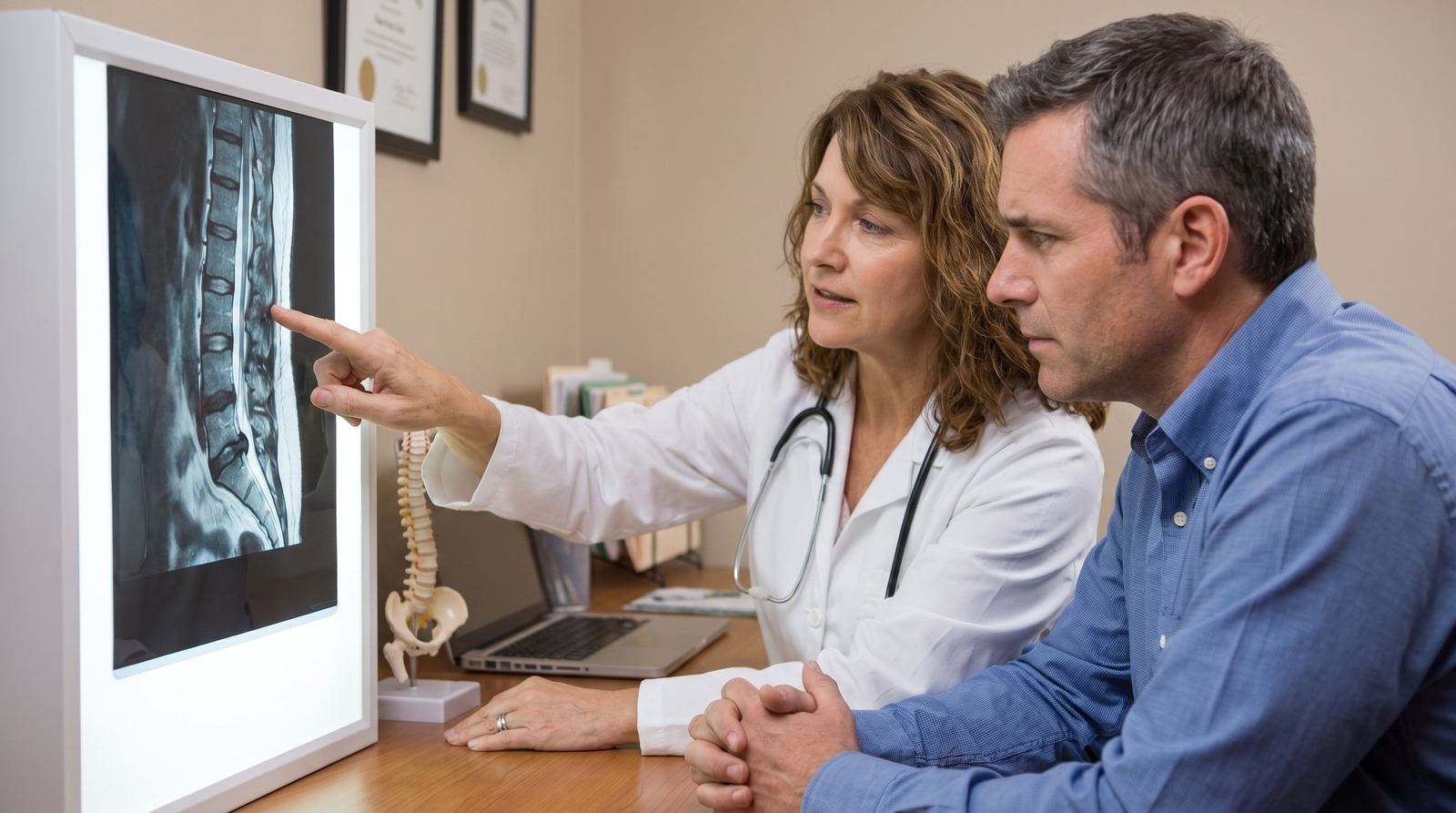
Case Studies & Clinical Pearls 205 — at a Glance
| Course: | Lumbar Spine Diagnosis · 2 CE hours · $40 |
| Faculty: | Monte Horne, DC · founder of CCEDseminars · 39+ years in practice · former Designated Doctor, Texas Department of Insurance |
| Format: | On-demand online video with handouts and assessment · instant certificate |
| Pricing: | $20/hr · automatic 10% off at 6–9 hrs, 20% off at 10+ hrs in one order · no promo codes |
| Approval: | PACE Provider #34015544 · co-sponsored by Texas Chiropractic College · acceptance varies by state |



Board-approved · PACE Provider #34015544 · CE Broker auto-reporting for states served · Instant certificate
Case Studies & Clinical Pearls 205 — Lumbar Spine Diagnosis — is a chiropractic course that masters the complexities of the low back through high-level clinical reasoning and real-world case studies drawn from 39 years of practice, refining diagnostic accuracy for discogenic, facet, and radicular conditions. Dr. Monte Horne takes the doctor through the Lumbar Clinical Audit Process — functional movement screens and dural tension testing as immediate proof of progress and documentation of medical necessity — into “The Discogenic Mimic,” the high-speed orthopedic sequences that separate true disc herniation from sacroiliac joint dysfunction and myofascial referral, and the neurological decision-making that sets the clinical benchmarks for lumbar imaging and surgical referral, including the subtle red flags of cauda equina, with trench-tested protocols for acute lumbar antalgia and chronic degenerative instability refined across thousands of patient encounters.
The low back is the region where the decision matters most and the time to make it is shortest: mechanical pain, radiculopathy, and stenosis can present in the same week and demand three different plans, and the one case in the stack that is a cauda equina cannot wait for the next visit. This 2-hour online course — written by CCEDseminars' founder, a former Designated Doctor for the Texas Department of Insurance and a working expert witness and peer reviewer, and delivered with handouts — is the fifth region of the first-pass series, and it teaches the sixty-second separation of mechanical low back pain from radiculopathy and stenosis alongside the documentation that proves the necessity of what follows. Every completion generates an instant certificate for your renewal file.
Choose Your Case Study Path — Three Lanes, One Curriculum
The catalog is organized as a curriculum, not a pile of hours — two complete head-to-foot regional series, then specialist case files on the conditions that fill a schedule. Work the regions in order, deepen with the second pass, or pull the file that matches this week's patient; the full catalog lives on the Case Studies & Clinical Pearls category page.
1 · The Regional Series — First Pass (201–206)
A complete head-to-foot tour of case-based diagnosis — the foundation lane. You are here: Case Studies & Clinical Pearls 205.
201: Headache Diagnosis & Clinical Pearls
202: The Cervical Spine
203: Upper Extremities
204: Thorax Conditions & Clinical Pearls
205: Lumbar Spine Diagnosis
206: Lower Extremity Conditions & Clinical Pearls
2 · The Regional Series — Second Pass (207–212)
The same regions revisited with new cases and deeper differentials — the lane that turns pattern recognition into judgment.
207: The Head II
208: The Cervical Spine II
209-A / 209-B: The Upper Extremities II, Parts I & II
210-A / 210-B: The Thorax II, Parts I & II
211: Lumbar Spine Conditions II
212: Lower Extremity Conditions II
3 · Specialist Case Files (213–221)
Board-credentialed faculty open their own files — condition-specific cases from orthopedic, sports, extremity, and nutrition practice.
213: Headache Management & Diagnosis
214: From Anatomy to Diagnoses
215: Case Studies Related to the TMJ
216: Disc Herniation
217: Spondylolisthesis Treatment
218: Carpal Tunnel Syndrome Treatment
219: TMD
220: Soft Tissue Injuries
221: Headache Management & Treatment
New case study courses are added to these lanes as faculty release them.
What You'll Learn in Case Studies & Clinical Pearls 205
• Execute the Lumbar Clinical Audit Process (CAP): use functional movement screens and dural tension testing to provide immediate proof of progress and document medical necessity.
• Identify “The Discogenic Mimic”: differentiate true disc herniation from sacroiliac joint dysfunction and myofascial referral using high-speed orthopedic sequences.
• Analyze Neurological Decision-Making: master the clinical benchmarks for lumbar imaging and surgical referral, including identifying subtle cauda equina red flags.
• Implement trench-tested protocols for acute lumbar antalgia and chronic degenerative instability refined across thousands of patient encounters.
Your Case Study Faculty
Monte Horne, DC — instructor of this course and author of the fourteen-course regional core (201–212), both head-to-foot passes — is the founder of CCEDseminars and postgraduate faculty at Texas Chiropractic College: a 1985 graduate of Southern California University of Health Sciences with three years of postdoctoral training in chiropractic orthopedics, a peer-reviewed author in the Journal of Manipulative and Physiological Therapeutics, more than 39 years in practice, a former Designated Doctor for the Texas Department of Insurance, and a working expert witness and peer reviewer. The cases teach decision-making the way case review demands it: reasoning a second reader can follow.
Steven Yeomans, DC, FACO brings orthopedic board credentials to the three highest-stakes structural files — disc herniation, spondylolisthesis, and carpal tunnel syndrome (216–218) — the same conditions at the center of his documentation and personal injury teaching.
Heather Wright, DC, CCEP teaches headache management and diagnosis, the anatomy-to-diagnosis bridge, and TMJ case studies (213–215) with an extremity-certified chiropractor's structural precision, and Howard Benedikt, DC, DCBCN — board-certified in clinical nutrition — works the TMD and headache management files (219, 221) where structure, physiology, and nutrition intersect. Dennis O'Hara, DC, DACBSP opens the soft tissue injury file (220) with a sports diplomate's tissue-healing timeline.
Full bios and the complete instructor roster: CCEDseminars faculty page.
Where Case Study Hours Count — State Rules Worth Knowing
Case study coursework is clinical subject matter in its purest form — assessment, diagnosis, and case management — which is exactly what several state boards ask for. In Iowa, these hours feed the 36-hour clinical case-management minimum (this category is case management by name and by content); in Rhode Island, they serve the 50-of-60 clinical requirement; and in Vermont — where practice-building coursework earns no credit at all — patient-care education like this counts fully under the clinical-focus rule.
Online-format allowances still vary by state — some accept every hour online, others cap distance learning or require in-person blocks. Check your state's guide in the full state directory before building your renewal plan.
Build Your Case Study Block
Most courses in the series run 2 hours at $40; the four Series II split-courses (209-A/B, 210-A/B) run 1 hour at $20 each, so the automatic discounts stack naturally: 6–9 hours in one order earns 10% off, and 10 or more earns 20% off — the full first-pass regional series (201–206, 12 hours) lands at roughly $192 instead of $240, and all 42 hours at roughly $672 instead of $840, with no promo codes. The natural pairing for this course is its lane partner, 206 Lower Extremity Conditions & Clinical Pearls — the last region in the first pass, and where lumbar radiculopathy finishes its story — plus 211 Lumbar Spine Conditions II for the second-pass cases, and the two specialist files that sit directly behind this course, 216 Disc Herniation and 217 Spondylolisthesis Treatment. Browse Case Studies & Clinical Pearls Courses
Case Studies & Clinical Pearls 205 — Frequently Asked Questions
What does Case Studies & Clinical Pearls 205 cover?
The lumbar spine case by case: the Lumbar Clinical Audit Process, using functional movement screens and dural tension testing as a pre- and post-adjustment documentation tool that provides immediate proof of progress and medical necessity; “The Discogenic Mimic” — the high-speed orthopedic sequences that differentiate true disc herniation from sacroiliac joint dysfunction and myofascial referral; neurological decision-making, with the clinical benchmarks for lumbar imaging and surgical referral and the subtle red flags of cauda equina syndrome; and trench-tested protocols for acute lumbar antalgia and chronic degenerative instability, with the documentation pearls that establish objective medical necessity in complex lumbar cases. Also known as low back pain differential diagnosis CE, lumbar disc herniation versus sacroiliac joint course, lumbar radiculopathy and stenosis for chiropractors, cauda equina red flags course, and lumbar spine clinical pearls.
How many CE hours is Case Studies & Clinical Pearls 205, and what is the format?
2 CE hours, fully online and self-paced — a recorded online presentation with handouts, available 24/7 to pause and resume at any time, followed by an assessment. Your certificate is available in your account immediately upon successful completion, and you have up to one year from the date of purchase to complete the course.
How do I tell a true disc herniation from a sacroiliac joint problem or myofascial referral?
That is the Discogenic Mimic, and the course gives it a high-speed orthopedic sequence — the dural tension and neurological findings a real disc produces against the provocation pattern of a sacroiliac joint and the referral map of a myofascial source, read together so the answer arrives before the treatment plan is written. The same section sets the benchmarks that decide when the case leaves your office: the imaging thresholds, the surgical referral criteria, and the subtle cauda equina red flags that turn a routine low back visit into a same-day emergency.
Is this course accepted for my state's chiropractic license renewal?
Case Studies & Clinical Pearls 205 is a PACE Provider #34015544 program co-sponsored by Texas Chiropractic College and is accepted in most U.S. states plus the District of Columbia and Puerto Rico, seven Canadian provinces, and more than 50 international jurisdictions. The complete approval list appears at the bottom of this page, and your state's online-hour rules are summarized in its CE guidelines page.
How do discounts and certificates work?
Courses are $20 per credit hour, and discounts apply automatically in a single order — 10% off at 6–9 hours, 20% off at 10 or more. No promo codes. Each completion generates an instant certificate with a permanent copy in your account dashboard, and CE Broker reporting is handled automatically for states served.
State Approval and Licensing Reminder
Continuing education requirements — including online-hour caps and clinical-hour minimums — vary by jurisdiction. Review the online chiropractic CE guidelines page and contact CCEDseminars with questions about your specific licensing requirements before registering.
Ready to Enroll in Case Studies & Clinical Pearls 205?
2 CE hours · $40 · online & self-paced · instant certificate. Add it to your cart, or pair it with 206 to complete the first-pass regional series.
CCEDseminars · PACE Provider #34015544 · Reviewed by Monte Horne, DC · Last updated September 1, 2026 (CT)