 Login
Login

Home › Online Course Categories › Case Studies & Clinical Pearls › 216: Disc Herniation
Case Studies & Clinical Pearls 216 — at a Glance
| Course: | Disc Herniation · 2 PACE-approved CE hours |
| Faculty: | Steve Yeomans, DC, FACO · Board-certified chiropractic orthopedist |
| Format: | On-demand online video with case walk-throughs and assessment · downloadable handouts · instant certificate |
| Pricing: | $20/hr · automatic 10% off at 6–9 hrs, 20% off at 10+ hrs in one order · no promo codes |
| Approval: | PACE Provider #34015544 · co-sponsored by Texas Chiropractic College · acceptance varies by state |

Board-approved · PACE Provider #34015544 · CE Broker auto-reporting for states served · Instant certificate
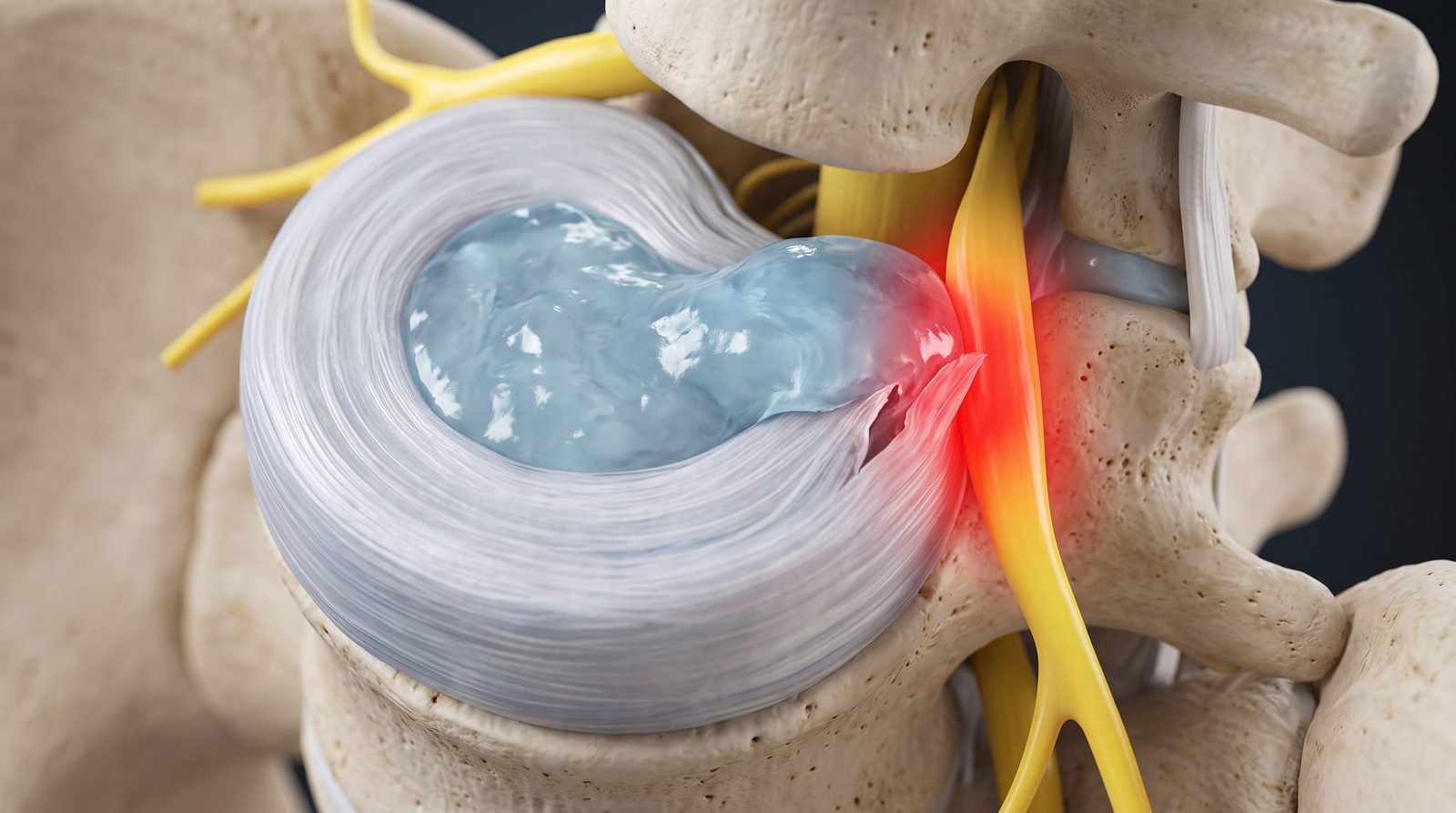
A disc herniation is a diagnosis that has to survive scrutiny. These are the files most likely to be read by another clinician, an insurer or an attorney, and the difference between a defensible case and an exposed one is rarely the technique — it is whether the history, the orthopedic examination and the decision to image were documented in an order that makes clinical sense.
Dr. Steve Yeomans, a board-certified chiropractic orthopedist, works cervical and lumbar herniations from initial history to final discharge: the examination that localises the level, the indications that justify advanced imaging and neuro-diagnostic testing, and the manual and rehabilitative options that hold up against current guidelines.
Choose Your Case Study Path — Three Lanes, One Curriculum
The catalog is organized as a curriculum, not a pile of hours — 23 courses and 42 CE hours covering every region head-to-foot across two series, plus specialist case files. Start in the lane that matches your patient mix; the full catalog lives on the Case Studies & Clinical Pearls category page.
1 · The Regional Series — First Pass (201–206)
A complete head-to-foot tour of case-based diagnosis — the foundation lane.
201: Headache Diagnosis & Clinical Pearls
202: The Cervical Spine
203: Upper Extremities
204: Thorax Conditions & Clinical Pearls
205: Lumbar Spine Diagnosis
206: Lower Extremity Conditions & Clinical Pearls
2 · The Regional Series — Second Pass (207–212)
The same regions revisited with new cases and deeper differentials — the lane that turns pattern recognition into judgment.
207: The Head II
208: The Cervical Spine II
209-A / 209-B: The Upper Extremities II, Parts I & II
210-A / 210-B: The Thorax II, Parts I & II
211: Lumbar Spine Conditions II
212: Lower Extremity Conditions II
3 · Specialist Case Files (213–221)
Board-credentialed faculty open their own files — condition-specific cases from orthopedic, sports, extremity, and nutrition practice. You are here: Case Studies & Clinical Pearls 216.
213: Headache Management & Diagnosis
214: From Anatomy to Diagnoses
215: Case Studies Related to the TMJ
216: Disc Herniation
217: Spondylolisthesis Treatment
218: Carpal Tunnel Syndrome Treatment
219: TMD
220: Soft Tissue Injuries
221: Headache Management & Treatment
New case files are added to these lanes as faculty release them.
What You'll Learn in Case Studies & Clinical Pearls 216
Build the examination that localises the lesion. Assemble a comprehensive disc history and the orthopedic protocols — including straight leg raise and the neurological screen — that separate a radiculopathy from referred pain and identify the segment actually involved.
Know when imaging is indicated, and when it is not. Work the testing decision explicitly: which findings justify advanced imaging or neuro-diagnostic study, which do not, and which red flags — cauda equina among them — change the timeline from routine to urgent.
Match treatment to the stage of the case. Examine the manual and rehabilitative options that are most effective for acute versus chronic presentations in both the cervical and lumbar spine, with the reasoning that makes each choice defensible.
Plan to an outcome, not to a schedule. Establish treatment frameworks and quantitative goals that align with current guidelines, support the patient’s recovery, and produce a record that reads clearly to anyone who reviews it.
Your Case Studies & Clinical Pearls Faculty
Steve Yeomans, DC, FACO — instructor of this course — brings orthopedic board credentials to the highest-stakes structural files in the lane: disc herniation and spondylolisthesis (216–217). A Fellow of the Academy of Chiropractic Orthopedists and author of several authoritative texts on clinical outcomes and orthopedic assessment, he teaches the reasoning that makes a case defensible.
Heather Wright, DC, CCEP opens the extremity and craniofacial files — headache management and diagnosis, the anatomy-to-diagnosis bridge, and TMJ case studies (213–215) — as a Certified Chiropractic Extremity Practitioner.
Steve Yeomans, DC, FACO and the rest of the specialist faculty open the remaining condition-specific files across the lane.
Howard Benedikt, DC, DCBCN — board-certified in clinical nutrition — works the TMD and headache management files (219, 221) where structure, physiology, and nutrition intersect.
Dennis O'Hara, DC, DACBSP opens the soft tissue injury file (220) with a sports diplomate's tissue-healing timeline.
Full bios and the complete instructor roster: CCEDseminars faculty page.
Where Case Study Hours Count — State Rules Worth Knowing
Case study coursework is clinical subject matter — assessment, diagnosis, and case management — which is exactly what several state boards ask for. In Iowa, these hours serve the 36-hour clinical case-management minimum (this category is case management, by name and by content); in Rhode Island, they address the 50-of-60 clinical requirement; and in Vermont — where practice-building coursework earns nothing — patient-care education like this counts fully under the clinical-focus rule.
Online-format allowances still vary by state — some accept every hour online, others cap distance learning or require in-person blocks. Check your state's guide in the full state directory before building your renewal plan.
Build Your Case Study Block
Most courses in the series run 2 hours at $40 (the four Series II split-courses, 209-A/B and 210-A/B, run 1 hour at $20 each), so the automatic discounts do the bundling for you: 6–9 hours in one order earns 10% off, and 10 or more earns 20% off The natural pairing for this course is the rest of the structural file set: 217 Spondylolisthesis Treatment and 211 Lumbar Spine Conditions II; 205 Lumbar Spine Conditions I and 220 Soft Tissue Injuries round out the disc and low back material. Browse Case Studies & Clinical Pearls Courses
Case Studies & Clinical Pearls 216 — Frequently Asked Questions
What does Case Studies & Clinical Pearls 216 cover?
This course works cervical and lumbar disc herniation as a chiropractic case file, from initial history through examination and testing decisions to discharge. Also known as disc herniation management, herniated disc differential diagnosis, or radiculopathy assessment training, it covers diagnostic history and orthopedic examination, advanced testing and imaging indications, evidence-informed manual and rehabilitative treatment, and outcome-based planning.
How many CE hours is this course, and what does it cost?
Case Studies & Clinical Pearls 216 is a 2-hour, PACE-approved online course priced at $40 — the standard $20 per CE credit hour across the CCEDseminars catalog. It is recorded, self-paced, and includes video and handouts.
How do I know when my patient’s leg pain needs an MRI rather than more treatment?
That decision is one of the core themes of this course. You will work through the testing indications explicitly — which history and examination findings justify advanced imaging or neuro-diagnostic study, which findings do not, and which red flags move a case from routine care to urgent referral.
Who teaches Case Studies & Clinical Pearls 216?
Steve Yeomans, DC, FACO — a board-certified chiropractic orthopedist and Fellow of the Academy of Chiropractic Orthopedists, and the author of several authoritative texts on clinical outcomes and orthopedic assessment. Dr. Yeomans also teaches 217 (Spondylolisthesis Treatment) in this series.
Will this course count toward my state CE requirement?
CCEDseminars is a PACE-recognized provider (#34015544) and this course is accepted in Texas and 40-plus additional states, with CE Broker auto-reporting where applicable. Requirements vary by board, so confirm your state’s current rules before you enroll.
State Approval and Licensing Reminder
Continuing education requirements — including online-hour caps and clinical-hour minimums — vary by jurisdiction. Review the online chiropractic CE guidelines page and contact CCEDseminars with questions about your specific licensing requirements before registering.
Ready to Enroll in Case Studies & Clinical Pearls 216?
2 CE hours · $40 · online & self-paced · instant certificate. Add it to your cart, or pair it with 217 Spondylolisthesis Treatment to complete Dr. Yeomans’ structural file set.
CCEDseminars · PACE Provider #34015544 · Reviewed by Monte Horne, DC · Last updated September 3, 2026 (CT)