 Login


Home › Clinical Longevity & Healthspan Science CE Courses › CLHS 207: Muscle as Medicine, Part 2: Strength Programming
CLHS 207: Muscle as Medicine, Part 2: Strength Programming — At a Glance
| Course | CLHS 207 · 2 CE hours · $40 |
| Faculty | Arland Hill, DC, MPH, DACBN |
| Format | Online, on-demand — start immediately |
| Pricing | $40 for 2 CE hours — $20 per hour; multi-course discounts apply automatically in the cart |
| Approval | PACE Provider #34015544 · TCC co-sponsored |



PACE Provider #34015544 · Co-sponsored by Texas Chiropractic College · Completions reported to CE Broker
Understanding the benefits of strength training is only the first step; translating exercise science into safe, effective and sustainable programming is what changes patient outcomes. CLHS 207 is the applied continuation of CLHS 203: Part 1 built the biology case and chair-side screening; Part 2 is the programming — frequency, intensity, volume, progressive overload and recovery, exercise selection by movement pattern, power development and bone loading, and the modifications older and frail patients need.
Arland Hill, DC, MPH, DACBN, closes with the mistakes that undo good intentions — the “sweat equals longevity” misconception, chronic HIIT and excessive fatigue, ignoring recovery, excessive isolation work on a poor mobility and stability foundation, and neglecting power, gait and balance — so the programs you write hold up over years, not weeks.
Where This Course Fits — The Five CLHS Pillars
You are here: CLHS 207 — Pillar 2, Metabolic Efficiency, bridging into Pillar 3, Functional Movement. CLHS 203 (Part 1) makes the case for muscle and screens for sarcopenia; 207 turns it into programming — strength, power, mobility and the movement patterns that keep patients capable.
1. Neuromechanical Integrity
Spinal and joint mechanics, proprioception, balance and fall risk, and the evidence on manipulation across the lifespan.
2. Metabolic Efficiency
Muscle as a metabolic organ, nutrition for healthy aging, medication-induced nutrient depletion, and the lab markers worth watching.
3. Functional Movement
Strength, power and mobility programs that keep patients capable.
4. Sleep Hygiene
Sleep as a longevity lever: assessment, disruptors, and non-pharmacologic approaches within chiropractic scope.
5. Stress Adaptation
Autonomic resilience, the biology of stress, and the tools for measuring a patient's adaptive capacity.
Browse the full Clinical Longevity & Healthspan Science category ?
What You'll Learn
- Programming principles: Apply evidence-informed resistance-training programming principles — including frequency, intensity, volume, progressive overload, and recovery — to support long-term healthspan and physiologic resilience.
- Exercise selection: Differentiate exercise-selection strategies based on movement patterns, functional capacity, stability requirements, and age-related considerations to improve strength, balance, mobility, and independence.
- Power and bone loading: Incorporate power development, bone-loading activities, and movement-based training approaches into exercise programs designed to preserve function and reduce age-related decline.
- Older-adult and frailty modifications: Recognize appropriate modifications for older adults and individuals with frailty, including minimum-effective-dose strategies and considerations related to concurrent training and recovery capacity.
- Common mistakes: Identify common exercise-programming mistakes and misconceptions that impair adaptation, increase injury risk, reduce recovery, or compromise long-term functional outcomes.
Your Faculty
Arland Hill, DC, MPH, DACBN — Director of Clinical Education at Biotics Research Corporation. He lectured at Texas A&M College of Medicine from 2009 to 2024, presents nationally for the American Academy of Anti-Aging Medicine (A4M), and maintains an active clinical practice at Genesis Wellness Center in Hillister, Texas. His teaching translates current research in exercise physiology, resistance-training programming and healthy-aging science into defensible, evidence-based protocols chiropractors can integrate within scope; he teaches the muscle, cardiovascular and metabolic courses in the CLHS series.
Also teaching in the series: Howard Benedikt, DC, DCBCN · Michael Hall, DC, FIACN · Dennis O'Hara, DC, DACBSP
Credit, Reporting & State Rules
CLHS 207 is a 2-hour on-demand course, PACE-recognized and co-sponsored by Texas Chiropractic College — the approval pathway most boards accept for online chiropractic CE. Its approval list renders at the bottom of this page, straight from the course record; that list is the one to trust.
Most boards cap the share of a renewal that can be earned online, and several classify nutrition, exercise and wellness coursework under a general or clinical category rather than a named one — check how your board counts it before relying on CLHS hours for a specific requirement.
Texas: licensees can verify provider status through the Texas Board of Chiropractic Examiners. For every other state and province, start at the CE guidelines directory.
Build Your CLHS Block
$40 for 2 CE hours — $20 per hour. Pair it with CLHS 203 (Muscle as Medicine, Part 1) for the 4-hour Muscle as Medicine block, or stack the pillar courses as they come online.
Multi-course discounts apply automatically in the cart — 10% at 6–9 hours, 20% at 10 or more, no promo code. Hours from any CCEDseminars on-demand category count toward the same tiers.
Want it live? New CLHS topics debut as live webinars before they are converted here.
Frequently Asked Questions
What does CLHS 207 cover?
A two-hour, applied resistance-training programming course for chiropractors: the clinical programming variables (frequency, intensity, volume, progressive overload, recovery, minimum effective dose), exercise selection across the squat, hinge, push, pull, carry and rotation patterns, power development and bone-loading strategies, modifications for older adults and frailty, and the common programming mistakes that undermine adaptation and function. Also known as strength programming CE, resistance training for older adults CE or Muscle as Medicine Part 2.
Who teaches it, and is it for chiropractors?
Arland Hill, DC, MPH, DACBN, Director of Clinical Education at Biotics Research Corporation. The course is built for chiropractors applying resistance-training principles in a clinical context — programming logic, exercise selection and safe modification, especially for older adults and patients with frailty — not for coaching certification; you do not need to be a personal trainer or exercise specialist to apply it. PACE-recognized and co-sponsored by Texas Chiropractic College.
My 70-year-old patient wants to get stronger but is afraid of getting hurt — what does a safe program look like?
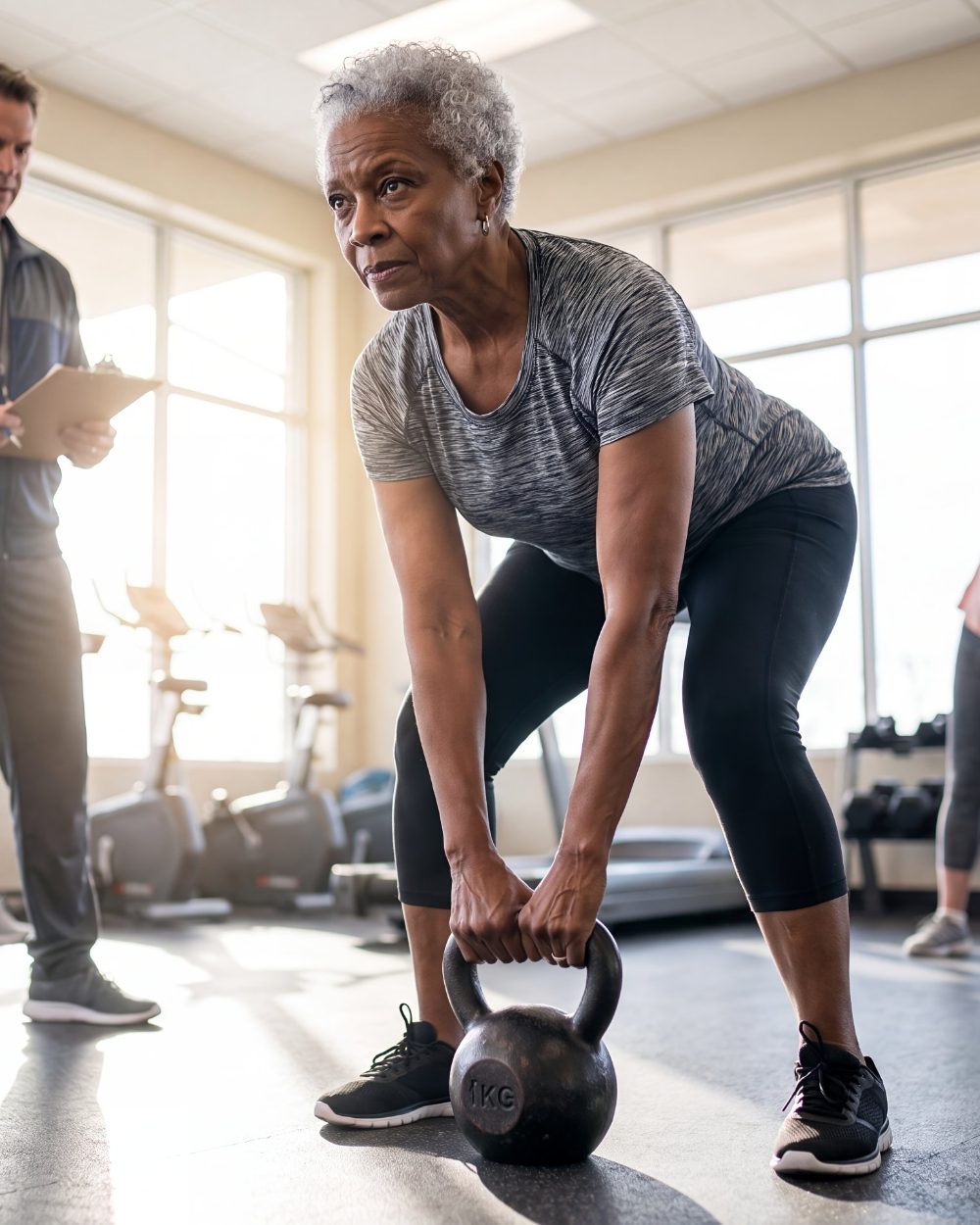
Like the one this course teaches you to write. It starts from the movement patterns and stability prerequisites, not from a machine circuit; it uses the minimum effective dose and progressive overload rather than exhaustion; it includes power work and bone loading because those are what protect against falls and fractures; it respects recovery capacity and concurrent-training interference; and it avoids the mistakes — chronic high-intensity intervals, excessive isolation work, ignoring gait and balance — that are where most older-adult injuries come from. You leave with the logic to build and modify that program in the office.
Do I need CLHS 203 (Part 1) first?
Recommended, not required. CLHS 203 builds the biology case — sarcopenia as a mortality driver, myokine biology, chair-side screening, the protein and leucine targets. CLHS 207 is the applied programming half and stands on its own, but the two together are the complete Muscle as Medicine block.
How is the course delivered, and when do I get my certificate?
Recorded video you can watch on any device, with one year of access from purchase. Pass the short post-test and your certificate is available immediately. For states served by CE Broker, completion is reported automatically.
State approval and licensing reminder. Approval status for this course is listed below. Online-hour caps, subject classification and scope rules vary by board; confirm your own state's rules before relying on this course for a specific requirement.
Ready to write strength programs that hold up for years?
CLHS 207 · 2 CE hours · $40 · instant certificate
CCEDseminars · PACE Provider #34015544 · Reviewed by Monte Horne, DC · Last updated November 2, 2026 (CT)