 Login
Login

Home › Online Course Categories › Geriatrics › Geriatrics 205: Introduction to Aging & Longevity

Geriatrics 205 — at a Glance
| Course: | Introduction to Aging & Longevity · 2 PACE-approved CE hours |
| Faculty: | Howard Benedikt, DC, DCBCN · Clinical Nutrition Faculty, CCEDseminars |
| Format: | On-demand online video with case walk-throughs and assessment · downloadable handouts · instant certificate |
| Pricing: | $20/hr · automatic 10% off at 6–9 hrs, 20% off at 10+ hrs in one order · no promo codes |
| Approval: | PACE Provider #34015544 · co-sponsored by Texas Chiropractic College · acceptance varies by state |



Board-approved · PACE Provider #34015544 · CE Broker auto-reporting for states served · Instant certificate
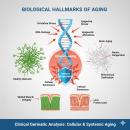
Every other course in this category treats a consequence of ageing. This one treats the process. Geriatrics 205 works through the biological theories of ageing — oxidative stress, toxic accumulation, chronic inflammation and immune dysregulation — and what each predicts about the patient sitting in front of you, so that geriatric care becomes something more deliberate than symptom management for older people.
From cellular theory the course moves to the two systems chiropractors most often meet it in: skeletal muscle and the brain. It closes on the interventions that actually move those markers — diet and exercise — treated as clinical tools with mechanisms behind them rather than general wellness advice.
Choose Your Geriatrics Path — Three Lanes, One Curriculum
The Geriatrics series runs from the biology of aging outward to the structures it acts on: what changes in an ageing body, how degeneration presents region by region, and how balance, posture and cognition are assessed and rehabilitated. Seven courses, two hours each.
1 · Aging and Bone Health (201, 205)
Why the body ages the way it does, and what happens to the skeleton that carries it — the biology underneath every other file in the category. You are here: Geriatrics 205.
205: Introduction to Aging & Longevity
201: Osteoporosis Management
2 · Osteoarthritis by Region (202–204)
Degenerative joint disease worked region by region — spine, lower extremity, upper extremity — with the diagnostic, in-office and rehabilitative decisions that differ at each.
202: Spinal Osteoarthritis Management
203: Lower Extremity Osteoarthritis
204: Upper Extremity Osteoarthritis
3 · Neurology, Balance and Cognition (206–207)
The neurological side of aging: coordination and fall risk, and the postural and grip-strength markers that track cognitive and biological decline.
206: Coordination & Balance Rehab
207: Head Posture, Cognition and Grip Strength
Every course in the series is 2 PACE-approved CE hours at $40, and the automatic bundle discounts apply across the whole lane.
What You'll Learn in Geriatrics 205
Compare the biological theories of ageing — oxidative stress, toxic accumulation, chronic inflammation and immune dysregulation — and what each implies clinically.
Analyse how ageing affects the musculoskeletal and neurological systems at a cellular level, including skeletal muscle loss and brain ageing.
Translate cellular-ageing mechanisms into the findings and complaints that present in an older patient.
Apply practical diet and exercise interventions as clinical tools for longevity and functional vitality, with the mechanism stated.
Your Geriatrics Faculty
Howard Benedikt, DC, DCBCN,instructor of this course. Executive Member of the Chiropractic Board of Clinical Nutrition and Clinical Nutrition Faculty at CCEDseminars. He teaches the nutritional and functional-medicine side of geriatric care — the bone, metabolic and lifestyle files (201, 205).
Donald Ozello, DC, CCN, CCSM,Sports chiropractor, founder of Championship Chiropractic in Las Vegas, and Rehabilitation & Sports Medicine Faculty at CCEDseminars. He teaches functional movement and rehabilitation for athletes and seniors, and carries the three regional osteoarthritis files (202–204).
Michael Hall, DC, FIACN,Chiropractic neurology specialist, founder of BrainDC.org and Neurology Faculty at CCEDseminars, with more than 30 years of clinical and academic experience. He teaches the neurological files in this category — coordination, balance and the postural and cognitive markers of aging (206–207).
Full bios and the complete instructor roster: CCEDseminars faculty page.
Where Geriatrics CE Hours Count — State Rules Worth Knowing
Geriatrics coursework is clinical subject matter — assessment, diagnosis and case management of the aging patient — which is exactly what several state boards ask for. In Iowa, these hours serve the 36-hour clinical case-management minimum; in Rhode Island, they address the 50-of-60 clinical requirement; and in Vermont — where practice-building coursework earns nothing — patient-care education like this counts fully under the clinical-focus rule.
Online-format allowances still vary by state — some accept every hour online, others cap distance learning or require in-person blocks. Check your state's guide in the full state directory before building your renewal plan.
Build Your Geriatrics Block
Every course in the Geriatrics series runs 2 hours at $40, so the automatic discounts do the bundling for you: 6–9 hours in one order earns 10% off, and 10 or more earns 20% off — all seven courses together is 14 hours, which clears the 20% tier at roughly $224 instead of $280, with no promo codes. This course is the conceptual front door to the category: 201 Osteoporosis Management applies the same biology to bone, the three regional osteoarthritis files (202, 203, 204) apply it joint by joint, and 206 and 207 carry it into the nervous system, balance and cognition. Browse Geriatrics Courses
Geriatrics 205 — Frequently Asked Questions
What does Geriatrics 205 cover?
The biological aging process and its clinical consequences: the major theories of ageing — oxidative stress, toxic accumulation, chronic inflammation and immune dysregulation — how ageing affects skeletal muscle and the brain at a cellular level, and the diet and exercise interventions that influence those mechanisms in practice.
How many CE hours is this course, and what does it cost?
2 PACE-approved CE hours for $40, or $20 per hour. Ordering 6–9 hours at once takes 10% off automatically and 10 or more takes 20% off — the full seven-course Geriatrics series is 14 hours and clears the 20% tier. No promo codes.
Is this a nutrition course or a clinical course?
Both, deliberately. The mechanisms are cellular and the interventions are largely dietary and behavioural, so the course explains the biology first and then what to do about it — which is what makes the advice defensible to a patient who asks why.
Should I take this before the other Geriatrics courses?
It is the most useful starting point, because it supplies the ageing biology the rest of the category applies to bone, joints and the nervous system. It also stands alone, so the order is not enforced.
Will this course count toward my state CE requirement?
In most states, yes — this is clinical patient-care subject matter, and it is PACE-approved and co-sponsored by Texas Chiropractic College. Online-format allowances and clinical-hour minimums vary, so check your state guide in the full state directory before you build your renewal plan.
State Approval and Licensing Reminder
Continuing education requirements — including online-hour caps and clinical-hour minimums — vary by jurisdiction. Review the online chiropractic CE guidelines page and contact CCEDseminars with questions about your specific licensing requirements before registering.
Ready to Enroll in Geriatrics 205?
2 CE hours · $40 · online & self-paced · instant certificate. Add it to your cart, or start here and pair it with 201 Osteoporosis Management to build the bone-health block.
CCEDseminars · PACE Provider #34015544 · Reviewed by Monte Horne, DC · Last updated September 3, 2026 (CT)