 Login
Login

Home › Online Course Categories › Neurology › Neurology 204: Clinical Aspects of the Pyramidal Man
Neurology 204 — at a Glance
| Course: | Clinical Aspects of the Pyramidal Man · 2 PACE-approved CE hours |
| Faculty: | Michael Hall, DC, FIACN · Neurology Faculty, CCEDseminars |
| Format: | On-demand online video with case walk-throughs and assessment · downloadable handouts · instant certificate |
| Pricing: | $20/hr · automatic 10% off at 6–9 hrs, 20% off at 10+ hrs in one order · no promo codes |
| Approval: | PACE Provider #34015544 · co-sponsored by Texas Chiropractic College · acceptance varies by state |



Board-approved · PACE Provider #34015544 · CE Broker auto-reporting for states served · Instant certificate
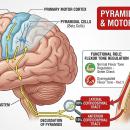
Tone is not a property of a muscle — it is a setting the cortex maintains, and asymmetry in it is information. Neurology 204 works the functional hierarchy of the motor system: the anatomy and clinical relevance of the corticospinal tracts, how descending control regulates flexor tone, and what limb symmetry tells you about the state of that control.
The clinically distinctive part is the interaction between head position and cortical inhibition. The course covers the brain–limb dynamics that make a head tilt a neurological finding rather than a postural one, and supplies the tests to assess a pyramidal presentation and the rehabilitative strategies that follow from it.
Choose Your Neurology Path — Three Lanes, One Curriculum
The Neurology series runs from what you can measure at the bedside, through the brain systems that explain the findings, to the structures a chiropractor actually treats. Courses 201–210 are the first block of a larger clinical-neurology curriculum; each is two hours.
1 · Measurement and Monitoring (203, 208)
What you measure in the room and what the numbers actually mean — oximetry and vital signs read through a functional neurological lens rather than as box-ticking.
203: Pulse Oximetry in Chiropractic
208: Vital Signs for Chiropractors
2 · Brain Systems (202, 204–206)
The cortical and cerebellar files: what chronic pain does to the brain, how the pyramidal system governs tone and symmetry, and what the frontal lobes and cerebellum contribute to everything else. You are here: Neurology 204.
202: Pain & the Central Nervous System
204: Clinical Aspects of the Pyramidal Man
205: Functional Neurology & Frontal Lobes
206: Functional Neurology & the Cerebellum
3 · Spine, Balance and Clinical Integration (201, 207, 209, 210)
Where neurology meets the structures a chiropractor actually treats — the cord, the vestibular apparatus, the craniocervical junction — and three worked cases that put the whole method together.
201: Chiropractic Myelopathy Management
207: Exploring the Vestibular System
209: Guzay’s Theorem & Craniocervical Neurology
210: Chiropractic Clinical Case Studies
Every course in the series is 2 PACE-approved CE hours at $40, and the automatic bundle discounts apply across the whole lane.
What You'll Learn in Neurology 204
Describe the anatomy and clinical relevance of the pyramidal system and corticospinal tracts in the regulation of flexor tone.
Analyse the cortex’s role in maintaining motor symmetry and functional coordination between limbs.
Interpret head tilt and postural shift as neurological findings, through their effect on cortical inhibition.
Apply clinical tests to assess a pyramidal presentation and select rehabilitative strategies matched to the finding.
Your Neurology Faculty
Michael Hall, DC, FIACN,instructor of this course and of the entire Neurology curriculum. A chiropractic neurology specialist, founder of BrainDC.org and Neurology Faculty at CCEDseminars, with more than 30 years of clinical and academic experience. He teaches functional neurology, neurological assessment and clinical neuroscience with an emphasis on case-based, evidence-informed application — translating complex neurological concepts into clinical reasoning a general practice can use.
Monte Horne, DC,reviewer of this course. Founder and CE Program Director of CCEDseminars, a Designated Doctor for the Texas Department of Insurance and a peer reviewer and expert witness.
Full bios and the complete instructor roster: CCEDseminars faculty page.
Where Neurology CE Hours Count — State Rules Worth Knowing
Clinical neurology coursework is clinical subject matter — assessment, diagnosis and case management — which is exactly what several state boards ask for. In Iowa, these hours serve the 36-hour clinical case-management minimum; in Rhode Island, they address the 50-of-60 clinical requirement; and in Vermont — where practice-building coursework earns nothing — patient-care education like this counts fully under the clinical-focus rule.
Online-format allowances still vary by state — some accept every hour online, others cap distance learning or require in-person blocks. Check your state's guide in the full state directory before building your renewal plan.
Build Your Neurology Block
Every course in the Neurology series runs 2 hours at $40, so the automatic discounts do the bundling for you: 6–9 hours in one order earns 10% off, and 10 or more earns 20% off — courses 201–210 together are 20 hours, well past the 20% tier at roughly $320 instead of $400. The full Chiropractic Clinical Neurology (CCN) 201–224 bundle runs 48 hours if you are working toward the certification. This course sits in the brain-systems lane with 205 Functional Neurology & Frontal Lobes and 206 Functional Neurology & the Cerebellum, and supplies the motor-tract background that makes cord signs in 201 Chiropractic Myelopathy Management interpretable. Browse Neurology Courses
Neurology 204 — Frequently Asked Questions
What does Neurology 204 cover?
The functional hierarchy of the motor system: the anatomy and clinical relevance of the pyramidal system and corticospinal tracts in flexor tone regulation, the cortex’s role in motor symmetry and coordination, the neurological implications of head tilt and postural shift on cortical inhibition, and the clinical tests and rehabilitative strategies that apply to pyramidal presentations.
How many CE hours is this course, and what does it cost?
2 PACE-approved CE hours for $40, or $20 per hour. Ordering 6–9 hours at once takes 10% off automatically and 10 or more takes 20% off — courses 201–210 together are 20 hours and clear the 20% tier. No promo codes.
What does the pyramidal system have to do with muscle tone?
The corticospinal tracts carry descending control that modulates flexor tone, so tone is maintained by the cortex rather than set locally. That is why an asymmetry in tone or limb behaviour points upstream, and the course works through what the finding implicates.
Why does head position matter neurologically?
Because head position interacts with cortical inhibition, which means a tilt is not simply a postural habit — it has consequences for brain–limb dynamics. The course covers those mechanics and the tests that separate a mechanical tilt from a neurological one.
Will this course count toward my state CE requirement?
In most states, yes — this is clinical patient-care subject matter, and it is PACE-approved and co-sponsored by Texas Chiropractic College. Online-format allowances and clinical-hour minimums vary, so check your state guide in the full state directory before you build your renewal plan.
State Approval and Licensing Reminder
Continuing education requirements — including online-hour caps and clinical-hour minimums — vary by jurisdiction. Review the online chiropractic CE guidelines page and contact CCEDseminars with questions about your specific licensing requirements before registering.
Ready to Enroll in Neurology 204?
2 CE hours · $40 · online & self-paced · instant certificate. Add it to your cart, or pair it with 201 Chiropractic Myelopathy Management to read motor findings against cord mechanics.
CCEDseminars · PACE Provider #34015544 · Reviewed by Monte Horne, DC · Last updated September 3, 2026 (CT)