 Login
Login

Home › Online Course Categories › Neurology › Ribs and Breathing

Neurology 231 — at a Glance
| Course: | Neurology 231: Ribs and Breathing |
| Faculty: | Michael Hall, DC, FIACN · Neurology Faculty, CCEDseminars |
| Format: | On-demand online video with case walk-throughs and assessment · downloadable handouts · instant certificate |
| Pricing: | $20/hr · automatic 10% off at 6–9 hrs, 20% off at 10+ hrs in one order · no promo codes |
| Approval: | PACE Provider #34015544 · co-sponsored by Texas Chiropractic College · acceptance varies by state |


Board-approved · PACE Provider #34015544 · CE Broker auto-reporting for states served · Instant certificate
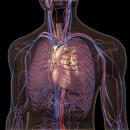
Breathing is the one thing every patient does in front of you, and the one thing almost nobody assesses. A patient who cannot take a full breath is not simply uncomfortable — they are delivering less oxygen to every tissue you are trying to help, and the ribcage is usually where that restriction lives. Clinical hypoxia is common, quiet and correctable, and it rarely announces itself as a breathing complaint.
This two-hour course takes the ribcage seriously as a neurological structure. It covers the neuroanatomy of breathing and the respiratory musculature, what breaths per minute actually tells you, how hypoxia is defined and measured, and how tissue perfusion and gas exchange rates connect a stiff thorax to a fatigued patient. It closes on what to do about it — chiropractic adjustments, incentive spirometry, and daily exercises patients can carry out of the office.
Choose Your Neurology Path — Three Lanes, One Curriculum
The Neurology series runs from what you can measure at the bedside, through the brain systems that explain the findings, to the structures a chiropractor treats, the developing nervous system, and the risks worth screening for. Courses 201–230 are built out here, within a larger clinical-neurology curriculum; each is two hours.
1 · Examination, Testing and Clinical Reasoning
What you measure and what it means — oximetry, vital signs, reflexes, sensory testing, outcome measures and the differential behind a collapse.
203: Pulse Oximetry in Chiropractic
208: Vital Signs for Chiropractors
210: Chiropractic Clinical Case Studies
211: Reflex Assessment in Chiropractic
213: Neurology Tests for Chiropractors
222: Somatosensory Examination Review
224: Outcome Assessments: Neurologic Perspective
235: Syncope
236: Accurate Sensory Testing & the Clinical Examination
2 · Brain Systems, Cognition and Mood
The cortical, cerebellar and limbic files — pain and the CNS, the pyramidal system, frontal lobes and cerebellum, memory, mood, smell and what the brain is popularly believed to do.
202: Pain & the Central Nervous System
204: Clinical Aspects of the Pyramidal Man
205: Functional Neurology & Frontal Lobes
206: Functional Neurology & the Cerebellum
223: Myths of the Brain
228: The Neurophysiology of Happiness
229: Clinical Perspectives Surrounding Memory
233: Anxiety in America
237: The Nose Knows
238: The Science of Happiness
3 · Spine, Posture and Craniocervical
Where neurology meets the structures a chiropractor treats — the cord, the vestibular system, the craniocervical junction, the cervical curve, sleep posture and the mechanics of the ribcage. You are here: Neurology 231.
201: Chiropractic Myelopathy Management
207: Exploring the Vestibular System
209: Guzay’s Theorem & Craniocervical Neurology
225: Current Perspectives of Sleep Posture
231: Ribs and Breathing
234: The Cervical Lordosis
4 · Pediatric and Developmental Neurology
The developing nervous system from birth through adolescence — early plasticity, developmental milestones, and concussion in children and teens.
212: Pediatric Concussion Management
217: The Concussed Teen and Return to Learn
221: Brain Rules for Babies
226: Pediatric Pearls (Ages 0–3)
227: The Vital Child (Ages 5–12)
5 · Motor Control, Tone and Peripheral Nerve
The motor system from cortex to muscle — upper motor neuron anatomy and signs, tone and spasticity, movement disorders and peripheral nerve involvement.
215: Dopamine, Parkinson’s & Chiropractic
218: Chiropractic Perspectives on Tone
240: The Upper Motor Neuron
6 · Autonomic, Vascular and Brain-Health Risk
The autonomic and vascular side of practice — sympathetic and vagal regulation, blood pressure, digestion, stroke risk, and the lifestyle factors that move long-term brain health.
214: Depression and Exercise
216: Is Fitness Important to Health?
219: Cervicogenic Hypertension
220: Chiropractic Stroke Risk Assessment
230: Low Stomach Acid & the Burp Test
232: The IML — Structure, Function & Relevance
239: Dysautonomia
Every course in the series is 2 PACE-approved CE hours at $40, and the automatic bundle discounts apply across the whole lane.
What You'll Learn in Neurology 231
Illustrate the anatomy and physiology of breathing, from the neuroanatomy of respiratory drive to the muscles that move the ribcage
Explain what matters clinically about breathing and gas exchange, including tissue perfusion and gas exchange rates
Define and measure clinical hypoxia, and recognise the presentations in which it is quietly present
Apply adjustments, incentive spirometry and daily home exercises — and teach them to patients
Your Neurology Faculty
Michael Hall, DC, FIACN,instructor of this course and of the entire Neurology curriculum. A chiropractic neurology specialist, founder of BrainDC.org and Neurology Faculty at CCEDseminars, with more than 30 years of clinical and academic experience. He teaches functional neurology, neurological assessment and clinical neuroscience with an emphasis on case-based, evidence-informed application — translating complex neurological concepts into clinical reasoning a general practice can use.
Monte Horne, DC,reviewer of this course. Founder and CE Program Director of CCEDseminars, a Designated Doctor for the Texas Department of Insurance and a peer reviewer and expert witness.
Full bios and the complete instructor roster: CCEDseminars faculty page.
Where Neurology CE Hours Count — State Rules Worth Knowing
Clinical neurology coursework is clinical subject matter — assessment, diagnosis and case management — which is exactly what several state boards ask for. In Iowa, these hours serve the 36-hour clinical case-management minimum; in Rhode Island, they address the 50-of-60 clinical requirement; and in Vermont — where practice-building coursework earns nothing — patient-care education like this counts fully under the clinical-focus rule.
Online-format allowances still vary by state — some accept every hour online, others cap distance learning or require in-person blocks. Check your state's guide in the full state directory before building your renewal plan.
Build Your Neurology Block
Every course in the Neurology series runs 2 hours at $40, so the automatic discounts do the bundling for you: 6–9 hours in one order earns 10% off, and 10 or more earns 20% off — courses 201–210 together are 20 hours, well past the 20% tier at roughly $320 instead of $400. The full Chiropractic Clinical Neurology (CCN) 201–224 bundle runs 48 hours if you are working toward the certification. 2 CE hours,$40 Browse Neurology Courses
Neurology 231 — Frequently Asked Questions
Why would a chiropractor assess breathing at all?
Because the ribcage is a joint system and breathing is a motor pattern, both of which sit squarely in a chiropractor’s scope. Restricted rib mechanics reduce the volume a patient can move, and reduced volume shows up as fatigue, poor recovery and a patient who never quite responds. Assessing breathing mechanics is assessing the thorax you are already treating.
What is clinical hypoxia, and how would I recognise it?
Clinical hypoxia is an oxygen level below what the tissues need to function well — not the dramatic hypoxia of an emergency, but a chronic shortfall. The course covers how it is defined and measured, and how tissue perfusion and gas exchange rates determine whether the oxygen a patient breathes in actually reaches the tissue. It usually presents as something other than breathlessness.
What does breaths per minute tell me?
More than most practitioners expect. Respiratory rate is a vital sign that is rarely counted and easy to count, and the course explains why the number matters, what a normal range looks like, and how an elevated resting rate points toward restricted mechanics rather than a lung problem.
Is incentive spirometry useful outside a hospital?
Yes — and it is one of the practical tools this course covers. An incentive spirometer gives a patient an objective, repeatable target for inspiratory volume they can work on at home, which makes rib and breathing work measurable rather than a matter of instruction and hope.
What can I actually give a patient to do at home?
The course closes on daily exercises for improved breathing alongside the in-office work. Rib function responds to repetition: an adjustment restores motion, and the home exercises are what keep it. Patient education is treated as part of the clinical technique, not an afterthought.
State Approval and Licensing Reminder
Continuing education requirements — including online-hour caps and clinical-hour minimums — vary by jurisdiction. Review the online chiropractic CE guidelines page and contact CCEDseminars with questions about your specific licensing requirements before registering.
Ready to Enroll in Neurology 231?
Rib function is assessable, teachable and correctable. This course gives you the anatomy, the measurements and the home exercises to act on it.
CCEDseminars · PACE Provider #34015544 · Reviewed by Monte Horne, DC · Last updated September 3, 2026 (CT)