<< Back to online CE course catalog
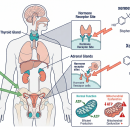
Nutrition 217 — Endocrine Disruptors in Health and Disease is a two-hour PACE nutrition CE webinar examining how environmental toxins interfere with endocrine function and drive chronic disease. The course covers xenoestrogens, xenobiotics, phytoestrogens, and the clinical consequences of toxic burden — including thyroid dysfunction, mitochondrial failure, and fetal developmental harm.
Instructor Howard Benedikt, DC, DCBCN draws on 46+ years of clinical nutrition practice to connect endocrine disruption research to actionable patient management strategies. Chiropractors earn 2 CE hours toward license renewal and leave with a framework for identifying and addressing toxic load in clinical practice.
Howard Benedikt, DC, DCBCN is a Board-Certified Chiropractic Clinical Nutritionist, 46+ years in practice, M.S. Human Nutrition CW Post/LIU, and Lead Clinical Nutrition Faculty at CCEDseminars. He delivers PACE- and board-approved curricula via Texas Chiropractic College, holds adjunct positions at New York Chiropractic College and Berkeley College NY, and practices in midtown Manhattan.
What are endocrine disruptors and why do chiropractors need to understand them?
Endocrine disruptors are chemicals — synthetic or naturally occurring — that interfere with hormone signaling by mimicking, blocking, or altering endocrine pathways. For chiropractors, understanding this mechanism is clinically essential because toxic burden manifests as thyroid dysfunction, fatigue, weight dysregulation, and musculoskeletal symptoms that present in practice daily. Identifying environmental contributors elevates the quality of nutritional and lifestyle guidance chiropractors can offer.
What is the difference between xenoestrogens and xenobiotics?
Xenobiotics are any foreign chemical compounds not naturally produced by the body — including pesticides, industrial chemicals, pharmaceuticals, and food additives. Xenoestrogens are a subset of xenobiotics that specifically mimic estrogen, binding to estrogen receptors and disrupting reproductive, thyroid, and metabolic hormone balance. Nutrition 217 covers both categories and their distinct clinical implications.
How do phytoestrogens differ from xenoestrogens in clinical practice?
Phytoestrogens are plant-derived compounds — found in soy, flaxseed, and legumes — that interact with estrogen receptors but typically with weaker affinity than endogenous estrogen. Unlike xenoestrogens, they can act as partial agonists or antagonists depending on the hormonal environment. Clinically they are used as modulators in estrogen-dominant conditions, menopause management, and cardiovascular support — a nuance Nutrition 217 addresses directly.
Is Nutrition 217 PACE-approved for chiropractic license renewal?
Yes. Nutrition 217 is PACE-approved for chiropractic license renewal in most U.S. states. Visit the CCEDseminars State CE Guidelines page to confirm your state or region's requirements before enrolling.
Watch Dr. Benedikt discuss endocrine disruption and clinical nutrition CE.
Watch on YouTubeAlaska, Colorado, Connecticut, Delaware, District Of Columbia, Florida, Hawaii, Idaho, Illinois, Indiana, Iowa, Kansas, Maine, Maryland, Massachusetts, Michigan, Minnesota, Missouri, Montana, Nebraska, New Hampshire, New Jersey, New York, North Carolina, North Dakota, Ohio, Oregon, Puerto Rico, Rhode Island, South Carolina, South Dakota, Tennessee, Texas, Utah, Vermont, Virginia, Washington, West Virginia, Wyoming,
British Columbia, Manitoba, New Brunswick, Nova Scotia, Ontario, Yukon,
Argentina, Australia, Bahamas, Belgium, Bolivia, Cayman Islands, Chili, Columbia, Costa Rica, Cyprus, Denmark, Dominican Republic, Ecuador, Fiji, Finland, Germany, Greece, Guam, Hong Kong, Hungary, Iceland, Iran, Israel, Italy, Jamaica, Japan, Jordan, Korea, Lebanon, Libya, Liechtenstein, Malaysia, Mexico, Nambia, Netherlands, New Zealand, Northern Ireland, Norway, Panama, Peru, Philippines, Saint Kitts & Nevis, Saudi Arabia, Singapore, South Africa, Spain, Sweden, Switzerland, Taiwan, Thailand, Trinidad & Tobago, United Arab Emirates, United Kingdom, Venezuela, Virgin Island, Zimbabwe,
 Login
Login