<< Back to online CE course category
| Course Number | Nutrition 226 |
| CE Hours | 2 Hours |
| Price | $40.00 |
| Format | Online Video Self-Paced; immediate downloadable certificate |
| Category | Nutrition CE Courses; counts toward Nutritional Certification Program |
| State Guidelines | Check Your State Requirements |
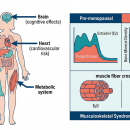
Estrogen is far more than a reproductive hormone. It acts as a systemic regulatory signal throughout a woman's body — influencing bone mineral density, skeletal muscle mass, cardiovascular function, brain metabolism, and overall metabolic balance. When estrogen levels decline during perimenopause and menopause, the downstream effects on the musculoskeletal system can be profound and clinically significant.
This 2-hour online chiropractic nutrition CE course examines the broad physiological impact of estrogen loss and equips practitioners with evidence-based strategies to support their female patients through this transition. Dr. Howard Benedikt, DC, DCBCN — President of the Chiropractic Board of Clinical Nutrition and Lead Clinical Nutrition Faculty at CCEDseminars — draws on more than 46 years of clinical practice to deliver practical, patient-centered guidance grounded in current research.
Participants will explore how declining estrogen accelerates bone resorption, contributes to sarcopenia, increases cardiovascular risk, and affects neurological function. The course addresses the most common symptoms women report during this transition and examines both nutritional and lifestyle strategies that clinicians can implement immediately in practice.
Whether you are a chiropractor, chiropractic clinical nutritionist, or integrative health practitioner, this course provides tools to better understand and manage one of the most significant health transitions your female patients will face. PACE/Board-approved via Texas Chiropractic College.
Upon successful completion of this course, participants will be able to:
Dr. Howard Benedikt, DC, DCBCN
Dr. Benedikt is President of the Chiropractic Board of Clinical Nutrition and a Board-Certified Chiropractic Clinical Nutritionist with over 46 years in clinical practice. He holds an M.S. in Human Nutrition from CW Post/LIU and serves as Lead Clinical Nutrition Faculty at CCEDseminars.
Dr. Benedikt's courses are PACE/board-approved via Texas Chiropractic College. He also serves as adjunct faculty at New York Chiropractic College and Berkeley College New York, and maintains an active clinical practice in midtown Manhattan.
How does estrogen loss affect the musculoskeletal system during menopause?
Estrogen plays a critical role in maintaining both bone mineral density and skeletal muscle mass. As estrogen declines during perimenopause and menopause, bone resorption accelerates — increasing the risk of osteopenia and osteoporosis — while muscle fiber composition shifts and strength diminishes, a process known as sarcopenia. These changes can significantly impair a woman's mobility, balance, and risk of fracture. Nutrition 226 explores these mechanisms in depth and reviews clinically applicable strategies to slow or mitigate musculoskeletal decline.
What nutritional and lifestyle strategies can chiropractors recommend to support women's health during menopause?
Evidence-based strategies discussed in this course include optimizing dietary protein intake to counteract sarcopenia, ensuring adequate calcium and vitamin D for bone health, and incorporating phytoestrogen-rich foods and targeted supplementation where appropriate. Lifestyle interventions — including resistance training, weight-bearing exercise, stress management, and sleep quality optimization — are also examined as essential components of a comprehensive women's wellness plan that chiropractors can implement and reinforce in practice.
Does declining estrogen affect cardiovascular and brain health as well?
Yes. Estrogen exerts cardioprotective effects including favorable modulation of lipid profiles, vascular tone, and inflammatory markers. After menopause, women face an accelerated rise in cardiovascular risk that narrows the gap with men of the same age. Estrogen also supports neurological function and cognitive metabolism; its decline has been associated with increased risk of cognitive changes and mood disturbances. This course addresses how estrogen loss affects multiple body systems simultaneously, helping clinicians take a whole-person approach to patient care.
Is this chiropractic CE course approved and how do I earn my certificate?
Nutrition 226 is PACE/board-approved via Texas Chiropractic College and delivers 2 CE hours in nutrition & counts toward you Nutritional Certification. The course is completed entirely online at your own pace. After viewing the course material and passing the post-course assessment, your certificate of completion is available through the CCEDseminars Certification Hub. Check the State Guidelines page to confirm this course meets your state board's requirements before registering.
Ready to Earn 2 CE Hours in Nutrition?
Enroll now for $40 and gain clinical strategies for supporting women's health through menopause and beyond.
Enroll — $40 View Certification ProgramsAlaska, Colorado, Connecticut, Delaware, District Of Columbia, Florida, Hawaii, Idaho, Illinois, Indiana, Iowa, Kansas, Maine, Maryland, Massachusetts, Michigan, Minnesota, Missouri, Montana, Nebraska, New Hampshire, New Jersey, New York, North Carolina, North Dakota, Ohio, Oregon, Puerto Rico, Rhode Island, South Carolina, South Dakota, Tennessee, Texas, Utah, Vermont, Virginia, Washington, West Virginia, Wyoming,
British Columbia, Manitoba, New Brunswick, Nova Scotia, Ontario, Yukon,
Argentina, Australia, Bahamas, Belgium, Bolivia, Cayman Islands, Chili, Columbia, Costa Rica, Cyprus, Denmark, Dominican Republic, Ecuador, Fiji, Finland, Germany, Greece, Guam, Hong Kong, Hungary, Iceland, Iran, Israel, Italy, Jamaica, Japan, Jordan, Korea, Lebanon, Libya, Liechtenstein, Malaysia, Mexico, Nambia, Netherlands, New Zealand, Northern Ireland, Norway, Panama, Peru, Philippines, Saint Kitts & Nevis, Saudi Arabia, Singapore, South Africa, Spain, Sweden, Switzerland, Taiwan, Thailand, Trinidad & Tobago, United Arab Emirates, United Kingdom, Venezuela, Virgin Island, Zimbabwe,
 Login
Login