<< Back to online CE course category
Nutrition 227 | 2 CE Hours | Online Chiropractic Continuing Education
| Course Number | Nutrition 227 | CE Hours | 2 Hours |
| Price | $40.00 | Format | Online Video / On-Demand |
| Category | Nutrition CE Courses | ||
| Enroll Now — $40 State CE Guidelines | |||
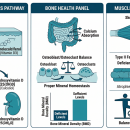
Vitamin D is far more than a nutrient tied to sunlight exposure — it is a steroid prohormone whose active metabolite, 1,25-dihydroxyvitamin D (calcitriol), engages a nuclear receptor expressed in virtually every tissue of the body. Why does vitamin D matter for the chiropractor and clinical nutritionist? Its effects on the musculoskeletal system are of direct, daily relevance: vitamin D deficiency is now recognized as a global public health problem, and its consequences reach from impaired calcium absorption and reduced bone mineral density to compromised skeletal muscle strength, elevated fall risk, and accelerated osteoporosis.
This two-hour online CE course — Nutrition 227: Vitamin D and Musculoskeletal Health — provides a rigorous, evidence-based review of vitamin D physiology, the downstream effects of deficiency on bone and muscle, and actionable clinical guidance on serum 25(OH)D testing, supplementation dosing, and patient management. Content draws on current literature, including landmark studies and recent systematic reviews, making it immediately applicable to chiropractic clinical practice.
Whether you are managing patients with chronic low back pain, osteopenia, sarcopenia, or recurrent falls, this course equips you with the clinical framework to identify vitamin D insufficiency, order and interpret the correct laboratory test, and implement supplementation strategies grounded in current evidence. The course qualifies for 2 chiropractic CE hours and is board-approved through Texas Chiropractic College via PACE.
Upon completing this course, participants will be able to:
Dr. Howard Benedikt, DC, DCBCN is the President of the Chiropractic Board of Clinical Nutrition and a Board-Certified Chiropractic Clinical Nutritionist with over 46 years of clinical practice. He holds an M.S. in Human Nutrition from C.W. Post/Long Island University and serves as Lead Clinical Nutrition Faculty at CCEDseminars.
Dr. Benedikt's CE programs are PACE/board-approved through Texas Chiropractic College, and he holds adjunct faculty positions at New York Chiropractic College and Berkeley College New York. He practices in midtown Manhattan, where his clinical focus includes nutritional biochemistry, neuromusculoskeletal conditions, and evidence-based supplementation protocols.
What does Nutrition 227 cover regarding vitamin D and musculoskeletal health?
Nutrition 227 covers the complete clinical picture: how vitamin D is synthesized from UVB exposure, converted in the liver and kidney to its active hormonal form, and how it signals through the vitamin D receptor (VDR) in bone and skeletal muscle. The course addresses the prevalence of deficiency, its consequences for bone mineral density, calcium metabolism, muscle fiber composition, grip strength, fall risk, and fracture incidence — and then moves to practical clinical application: testing, dosing, and monitoring.
Which laboratory test should chiropractors order to evaluate vitamin D status in patients?
The standard and clinically appropriate test is serum 25-hydroxyvitamin D — written as 25(OH)D. This is the major circulating form of vitamin D and the best indicator of overall vitamin D status. It reflects both dietary intake and cutaneous synthesis. The active hormone, 1,25(OH)2D (calcitriol), has a very short half-life and is tightly regulated; it is not a reliable index of vitamin D stores. This course provides specific interpretation thresholds for deficiency (<20 ng/mL), insufficiency (20–29 ng/mL), and sufficiency (≥30 ng/mL) as used in clinical practice.
How does vitamin D deficiency contribute to muscle weakness and fall risk in older adults?
Skeletal muscle expresses the vitamin D receptor, and adequate 1,25(OH)2D is required for normal muscle protein synthesis and maintenance of fast-twitch (type II) fiber diameter. Deficiency leads to selective atrophy of type II muscle fibers — the fibers critical for rapid, stabilizing contractions — resulting in impaired balance, reduced gait speed, decreased grip strength, and elevated fall risk. Clinical trials in older adults with low vitamin D have demonstrated measurable improvements in muscle function and fall reduction with supplementation, making this a key area of chiropractic preventive care.
Is this vitamin D CE course approved for chiropractic license renewal?
Yes. Nutrition 227 is board-approved through Texas Chiropractic College via PACE (Providers of Approved Continuing Education) and qualifies for 2 chiropractic CE hours. CCEDseminars courses are accepted in numerous states, but acceptance varies by jurisdiction. Before enrolling, review your state's specific continuing education requirements on the State CE Guidelines page to confirm eligibility.
Watch a Preview of This Course
Get a look at Dr. Benedikt's teaching style and the depth of clinical content in Nutrition 227.
Watch on YouTubeAlaska, Colorado, Connecticut, Delaware, District Of Columbia, Florida, Hawaii, Idaho, Illinois, Indiana, Iowa, Kansas, Maine, Maryland, Massachusetts, Michigan, Minnesota, Missouri, Montana, Nebraska, New Hampshire, New Jersey, New York, North Carolina, North Dakota, Ohio, Oregon, Puerto Rico, Rhode Island, South Carolina, South Dakota, Tennessee, Texas, Utah, Vermont, Virginia, Washington, West Virginia, Wyoming,
British Columbia, Manitoba, New Brunswick, Nova Scotia, Ontario, Yukon,
Argentina, Australia, Bahamas, Belgium, Bolivia, Cayman Islands, Chili, Columbia, Costa Rica, Cyprus, Denmark, Dominican Republic, Ecuador, Fiji, Finland, Germany, Greece, Guam, Hong Kong, Hungary, Iceland, Iran, Israel, Italy, Jamaica, Japan, Jordan, Korea, Lebanon, Libya, Liechtenstein, Malaysia, Mexico, Nambia, Netherlands, New Zealand, Northern Ireland, Norway, Panama, Peru, Philippines, Saint Kitts & Nevis, Saudi Arabia, Singapore, South Africa, Spain, Sweden, Switzerland, Taiwan, Thailand, Trinidad & Tobago, United Arab Emirates, United Kingdom, Venezuela, Virgin Island, Zimbabwe,
 Login
Login