<< Back to online CE course catalog
Course #667 | 2 CE Hours | $40 | Online | State Approval Guidelines
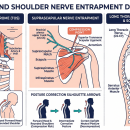
Orthopedics 202 delves into the complexities of trunk and shoulder entrapment syndromes, a clinically significant area that challenges chiropractors in everyday practice. The course addresses how postural stresses, anatomical variations, and modern lifestyle impacts can lead to peripheral nerve entrapments in critical areas such as the scapular region, shoulder girdle, rib cage, and thoracic outlet.
Peripheral nerve entrapments in the trunk and shoulder are frequently misdiagnosed or overlooked, resulting in delayed treatment and prolonged patient suffering. This course equips chiropractors with a systematic framework for identifying entrapment sites, differentiating clinical presentations, and applying evidence-informed conservative management strategies — without relying on surgical referral as a first-line response.
From thoracic outlet syndrome and suprascapular nerve entrapment to intercostal nerve syndromes and scapular winging from long thoracic nerve dysfunction, each condition is examined through anatomy, orthopedic testing, and practical rehabilitation. The course prioritizes conservative management and patient education, providing actionable clinical tools that can be implemented immediately in practice.
Upon completion, participants will be able to:
Dr. John H. Riggs III, MBA, DC, DIANM
Board-Certified Diplomate in Neuromusculoskeletal Medicine (DIANM), MBA, Doctor of Chiropractic — Los Angeles College of Chiropractic (1988). Former Chair, Texas Board of Chiropractic Examiners Enforcement Committee. Author of 21+ peer-reviewed publications in the Journal of Manipulative and Physiological Therapeutics (JMPT) and Journal of the American Chiropractic Association (JACO).
Dr. Riggs serves as Lead Orthopedics Faculty at CCEDseminars and Postgraduate Faculty at Texas Chiropractic College, holding active licenses in Texas and Michigan. View Full Faculty Bio →
| Course Number | Orthopedics 202 (ID: 667) |
| CE Hours | 2 Hours |
| Price | $40.00 USD |
| Delivery Format | Online / Self-Paced |
| Category | Orthopedics CE Courses |
| State Approval | View State Guidelines |
This course may qualify toward a CCEDseminars Certification Program.
Explore Certification ProgramsWhat is thoracic outlet syndrome and why is it clinically important for chiropractors?
Thoracic outlet syndrome (TOS) involves compression of the brachial plexus, subclavian artery, or subclavian vein as they pass through the thoracic outlet — bounded by the scalene triangle, costoclavicular space, and subcoracoid space. It is clinically important because its presentations — upper extremity pain, paresthesia, and weakness — mimic cervical radiculopathy and rotator cuff pathology, leading to frequent misdiagnosis. Chiropractors skilled in orthopedic examination can identify TOS early and implement conservative interventions that reduce patient morbidity without surgery.
How does suprascapular nerve entrapment present differently from rotator cuff tears?
Suprascapular nerve entrapment typically presents with deep, aching posterior shoulder pain, weakness in external rotation (infraspinatus), and supraspinatus weakness — which can mirror a rotator cuff tear on clinical exam. Key differentiators include the absence of a traumatic mechanism, pain that is poorly localized to the posterior scapular region rather than the shoulder tip, and positive provocative tests at the suprascapular notch. Electrodiagnostic studies and targeted orthopedic testing help distinguish entrapment neuropathy from structural rotator cuff pathology.
What causes long thoracic nerve entrapment and how does it affect shoulder function?
The long thoracic nerve (C5–C7) is vulnerable to compression or stretch injuries along its lengthy course, with causes including repetitive overhead activity, carrying heavy loads, direct blunt trauma, and viral neuropathy. Dysfunction results in serratus anterior weakness, producing classic scapular winging — where the medial scapular border lifts away from the thoracic wall. This disrupts normal scapulohumeral rhythm, reducing shoulder elevation and predisposing patients to secondary impingement syndromes. Conservative management includes activity modification, periscapular strengthening, and postural re-education.
Who should take Orthopedics 202 and how many CE hours does it provide?
Orthopedics 202 is designed for licensed chiropractors who evaluate and manage musculoskeletal and peripheral nerve conditions, particularly those seeing patients with shoulder, upper extremity, or rib cage complaints. It is also suitable for chiropractic residents and postgraduate students seeking to build expertise in neuromusculoskeletal diagnosis. The course awards 2 CE hours upon completion and is available entirely online. Verify eligibility with your state board using the State Approval Guidelines.
CCEDseminars on YouTube
Watch Free Chiropractic CE Previews
Preview lecture content, meet our faculty, and explore clinical topics — no subscription required.
Watch on YouTubeAlaska, Colorado, Connecticut, Delaware, District Of Columbia, Idaho, Illinois, Indiana, Iowa, Kansas, Maine, Maryland, Massachusetts, Michigan, Minnesota, Missouri, Montana, Nebraska, New Hampshire, New Jersey, New York, North Carolina, North Dakota, Ohio, Oregon, Puerto Rico, Rhode Island, South Carolina, South Dakota, Tennessee, Texas, Utah, Vermont, Virginia, Washington, West Virginia, Wyoming,
British Columbia, Manitoba, New Brunswick, Nova Scotia, Ontario, Yukon,
Argentina, Australia, Bahamas, Belgium, Bolivia, Cayman Islands, Chili, Columbia, Costa Rica, Cyprus, Denmark, Dominican Republic, Ecuador, Fiji, Finland, Germany, Greece, Guam, Hong Kong, Hungary, Iceland, Iran, Israel, Italy, Jamaica, Japan, Jordan, Korea, Lebanon, Libya, Liechtenstein, Malaysia, Mexico, Nambia, Netherlands, New Zealand, Northern Ireland, Norway, Panama, Peru, Philippines, Saint Kitts & Nevis, Saudi Arabia, Singapore, South Africa, Spain, Sweden, Switzerland, Taiwan, Thailand, Trinidad & Tobago, United Arab Emirates, United Kingdom, Venezuela, Virgin Island, Zimbabwe,
 Login
Login