 Login
Login

Home › Online Course Categories › Orthopedics › Rotator Cuff Syndrome
Orthopedics 204 — at a Glance
| Course: | Rotator Cuff Syndrome · 2 PACE-approved CE hours |
| Faculty: | Steven Yeomans, DC, FACO · Orthopedics Faculty, CCEDseminars |
| Format: | On-demand online video with assessment · downloadable handouts · instant certificate |
| Pricing: | $20/hr · automatic 10% off at 6–9 hrs, 20% off at 10+ hrs in one order · no promo codes |
| Approval: | PACE Provider #34015544 · co-sponsored by Texas Chiropractic College · acceptance varies by state |


Board-approved · PACE Provider #34015544 · CE Broker auto-reporting for states served · Instant certificate
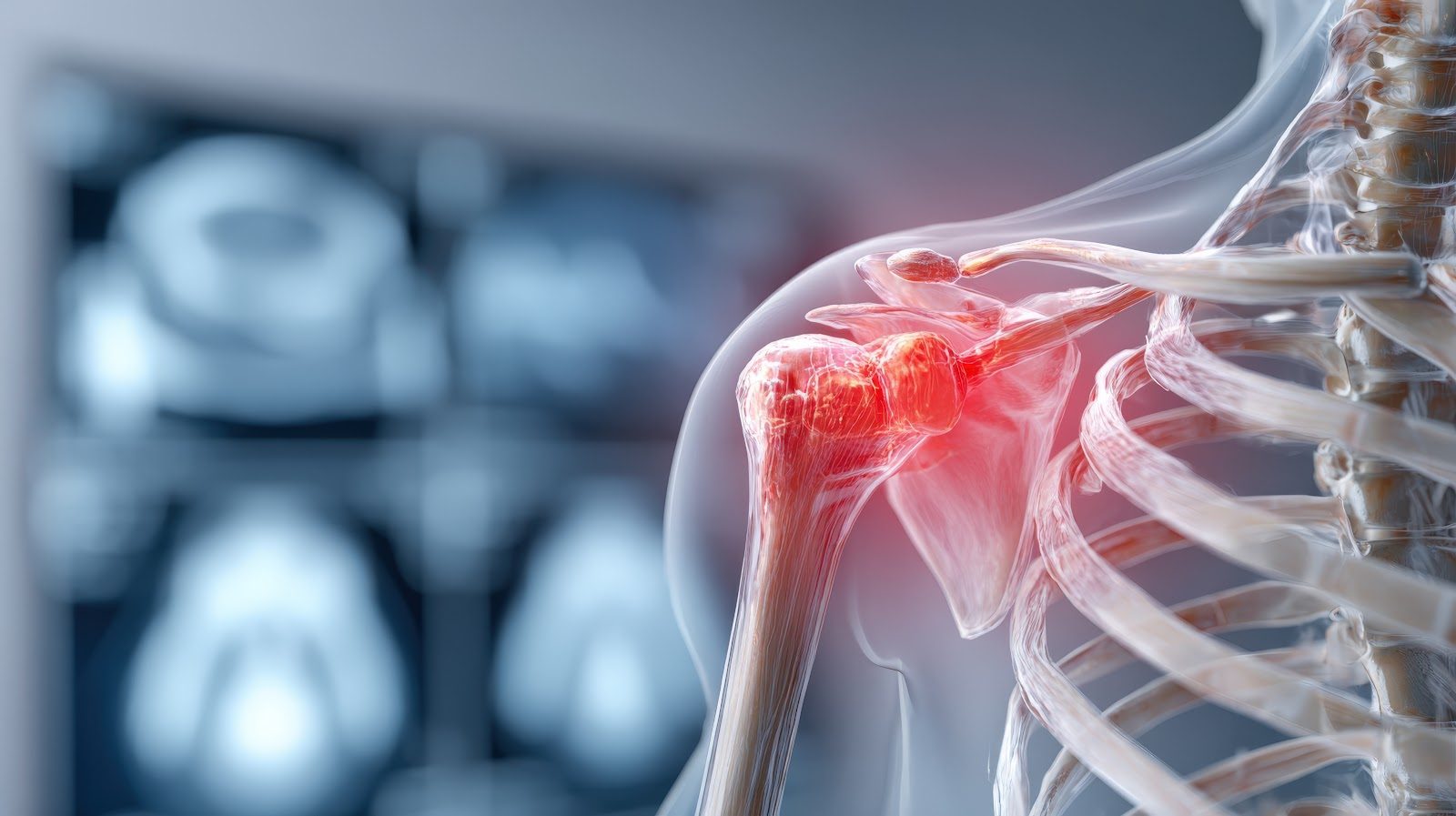
The painful shoulder that cannot reach overhead is one of the most common presentations in chiropractic practice, and rotator cuff syndrome is the diagnosis behind a large share of them. Orthopedics 204 takes the cuff from anatomy to decision-making: the four muscles, the subacromial space and the impingement mechanism, the Neer, Hawkins-Kennedy and Empty Can tests, X-ray, ultrasound and MRI interpretation, and the conservative management and rehabilitation protocols that get the shoulder moving again.
Dr. Steven Yeomans, a board-certified chiropractic orthopedist since 1985, structures the two hours around clinical reasoning: what the history and examination tell you about the cuff, what the classic tests can and cannot confirm, when imaging adds information and how to read it, and how manipulation, physical therapy and a progressive rehabilitation program fit together. Case studies run through the course so the diagnosis-to-plan sequence is practiced, not just described.
Choose Your Orthopedics Path — Three Lanes, One Curriculum
The Orthopedics library — twenty-six courses by five CCEDseminars faculty: John Riggs III, MBA, DC, DIANM; Steven Yeomans, DC, FACO; Michael Hall, DC, FIACN; Dennis O’Hara, DC, DACBSP; and Howard Benedikt, DC, DCBCN — organizes into three working lanes: trace the nerve, evaluate the joint, and catch the presentations that change management. Orthopedics 201–224 together form the 48-hour Clinical Chiropractic Orthopedics Certification (CCO). Two hours each.
1 · Gut, Microbiome, Digestion and Detoxification
Dr. Riggs’ designed three-course sequence — the entrapment map from the shoulder girdle to the tarsal tunnel: median, ulnar and radial nerve entrapments of the upper limb, the thoracic outlet and scapular syndromes, piriformis, meralgia paresthetica, peroneal and tarsal tunnel — plus the athlete’s stinger.
201: Upper Extremity Entrapment Syndromes
202: Trunk & Upper Extremity Entrapment Syndromes
203: Nerve Entrapments of the Pelvis and Lower Extremities
221: Burner Syndrome
2 · Brain, Mood, Stress and the Nervous System
Regional evaluation and management down the kinetic chain — the joints your schedule is made of: the rotator cuff and the frozen shoulder, the neck-and-shoulder file, the hip, plica syndrome at the knee, the foot and ankle, Achilles tendinitis, the chronically unstable ankle, and the stress fracture that hides as focal pain. You are here: Orthopedics 204.
204: Rotator Cuff Syndrome
206: Frozen Shoulder Evaluation
212: The Neck & Shoulder
215: Orthopedic Conditions of the Foot and Ankle
216: Plica Syndrome
217: Achilles Tendinitis
218: The Floppy Ankle
219: The Hip
225: Stress Fractures
3 · Musculoskeletal, Immune, Hormonal and Clinical Conditions
Stability testing, functional assessment and the presentations that demand recognition — cervical instability and position sense, cauda equina, dropped head syndrome, cervicovagopathy, gait and the lumbar spine, the Romberg sign and flexibility benchmarks — plus the chronic pain, inflammation and breathing science underneath.
205: Cervical Spine Instability: The How-To
207: Finger to Floor & Sit-n-Reach
208: Managing Chronic Pain
209: The Romberg Sign
210: Inflammatory Properties of Contained and Non-Contained Disc Disease
211: Cervical Position Sense Testing
213: Coronal Plane Movement & Neuroplasticity
214: Cauda Equina & Lumbar Radiculopathy
220: Cervicovagopathy
222: Dropped Head Syndrome
223: Chronic Inflammation and Close Relationships
224: Breathe — Mouth Breathing and Health
226: Gait & the Lumbar Spine
Every course in the series is 2 PACE-approved CE hours at $40, and the automatic bundle discounts apply across the whole lane. The full 26-course catalog continues on the Orthopedics category page.
What You’ll Learn in Orthopedics 204
Identify the anatomical structures involved in rotator cuff syndrome and impingement.
Apply evidence-based orthopedic examination procedures for rotator cuff assessment.
Interpret imaging findings relevant to rotator cuff pathology in the chiropractic setting.
Develop conservative management and rehabilitation protocols for rotator cuff syndrome patients.
Your Orthopedics Faculty
Steven Yeomans, DC, FACO — instructor of this course. Fellow of the Academy of Chiropractic Orthopedists and a board-certified chiropractic orthopedist since 1985, author of The Clinical Application of Outcomes Assessment, with teaching experience at seven chiropractic colleges. He teaches the rotator cuff, cervical spine instability and chronic pain courses in the CCEDseminars Orthopedics library — here, the rotator cuff from the four muscles and the subacromial space through the Neer, Hawkins-Kennedy and Empty Can tests, imaging and a structured rehabilitation plan.
Full bio and the complete instructor roster: CCEDseminars faculty page.
Where Orthopedics CE Hours Count — State Rules Worth Knowing
Orthopedics coursework is clinical subject matter — examination, diagnosis and case management — which is exactly what several state boards ask for. In Iowa, these hours serve the 36-hour clinical case-management minimum; in Rhode Island, they address the 50-of-60 clinical requirement; and in Vermont — where practice-building coursework earns nothing — patient-care education like this counts fully under the clinical-focus rule.
Online-format allowances still vary by state — some accept every hour online, others cap distance learning or require in-person blocks. Check your state’s guide in the full state directory before building your renewal plan.
Build Your Orthopedics Block — or Take the Credential
Every course in the Orthopedics series runs 2 hours at $40, so the automatic discounts do the bundling for you: 6–9 hours in one order earns 10% off, and 10 or more earns 20% off — any ten courses from the series is 20 hours, which clears the 20% tier at roughly $320 instead of $400, with no promo codes. Rotator Cuff Syndrome pairs naturally with Orthopedics 206 on frozen shoulder evaluation and Orthopedics 212 on the neck and shoulder; the three together make a 6-hour shoulder block and reach the 10% tier. Pursuing the credential? The Clinical Chiropractic Orthopedics Certification (CCO) packages Orthopedics 201–224 — 48 hours — in a single $960 checkout. Browse Orthopedics Courses
Orthopedics 204 — Frequently Asked Questions
What does Orthopedics 204 cover?
Orthopedics 204 covers rotator cuff syndrome for chiropractors: the anatomy of the four cuff muscles, the subacromial space and impingement mechanisms, clinical history and physical examination with the Neer, Hawkins-Kennedy and Empty Can tests, X-ray, ultrasound and MRI interpretation, conservative management including manipulation and rehabilitation protocols, and case studies in clinical decision-making. Also known as the rotator cuff course, the shoulder impingement course, or the Neer and Hawkins-Kennedy test course.
How reliable are the Neer, Hawkins-Kennedy and Empty Can tests?
Useful but not conclusive on their own — each has a sensitivity and specificity profile, and their value rises when they are clustered and read against the history. Dr. Yeomans covers how to perform each test, what a positive finding actually indicates, and how to combine them with imaging when the examination leaves the question open.
Can a chiropractor treat a rotator cuff injury without surgery?
Many rotator cuff syndromes, particularly impingement and partial-thickness tendinopathy, respond to conservative care, and the course lays out that plan: manipulation and manual therapy, activity modification, and a progressive rehabilitation program for the cuff and scapular stabilizers. It also covers the imaging findings and clinical signs that call for orthopedic referral.
How is this different from Orthopedics 206, Frozen Shoulder Evaluation?
Both are shoulder courses, and they are companions. Orthopedics 204 is the rotator cuff — impingement, tendinopathy and tears, with testing, imaging and rehabilitation. Orthopedics 206 is adhesive capsulitis, the stiff shoulder with a capsular pattern, which is often confused with cuff pathology. Many clinicians take both to separate the two most common painful shoulders.
How many CE hours is it, and where does it sit in the Orthopedics series?
It is 2 PACE-approved CE hours. Orthopedics 204 sits in the joint-by-joint lane of the Orthopedics series with Dr. Steven Yeomans, alongside Orthopedics 206 (Frozen Shoulder Evaluation), 212 (The Neck & Shoulder), 219 (The Hip) and 215 (Orthopedic Conditions of the Foot and Ankle).
State Approval and Licensing Reminder
Continuing education requirements — including online-hour caps and clinical-hour minimums — vary by jurisdiction. Review the online chiropractic CE guidelines page and contact CCEDseminars with questions about your specific licensing requirements before registering.
Ready to Enroll in Orthopedics 204?
The painful overhead shoulder is on your schedule this week. Two hours here give you the cuff anatomy, the tests, the imaging read and the rehabilitation plan to manage it with confidence.
CCEDseminars · PACE Provider #34015544 · Reviewed by Monte Horne, DC · Last updated September 2026 (CT)