<< Back to online CE course catalog
Course Number: Orthopedics 205 | CE Hours: 2 | Price: $40 | Format: Online / On-Demand
Cervical spine instability is one of the most consequential — and frequently misunderstood — findings in chiropractic orthopedics. This 2-hour online CE course from CCEDseminars delivers a focused, clinically practical review of how to assess, document, and rate cervical instability in both clinical and medico-legal settings. Dr. Steven Yeomans, a board-certified chiropractic orthopedist with over three decades of teaching and clinical experience, walks practitioners through the radiographic criteria for instability, the AMA Guides methodology for impairment rating, and findings from a landmark 2020 research study that updates established benchmarks.
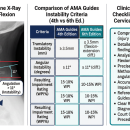
The course opens with foundational anatomy and biomechanics, then moves directly into how translation and angulation are measured on lateral flexion-extension radiographs. A side-by-side comparison of AMA Guides 4th and 6th Edition rating methods clarifies which standards apply in which contexts — critical for any practitioner involved in workers' compensation, personal injury, or independent medical examinations. The 2020 cervical instability study is examined in detail alongside the legacy AMA methods, helping you understand where the evidence has evolved. The course concludes with a real-world case study involving a 21-year-old male, demonstrating how to synthesize clinical findings, radiographic data, and medico-legal documentation into a defensible impairment rating report.
| Course Number | Orthopedics 205 |
| CE Credit Hours | 2 Hours |
| Tuition | $40.00 |
| Delivery Format | Online / On-Demand |
| Category | Orthopedics CE Courses |
| State Approvals | View State Guidelines |
| Instructor | Dr. Steven Yeomans, DC, FACO |
After completing this course, participants will be able to:
Dr. Steven Yeomans, DC, FACO
Dr. Yeomans is a Fellow of the Academy of Chiropractic Orthopedists (FACO) and a Doctor of Chiropractic with a BS from the National University of Health Sciences. Board-certified as a chiropractic orthopedist since 1985 following a 5-year residency, he is the author of the definitive textbook The Clinical Application of Outcomes Assessment (Appleton & Lange, 1999) and has taught at seven chiropractic colleges.
Dr. Yeomans served as former President of the Wisconsin Back Society, is a member of the North American Spine Society, and has served on the Medical Advisory Board of Spine-health.com since 2000. He is a partner at Yeomans-Edinger Chiropractic Center in Ripon, WI, and serves as Lead Orthopedics Faculty at CCEDseminars.
What is cervical spine instability and how is it diagnosed?
Cervical spine instability refers to excessive segmental motion beyond normal physiological limits, typically defined radiographically by translation of more than 3.5 mm or angular displacement exceeding 11° on lateral flexion-extension views. This course teaches clinicians the measurement methods used to identify instability objectively, including the specific radiographic protocols required for medico-legal documentation.
Which AMA Guides edition should I use for rating cervical spine instability?
The applicable edition depends on the jurisdiction and the date of injury. Dr. Yeomans provides a direct comparison of 4th and 6th Edition methodologies so practitioners understand the differences in impairment ratings produced by each approach. This is essential for workers' compensation, personal injury, and independent medical examination (IME) contexts where edition selection can significantly affect the final rating.
What does the 2020 cervical instability study add that the AMA Guides do not cover?
The 2020 study provides updated evidence-based thresholds and refined measurement criteria for cervical instability that postdate the most widely used AMA Guides editions. This course analyzes how those findings compare to legacy methods, which is critical for practitioners who need to justify or defend their impairment ratings against opposing expert testimony.
Is this course approved for chiropractic continuing education in my state?
CCEDseminars courses are accepted in multiple states for chiropractic CE credit. State approval status varies by jurisdiction. Check your state's guidelines here before enrolling to confirm applicability.
Earn Your Chiropractic Orthopedics Certification
Orthopedics 205 counts toward CCEDseminars certification programs. View all available pathways.
Explore Certification Programs →Watch a Course Preview on YouTube
Get a look at CCEDseminars' teaching style and the depth of clinical content in Chiropractic ecosystem.
Watch on YouTubeAlaska, Colorado, Connecticut, Delaware, District Of Columbia, Idaho, Illinois, Indiana, Iowa, Kansas, Maine, Maryland, Massachusetts, Michigan, Minnesota, Missouri, Montana, Nebraska, New Hampshire, New Jersey, New York, North Carolina, North Dakota, Ohio, Oregon, Puerto Rico, Rhode Island, South Carolina, South Dakota, Tennessee, Texas, Utah, Vermont, Virginia, Washington, West Virginia, Wyoming,
British Columbia, Manitoba, New Brunswick, Nova Scotia, Ontario, Yukon,
Argentina, Australia, Bahamas, Belgium, Bolivia, Cayman Islands, Chili, Columbia, Costa Rica, Cyprus, Denmark, Dominican Republic, Ecuador, Fiji, Finland, Germany, Greece, Guam, Hong Kong, Hungary, Iceland, Iran, Israel, Italy, Jamaica, Japan, Jordan, Korea, Lebanon, Libya, Liechtenstein, Malaysia, Mexico, Nambia, Netherlands, New Zealand, Northern Ireland, Norway, Panama, Peru, Philippines, Saint Kitts & Nevis, Saudi Arabia, Singapore, South Africa, Spain, Sweden, Switzerland, Taiwan, Thailand, Trinidad & Tobago, United Arab Emirates, United Kingdom, Venezuela, Virgin Island, Zimbabwe,
 Login
Login