<< Back to online CE course catalog
Frozen shoulder — clinically known as adhesive capsulitis — remains one of the most misunderstood and undertreated conditions in musculoskeletal practice, leaving patients with months or years of unexplained pain and progressively restricted range of motion. Chiropractors evaluating shoulder complaints must be equipped with both traditional orthopedic frameworks and the emerging functional neurology perspectives that are reshaping how this diagnosis is approached. This 2-hour online chiropractic CE course from CCEDseminars bridges established clinical evaluation methods with contemporary insights into adhesive capsulitis pathophysiology.
Course #: 206 | CE Hours: 2 | Price: $40.00 | Format: Online | Accreditation: PACE & Board Approved
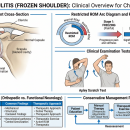
Register NowFrozen shoulder — adhesive capsulitis — has long challenged clinicians with its variable presentation, unpredictable timeline, and inconsistent response to standard care. This chiropractic CE course begins with a foundational overview of the condition: who it affects, how it progresses through its classic freezing, frozen, and thawing phases, and why the diagnosis is so frequently delayed or mismanaged. Participants will revisit core epidemiological data, including prevalence rates in the general population and elevated risk among patients with diabetes, thyroid disorders, and prolonged shoulder immobilization.
The traditional evaluation framework covers orthopedic provocative testing — including the Apley scratch test, Neer impingement sign, Hawkins-Kennedy maneuver, and passive range-of-motion assessment — alongside neurological screening and relevant imaging modalities. Radiographic findings, MRI arthrography, and ultrasonographic patterns are discussed in the context of distinguishing adhesive capsulitis from rotator cuff pathology, glenohumeral arthritis, and cervical radiculopathy mimicry. This comparative evaluation approach ensures that clinicians are ordering appropriate studies and interpreting results within the full clinical picture.
The second major focus of the course introduces new and contemporary perspectives on the frozen shoulder. Functional neurology offers a lens through which altered sensorimotor integration, cortical reorganization, and sympathetic nervous system involvement may contribute to the chronicity and recalcitrance of the condition. Emerging imaging research and clinical evidence have challenged the purely mechanical model of adhesive capsulitis, opening the door for chiropractors trained in neurological assessment to play an expanded role in evaluation and co-management. This course equips doctors of chiropractic with the knowledge to integrate these perspectives into their clinical reasoning.
Michael Hall, DC, FIACN is a Fellow of the International Board of Chiropractic Neurology and earned his Doctor of Chiropractic degree with Honors from Parker College of Chiropractic in 1990, going on to attain his Diplomate from the American Board of Chiropractic Neurology in 1993. With more than 30 years of clinical practice experience, Dr. Hall is the founder of BrainDC.org and serves as Lead Neurology and Orthopedics Faculty at CCEDseminars, bringing advanced neurological and musculoskeletal expertise to every course he presents.
View Full Faculty Profile →What orthopedic tests are covered in this frozen shoulder CE course?
This course covers a range of standard orthopedic and neurological assessment tools relevant to frozen shoulder evaluation, including the Apley scratch test, Neer impingement sign, Hawkins-Kennedy maneuver, and passive range-of-motion measurement protocols. Imaging interpretation — including radiograph, MRI arthrography, and ultrasound patterns — is also addressed to support differential diagnosis in clinical practice.
Is this chiropractic CE course approved for PACE and state board credit?
Yes. Orthopedics 206 is PACE approved and accepted by chiropractic licensing boards in most states. CCEDseminars maintains approval with numerous state boards, and chiropractors are encouraged to verify their specific state's acceptance by reviewing the course guidelines page. Upon successful completion, a 2-hour CE certificate is issued for license renewal purposes.
How does functional neurology apply to frozen shoulder evaluation?
Functional neurology offers a perspective that goes beyond the structural explanation of adhesive capsulitis, examining the role of altered sensorimotor integration, cortical mapping changes, and autonomic nervous system involvement in the perpetuation of shoulder stiffness and pain. This course introduces these emerging frameworks so that chiropractors trained in neurological assessment can refine their evaluations and consider a broader scope of contributing factors when managing patients with frozen shoulder.
Orthopedics 206 may be applied toward CCEDseminars specialty certification tracks — learn more about available certification pathways at the CCEDseminars Certification Programs page.
Chiropractic CE hour requirements and approved course categories vary by state — review the State CE Requirements Guide to confirm that Orthopedics 206 satisfies your licensing board's specifications before registering.
Watch Free Chiropractic CE Previews on YouTube
Subscribe to the CCEDseminars channel for course previews, clinical pearls, and CE updates.
Subscribe on YouTubeAlaska, Colorado, Connecticut, Delaware, District Of Columbia, Idaho, Illinois, Indiana, Iowa, Kansas, Maine, Maryland, Massachusetts, Michigan, Minnesota, Missouri, Montana, Nebraska, New Hampshire, New Jersey, New York, North Carolina, North Dakota, Ohio, Oregon, Puerto Rico, Rhode Island, South Carolina, South Dakota, Tennessee, Texas, Utah, Vermont, Virginia, Washington, West Virginia, Wyoming,
British Columbia, Manitoba, New Brunswick, Nova Scotia, Ontario, Yukon,
Argentina, Australia, Bahamas, Belgium, Bolivia, Cayman Islands, Chili, Columbia, Costa Rica, Cyprus, Denmark, Dominican Republic, Ecuador, Fiji, Finland, Greece, Guam, Hong Kong, Hungary, Iceland, Iran, Israel, Italy, Jamaica, Japan, Jordan, Korea, Lebanon, Libya, Liechtenstein, Malaysia, Mexico, Nambia, New Zealand, Northern Ireland, Norway, Panama, Peru, Philippines, Saint Kitts & Nevis, Saudi Arabia, Singapore, Spain, Sweden, Switzerland, Taiwan, Thailand, Trinidad & Tobago, United Arab Emirates, United Kingdom, Venezuela, Virgin Island, Zimbabwe,
 Login
Login