<< Back to online CE course catalog
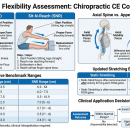
Spinal flexibility testing is a foundational clinical tool in chiropractic practice, used to quantify range of motion and guide rehabilitation. This 2-hour CE course delivers an evidence-informed review of the Finger to Floor and Sit-N-Reach assessments and their application in patient care.
Course #207 | 2 CE Hours | $40.00 | Online | PACE & Board Approved
Register for This CourseThe Sit-N-Reach and Finger to Floor tests are among the most widely used flexibility metrics across the lifespan, yet their proper interpretation is frequently misunderstood. This course explores the evidence behind each test, including separate normative benchmark ranges for males and females by age group, and explains the critical distinction between axial and appendicular flexibility — helping clinicians avoid common misinterpretations and design more targeted treatment strategies.
The course concludes with a contemporary review of stretching science. Long-held beliefs about static stretching and injury prevention have been substantially revised. Dr. Hall presents updated clinical perspectives to help practitioners counsel patients on home exercise programs and long-term flexibility maintenance in evidence-informed chiropractic care.
Dr. Michael Hall, DC, FIACN, earned his Doctor of Chiropractic degree with honors from Parker College of Chiropractic (1990) and his Diplomate from the American Board of Chiropractic Neurology (1993). As Founder of BrainDC.org and Lead Neurology and Orthopedics Faculty at CCEDseminars, he brings over 30 years of clinical expertise to each course. Learn more on the Faculty page.
What is the difference between the Finger to Floor and Sit-N-Reach tests?
The Finger to Floor test assesses total spinal and lower extremity flexibility in a standing position, while the Sit-N-Reach is a seated test that primarily captures hamstring and lumbar flexibility. This course reviews the pros, cons, and normative benchmarks for both tests.
Is Orthopedics 207 approved for chiropractic CE credit in my state?
Orthopedics 207 is PACE approved and accepted by most U.S. state chiropractic licensing boards. Confirm current requirements with your state board or review the CCEDseminars state CE guidelines before enrolling.
How long do I have to complete the course after enrolling?
Orthopedics 207 is fully self-paced with no live session requirements. Complete the 2 CE credit hours and the course exam on your own schedule.
Orthopedics 207 may count toward CCEDseminars specialty certification tracks — explore available Certification Programs to see how this course fits into your professional development pathway.
Review the Online Chiropractic Course Guidelines to confirm this course satisfies your state board's continuing education standards before enrolling.
Watch Free Chiropractic CE Previews on YouTube
Subscribe to the CCEDseminars channel for course previews, clinical pearls, and CE updates.
Subscribe on YouTubeAlaska, Colorado, Connecticut, Delaware, District Of Columbia, Idaho, Illinois, Indiana, Iowa, Kansas, Maine, Maryland, Massachusetts, Michigan, Minnesota, Missouri, Montana, Nebraska, New Hampshire, New Jersey, New York, North Carolina, North Dakota, Ohio, Oregon, Puerto Rico, Rhode Island, South Carolina, South Dakota, Tennessee, Texas, Utah, Vermont, Virginia, Washington, West Virginia, Wyoming,
British Columbia, Manitoba, New Brunswick, Nova Scotia, Ontario, Yukon,
Argentina, Australia, Bahamas, Belgium, Bolivia, Cayman Islands, Chili, Columbia, Costa Rica, Cyprus, Denmark, Dominican Republic, Ecuador, Fiji, Finland, Greece, Guam, Hong Kong, Hungary, Iceland, Iran, Israel, Italy, Jamaica, Japan, Jordan, Korea, Lebanon, Libya, Liechtenstein, Malaysia, Mexico, Nambia, New Zealand, Northern Ireland, Norway, Panama, Peru, Philippines, Saint Kitts & Nevis, Saudi Arabia, Singapore, Spain, Sweden, Switzerland, Taiwan, Thailand, Trinidad & Tobago, United Arab Emirates, United Kingdom, Venezuela, Virgin Island, Zimbabwe,
 Login
Login