Orthopedics

Orthopedics 214: Cauda Equina & Lumbar Radiculopathy CE Course | CCEDseminars

<< Back to online CE course catalog

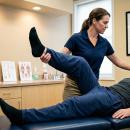
A chiropractor performs a straight leg raise test on a supine patient to assess lumbar radiculopathy and lower extremity neurological signs in a chiropractic clinical setting.
Online Course Format:  Online
Course Tuition:   $40.00
Credit Hours ( CE ):  2
Contributor:  Michael Hall, DC, FIACN
CLICK HERE for a list of states, provinces and countries this course is accredited in.

Online Chiropractic CE Course Description & Course Details

Orthopedics 214: Cauda Equina, Lumbar Radiculopathy, and Clinical Considerations

CourseOrthopedics 214
InstructorMichael Hall, DC, FIACN
FormatOnline (Recorded)
CE Hours2 Hours
Tuition$40.00
PACE ProviderCCEDseminars — PACE No. 34015544 | Recognized by the Federation of Chiropractic Licensing Boards (FCLB)

Cauda Equina syndrome is one of the most consequential diagnoses a chiropractor will encounter. Recognizing it — and acting swiftly — can mean the difference between recovery and permanent disability. In Orthopedics 214, Dr. Michael Hall, DC, FIACN guides you through clinical anatomy, red flag indicators, emerging research on fatty infiltration and sympathetic ganglion sensitization, and the peer-reviewed literature essential to every chiropractic evaluation of lumbosacral complaints. Available on demand, 2 CE hours, $40.

About the Presenter

Michael Hall DC FIACN — Chiropractic Neurology CE Instructor

Michael Hall, DC, FIACN is a Fellow of the International Academy of Chiropractic Neurology with over 30 years of clinical and academic expertise. A 1990 honors graduate of Parker College of Chiropractic and Diplomate of the American Board of Chiropractic Neurology (1993), Dr. Hall is the founder of BrainDC.org and a leading voice in functional neurology, concussion management, and global chiropractic education. He brings a rigorous evidence-based perspective to complex neurological and orthopedic presentations, making his courses essential for chiropractors who demand clinical depth alongside practical application.

What Attendees Are Saying

“CCED helps me stay sharp, up to date, and legally compliant. Their webinars are a must for any chiropractor who wants to grow their practice the right way.”

— Reon Bailey, DC

“I’ve learned more here than in many live seminars. Thank you for making me a better doctor.”

— Rob Rosenbaum, DC

Read more reviews →

Course Information

Course Description

This course delves into the critical study of Cauda Equina syndrome, a severe condition affecting the lumbosacral nerve roots. Led by Dr. Michael Hall, the course explores the latest research and understanding of this condition, focusing on lower back pain, leg pain, and bowel and bladder dysfunction. It is a must for chiropractors looking to update their knowledge on this serious condition.

Learning Objectives +

Upon completion of this course, participants will be able to:

  1. Discuss and recognize the signs and symptoms of Cauda Equina syndrome.
  2. Identify the red flags associated with the condition, including saddle anesthesia, bilateral neurogenic sciatica, and bladder or bowel dysfunction.
  3. Understand new perspectives and developments in treating Cauda Equina syndrome, including research on fatty infiltration and sympathetic ganglion (SG) sensitization.
  4. Summarize the current peer-reviewed literature and its implications for chiropractic practice in managing lumbosacral nerve root conditions.
Course Outline +
  1. Comprehensive overview of Cauda Equina syndrome: anatomy, pathophysiology, and clinical significance.
  2. Identification of signs, symptoms, and red flags: saddle anesthesia, urinary retention, bilateral lower extremity deficits, and bowel dysfunction.
  3. Exploration of new perspectives, including fatty infiltration of paraspinal musculature and sympathetic ganglion (SG) sensitization as contributors to the clinical picture.
  4. Review of relevant peer-reviewed literature and its implications for chiropractic triage, documentation, and referral practices.
Who Should Attend +

This course is designed for licensed Doctors of Chiropractic who manage patients with low back pain, lumbar radiculopathy, or neurological complaints. It is essential for any clinician who needs to recognize and triage Cauda Equina syndrome as a surgical emergency. Whether you primarily treat musculoskeletal conditions or see complex neurological cases, the red flag awareness and clinical frameworks taught in this course will strengthen your patient safety protocols and documentation practices.

Course Technology & Access +

How to Join: The course title in your account is the access link. No software installation is required. The webinar is accessible through any modern browser on desktop, tablet, or mobile devices.

CE Certificate Delivery: Certificates are issued electronically from your account upon course completion. Please ensure your license information is accurate at the time of registration.

Frequently Asked Questions +

What is covered in Orthopedics 214?

Orthopedics 214 covers Cauda Equina syndrome anatomy and pathophysiology, red flag identification, new clinical perspectives including fatty infiltration and SG sensitization, and current peer-reviewed literature relevant to chiropractic practice.

How many CE hours does this course provide?

This course awards 2 CE hours upon successful completion. The certificate is issued electronically and is recognized through the PACE program (Provider No. 34015544) as approved by the Federation of Chiropractic Licensing Boards (FCLB).

How do I join the course?

The course title in your account is the access link. No software installation is required. The webinar is accessible through any modern browser on desktop, tablet, or mobile devices.

Who should take this course?

This course is designed for licensed Doctors of Chiropractic who manage patients with low back pain, lumbar radiculopathy, or neurological complaints. It is especially valuable for clinicians who need to recognize and triage Cauda Equina syndrome as a surgical emergency.

What states are approved for this course?

State approval information is maintained and updated by our administrative team. Please see the State Approvals section on this page or contact CCEDseminars.com directly to confirm approval status for your specific state board before registering.

References

  1. Todd NV. Cauda equina syndrome: the timing of surgery probably does influence outcome. British Journal of Neurosurgery. 2005;19(4):301–306. doi:10.1080/02688690500305324
  2. Korse NS, Pijpers JA, van Zwet E, Elzevier HW, Vleggeert-Lankamp CLA. Cauda Equina Syndrome: presentation, outcome, and predictors with focus on micturition, defecation, and sexual dysfunction. European Spine Journal. 2017;26(3):894–904. doi:10.1007/s00586-017-4943-8
  3. Domen PM, Hofman PA, van Santbrink H, Weber WE. Predictive value of clinical characteristics in patients with suspected cauda equina syndrome. European Journal of Neurology. 2009;16(3):416–419. doi:10.1111/j.1468-1331.2008.02510.x
  4. Ropper AH, Zafonte RD. Sciatica. New England Journal of Medicine. 2015;372(13):1240–1248. doi:10.1056/NEJMra1410151
This online chiropractic course is accredited in the following states:

Alaska, Colorado, Connecticut, Delaware, District Of Columbia, Idaho, Illinois, Indiana, Iowa, Kansas, Maine, Maryland, Massachusetts, Michigan, Minnesota, Missouri, Montana, Nebraska, New Hampshire, New Jersey, New York, North Carolina, North Dakota, Ohio, Oregon, Puerto Rico, Rhode Island, South Carolina, South Dakota, Tennessee, Texas, Utah, Vermont, Virginia, Washington, West Virginia, Wyoming,

This online chiropractic course is accredited in the following Canadian Provinces:

British Columbia, Manitoba, New Brunswick, Nova Scotia, Ontario, Yukon,

This online chiropractic course is accredited in the following regions outside the United States & Canada:

Argentina, Australia, Bahamas, Belgium, Bolivia, Cayman Islands, Chili, Columbia, Costa Rica, Cyprus, Denmark, Dominican Republic, Ecuador, Fiji, Finland, Greece, Guam, Hong Kong, Hungary, Iceland, Iran, Israel, Italy, Jamaica, Japan, Jordan, Korea, Lebanon, Libya, Liechtenstein, Malaysia, Mexico, Nambia, New Zealand, Northern Ireland, Norway, Panama, Peru, Philippines, Saint Kitts & Nevis, Saudi Arabia, Singapore, Spain, Sweden, Switzerland, Taiwan, Thailand, Trinidad & Tobago, United Arab Emirates, United Kingdom, Venezuela, Virgin Island, Zimbabwe,