Orthopedics

Orthopedics 217: Achilles Tendinitis — The Good, The Bad, and The Ugly | Chiropractic CE | CCEDseminars

<< Back to online CE course catalog

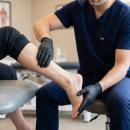
Clinician in black gloves palpating patient's lower leg and Achilles tendon area during clinical examination
Online Course Format:  Online
Course Tuition:   $40.00
Credit Hours ( CE ):  2
Contributor:  Michael Hall, DC, FIACN
CLICK HERE for a list of states, provinces and countries this course is accredited in.

Online Chiropractic CE Course Description & Course Details

ONLINE | RECORDED
CourseOrthopedics 217: Achilles Tendinitis — The Good, The Bad, and The Ugly
InstructorMichael Hall, DC, FIACN
CE Hours2 Hours
FormatOnline — Self-Paced, Available On Demand
Price$40.00
PACE Provider#34015544

Achilles tendinitis is one of the most common overuse injuries presenting in chiropractic practice — and its outcomes vary widely depending on how well it is identified and managed. In Orthopedics 217: Achilles Tendinitis — The Good, The Bad, and The Ugly, Dr. Michael Hall, DC, FIACN delivers a focused 2-hour online CE course that takes you through the full clinical picture: from straightforward cases that respond quickly to conservative care, to stubborn chronic tendinopathy presentations that test every tool in your toolkit. You will leave with a sharper clinical framework for history taking, examination, imaging, documentation, and multimodal management — all built around real-world patient presentations.

Dr. Michael Hall DC FIACN headshot

Michael Hall, DC, FIACN

Fellow, International Academy of Chiropractic Neurology

Dr. Michael Hall is a chiropractic educator and clinician with advanced training in chiropractic neurology. As a Fellow of the International Academy of Chiropractic Neurology (FIACN), Dr. Hall brings a neurology-informed, evidence-based lens to orthopedic examination and conservative management. He is one of CCEDseminars' most prolific instructors, with courses spanning orthopedics, neurology, documentation, ethics, and clinical compliance.

"CCED helps me stay sharp, up to date, and legally compliant. Their webinars are a must for any chiropractor who wants to grow their practice the right way."

— Reon Bailey, DC

"I've learned more here than in many live seminars. Thank you for making me a better doctor."

— Rob Rosenbaum, DC

Course Description

Achilles tendinitis is a common and often underestimated lower extremity condition that can significantly affect a patient's ability to perform daily activities, participate in sport, and maintain overall quality of life. While many cases resolve with appropriate early intervention, others progress to degenerative tendinopathy, partial rupture, or chronic pain — making accurate clinical assessment and timely, targeted management essential skills for every chiropractic practitioner.

In Orthopedics 217: Achilles Tendinitis — The Good, The Bad, and The Ugly, Dr. Michael Hall, DC, FIACN walks you through the complete clinical pathway for this condition — from first patient contact to discharge planning. The course begins with detailed history taking, focusing on the key questions that differentiate insertional from non-insertional tendinopathy, identify contributing biomechanical factors, and screen for systemic contributors such as fluoroquinolone use, inflammatory arthropathies, and metabolic conditions. A comprehensive physical examination sequence follows, covering palpation, range of motion, provocative tests, and functional movement screening relevant to the Achilles and surrounding structures.

From there, Dr. Hall addresses the full management toolkit: chiropractic treatment strategies including soft tissue therapy and joint mobilization; physical therapy rehabilitation protocols for progressive tendon loading; nutritional interventions targeting collagen synthesis and inflammation modulation; imaging indications and interpretation; and documentation and coding best practices that protect both the patient and the practice. The course concludes with a practical discussion of collaborative care — when to co-manage, when to refer, and how to structure outcomes-based communication with other providers.

Learning Objectives

Upon successful completion of this course, the participant will be able to:

  1. Integrate clinical evaluation techniques for Achilles tendinitis, including history-taking strategies and physical examination findings that differentiate presentations and guide management decisions.
  2. Develop new conservative treatment strategies for Achilles tendinitis, incorporating chiropractic techniques, progressive tendon loading protocols, and activity modification principles.
  3. Apply documentation and coding best practices in clinical settings when managing Achilles tendinitis and related lower extremity tendinopathies.
  4. Determine appropriate patient selection for collaborative treatment, including criteria for co-management with physical therapists, sports medicine physicians, and orthopedic specialists.
Course Outline

I. Patient History

  • Chief complaint, onset, and symptom progression
  • Insertional vs. non-insertional tendinopathy differentiation
  • Activity-related aggravating and relieving factors
  • Screening for systemic contributors (fluoroquinolone use, inflammatory arthropathies, metabolic conditions)
  • Prior treatment history and response

II. Physical Examination

  • Observation and gait analysis
  • Palpation of the Achilles tendon, insertional region, and retrocalcaneal bursa
  • Range of motion assessment — ankle dorsiflexion, plantarflexion, subtalar motion
  • Provocative tests — Royal London Hospital test, arc sign, Thompson test
  • Functional movement screening — single-leg heel raise, squat mechanics
  • Differential diagnosis — retrocalcaneal bursitis, partial rupture, Haglund deformity, posterior impingement

III. Imaging and Diagnostic Testing

  • Radiographic evaluation — calcaneal spurs and Haglund deformity
  • Diagnostic ultrasound — real-time tendon assessment
  • MRI indications — ruling out partial or full rupture
  • Interpreting findings in clinical context

IV. Chiropractic Treatment Methods

  • Soft tissue therapy — myofascial release, IASTM, cross-friction massage
  • Joint mobilization of the ankle, subtalar, and midfoot
  • Taping and orthotic considerations
  • Activity modification and load management protocols

V. Physical Therapy Approaches

  • Eccentric heel-drop protocol — Alfredson method
  • Heavy slow resistance training for tendinopathy
  • Stretching — gastrocnemius, soleus, plantar fascia
  • Progressive return-to-activity programming

VI. Nutritional Management

  • Anti-inflammatory nutrition strategies
  • Collagen synthesis support — vitamin C, gelatin/collagen supplementation
  • Omega-3 fatty acids and tendon tissue health

VII. Documentation, Coding, and Collaborative Care

  • ICD-10 coding for Achilles tendinitis and tendinopathy
  • SOAP note documentation pearls for tendinopathy management
  • Outcomes-based documentation to support medical necessity
  • Co-management criteria and referral indications
  • Communication with physical therapists, sports medicine, and orthopedic surgeons
Course Technology & Access

How to Join: The course title in your account is the access link. No software installation is required. The course is accessible through any modern browser on desktop, tablet, or mobile devices.

This is a self-paced online course available on demand. Once registered, you can access the course content at any time from your CCEDseminars account.

A CE certificate is issued upon from your account upon account successful completion of the course evaluation. Please retain your certificate for state licensing board submission.

State Approvals & Accreditation

CCEDseminars is a PACE-approved provider through the Federation of Chiropractic Licensing Boards (FCLB). PACE Provider #: 34015544.

Questions about your state's approved credit hours? Contact us at info@ccedseminars.com.

Frequently Asked Questions

What does "The Good, The Bad, and The Ugly" mean in context?

The title refers to the full clinical spectrum of Achilles tendinitis — straightforward cases that respond well to conservative care, more complex chronic presentations, and the most challenging degenerative or complicated cases. Dr. Hall addresses all three to prepare you for any presentation.

What topics are covered in this course?

The course covers patient history, physical examination, imaging and diagnostics, chiropractic treatment, physical therapy rehabilitation, nutritional management, documentation and coding, and collaborative care options.

How many CE hours does this course provide?

Orthopedics 217 provides 2 continuing education (CE) hours for licensed chiropractors.

How do I access this course after registering?

The course title in your account is the access link. No software installation is required. The course is accessible through any modern browser on desktop, tablet, or mobile devices.

What is the cost?

Orthopedics 217: Achilles Tendinitis is available for $40.00.

Is this course approved in my state?

CCEDseminars is a PACE-approved provider (FCLB Provider #34015544). Orthopedics 217 is approved in numerous U.S. states, Canadian provinces, and international regions. Please check the State Approvals section below on this page or contact us for details about your jurisdiction.

Ready to master Achilles tendinitis from history to discharge?

2 CE Hours | Online | $40.00 | PACE Approved #34015544

Register Now

References

  1. Alfredson H, Pietilä T, Jonsson P, Lorentzon R. Heavy-load eccentric calf muscle training for the treatment of chronic Achilles tendinosis. Am J Sports Med. 1998;26(3):360–366. doi:10.1177/03635465980260030301. PubMed
  2. Beyer R, Kongsgaard M, Hougs Kjær B, ØHlenschlæger T, Kjær M, Magnusson SP. Heavy slow resistance versus eccentric training as treatment for Achilles tendinopathy. Am J Sports Med. 2015;43(7):1704–1711. doi:10.1177/0363546515584760. PubMed
  3. Maffulli N, Wong J, Almekinders LC. Types and epidemiology of tendinopathy. Clin Sports Med. 2003;22(4):675–692. doi:10.1016/s0278-5919(03)00004-8. PubMed
  4. Shaw G, Lee-Barthel A, Ross ML, Wang B, Baar K. Vitamin C–enriched gelatin supplementation before intermittent activity augments collagen synthesis. Am J Clin Nutr. 2017;105(1):136–143. doi:10.3945/ajcn.116.138594. PubMed
Content Optimization v3.1 | Updated April 2026
This online chiropractic course is accredited in the following states:

Alaska, Colorado, Connecticut, Delaware, District Of Columbia, Idaho, Illinois, Indiana, Iowa, Kansas, Maine, Maryland, Massachusetts, Michigan, Minnesota, Missouri, Montana, Nebraska, New Hampshire, New Jersey, New York, North Carolina, North Dakota, Ohio, Oregon, Puerto Rico, Rhode Island, South Carolina, South Dakota, Tennessee, Texas, Utah, Vermont, Virginia, Washington, West Virginia, Wyoming,

This online chiropractic course is accredited in the following Canadian Provinces:

British Columbia, Manitoba, New Brunswick, Nova Scotia, Ontario, Yukon,

This online chiropractic course is accredited in the following regions outside the United States & Canada:

Argentina, Australia, Bahamas, Belgium, Bolivia, Cayman Islands, Chili, Columbia, Costa Rica, Cyprus, Denmark, Dominican Republic, Ecuador, Fiji, Finland, Greece, Guam, Hong Kong, Hungary, Iceland, Iran, Israel, Italy, Jamaica, Japan, Jordan, Korea, Lebanon, Libya, Liechtenstein, Malaysia, Mexico, Nambia, New Zealand, Northern Ireland, Norway, Panama, Peru, Philippines, Saint Kitts & Nevis, Saudi Arabia, Singapore, Spain, Sweden, Switzerland, Taiwan, Thailand, Trinidad & Tobago, United Arab Emirates, United Kingdom, Venezuela, Virgin Island, Zimbabwe,