Orthopedics

Orthopedics 219: The Hip | Chiropractic CE | CCEDseminars

<< Back to online CE course catalog

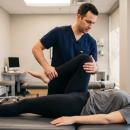
Chiropractor in scrubs performing hip range of motion assessment on patient lying supine on treatment table
Online Course Format:  Online
Course Tuition:   $40.00
Credit Hours ( CE ):  2
Contributor:  Dennis O'Hara, DC, DACBSP
CLICK HERE for a list of states, provinces and countries this course is accredited in.

Online Chiropractic CE Course Description & Course Details

ONLINE | RECORDED
CourseOrthopedics 219: The Hip
InstructorDennis O'Hara, DC, DACBSP
CE Hours2 Hours
FormatOnline — Self-Paced, Available On Demand
Price$40.00
PACE Provider#34015544

The hip is one of the most complex and clinically consequential joints in the body — a weight-bearing powerhouse that anchors the lower extremity kinetic chain and profoundly influences lumbar spine mechanics. In Orthopedics 219: The Hip, Dr. Dennis O'Hara, DC, DACBSP delivers a comprehensive 2-hour online CE course covering hip and pelvis anatomy, biomechanics, closed kinetic chain considerations, and the full spectrum of clinical evaluation and conservative management for hip conditions encountered in everyday chiropractic practice. Whether you are refining your examination approach, sharpening your differential diagnosis skills, or expanding your treatment toolkit, this course provides the clinical depth and practical insight to elevate your hip care.

Dr. Dennis O'Hara DC DACBSP headshot

Dennis O'Hara, DC, DACBSP

Diplomate, American Chiropractic Board of Sports Physicians

Dr. Dennis O'Hara is a Diplomate of the American Chiropractic Board of Sports Physicians (DACBSP) with extensive clinical expertise in sports chiropractic, orthopedic evaluation, and lower extremity biomechanics. A seasoned educator at CCEDseminars, Dr. O'Hara brings a sports medicine perspective to orthopedic CE — grounding clinical content in functional anatomy, movement assessment, and evidence-based conservative care.

"CCED helps me stay sharp, up to date, and legally compliant. Their webinars are a must for any chiropractor who wants to grow their practice the right way."

— Reon Bailey, DC

"I've learned more here than in many live seminars. Thank you for making me a better doctor."

— Rob Rosenbaum, DC

Course Description

The hip joint is the anatomical and biomechanical crossroads of the lower extremity and lumbar spine. Its role in weight-bearing, locomotion, and load transfer makes it both clinically significant and diagnostically challenging. Hip pain is a common presenting complaint in chiropractic practice, yet accurate identification of the underlying condition — and effective conservative management — requires a thorough command of anatomy, a systematic examination approach, and a working knowledge of the conditions most likely to present in an office-based setting.

Orthopedics 219: The Hip begins with a detailed review of hip and pelvis anatomy — the osseous architecture of the acetabulum and femoral head, the labrum, the capsular and ligamentous restraints, and the muscular anatomy governing hip motion across all planes. Particular attention is given to the iliofemoral, pubofemoral, and ischiofemoral ligaments, and to the deep external rotators and hip abductors as dynamic stabilizers of the joint.

The course then explores closed kinetic chain biomechanics — how hip mechanics influence and are influenced by foot pronation, knee valgus, pelvic tilt, and lumbar lordosis. Understanding these interdependencies is essential for designing treatment plans that address root causes rather than isolated symptoms.

Clinical evaluation is addressed in depth, including history taking, orthopedic special tests, gait analysis, and the use of imaging in diagnosing hip conditions. Dr. O'Hara then walks through a range of clinical conditions — from hip flexor and adductor strains to femoroacetabular impingement, greater trochanteric pain syndrome, piriformis syndrome, and hip osteoarthritis — covering differential diagnosis and evidence-based, conservative, office-based treatment strategies for each.

Learning Objectives

Upon successful completion of this course, the participant will be able to:

  1. Master the anatomy of the hip and pelvis, including osseous structures, ligamentous restraints, the acetabular labrum, and the musculature governing hip motion and dynamic joint stability.
  2. Discuss concepts related to the closed kinetic chain and explain how hip biomechanics influence and are influenced by foot, knee, pelvic, and lumbar spine mechanics.
  3. Outline various clinical conditions of the hip, including their presentation, differential diagnosis, and relevant examination and imaging findings.
  4. Develop clinical insights for improving patient outcomes through evidence-based, conservative, office-based treatment strategies for common hip conditions.
Course Outline

I. Hip and Pelvis Anatomy

  • Osseous anatomy — acetabulum, femoral head, greater and lesser trochanter
  • Acetabular labrum — structure and clinical significance
  • Ligamentous anatomy — iliofemoral, pubofemoral, ischiofemoral ligaments
  • Hip capsule and its role in joint stability
  • Muscular anatomy — hip flexors, extensors, abductors, adductors, and deep external rotators
  • Neurovascular supply of the hip joint

II. Closed Kinetic Chain Considerations

  • Principles of closed kinetic chain biomechanics in weight-bearing
  • Hip-knee-ankle interdependence — foot pronation, tibial rotation, and hip loading
  • Pelvic tilt and lumbar spine relationship to hip mechanics
  • Gait analysis — Trendelenburg sign, antalgic gait, gluteal insufficiency patterns

III. Clinical Conditions of the Hip

  • Hip flexor and adductor strains
  • Greater trochanteric pain syndrome (GTPS) / trochanteric bursitis
  • Piriformis syndrome and deep gluteal syndrome
  • Femoroacetabular impingement (FAI) — cam and pincer types
  • Acetabular labral tears
  • Hip osteoarthritis — clinical presentation and conservative management
  • Snapping hip syndrome (coxa saltans)
  • Iliopsoas tendinopathy

IV. Clinical Evaluation and Imaging

  • History taking — hip pain patterns, activity-related factors, red flag screening
  • Orthopedic special tests — FABER, FADIR, Thomas test, Ober test, log roll test
  • Imaging indications — plain radiograph, MRI, MR arthrography, diagnostic ultrasound
  • Interpreting imaging findings in clinical context

V. Conservative Treatment Strategies

  • Chiropractic adjustive techniques for the hip and pelvis
  • Soft tissue therapy — myofascial release, IASTM, trigger point therapy
  • Rehabilitative exercise — hip abductor and external rotator strengthening, core stabilization
  • Stretching protocols — hip flexors, piriformis, IT band, adductors
  • Activity modification and load management
  • Collaborative care — referral criteria and co-management with orthopedic and sports medicine providers
Course Technology & Access

How to Join: The course title in your account is the access link. No software installation is required. The course is accessible through any modern browser on desktop, tablet, or mobile devices.

This is a self-paced online course available on demand. Once registered, you can access the course content at any time from your CCEDseminars account.

A CE certificate is issued upon successful completion of the course evaluation. Please retain your certificate for state licensing board submission.

State Approvals & Accreditation

CCEDseminars is a PACE-approved provider through the Federation of Chiropractic Licensing Boards (FCLB). PACE Provider #: 34015544.

Questions about your state's approved credit hours? Contact Us.

Frequently Asked Questions

What hip conditions are covered in this course?

The course covers hip flexor and adductor strains, greater trochanteric pain syndrome, piriformis syndrome, femoroacetabular impingement (FAI), acetabular labral tears, hip osteoarthritis, snapping hip syndrome, and iliopsoas tendinopathy — with differential diagnosis and conservative management for each.

What is the closed kinetic chain and why does it matter?

The closed kinetic chain describes the linked mechanical relationship between weight-bearing joints. Hip dysfunction influences and is influenced by foot, knee, pelvic, and lumbar mechanics — making kinetic chain assessment essential for effective hip care.

How many CE hours does this course provide?

Orthopedics 219: The Hip provides 2 continuing education (CE) hours for licensed chiropractors.

How do I access this course after registering?

The course title in your account is the access link. No software installation is required. The course is accessible through any modern browser on desktop, tablet, or mobile devices.

What is the cost?

Orthopedics 219: The Hip is available for $40.00.

Is this course approved in my state?

CCEDseminars is a PACE-approved provider (FCLB Provider #34015544). Orthopedics 219 is approved in numerous U.S. states, Canadian provinces, and international regions. Please check the State Approvals section below on this page or Contact Us for details about your jurisdiction.

Ready to deepen your clinical command of the hip?

2 CE Hours | Online | $40.00 | PACE Approved #34015544

Register Now

References

  1. Ganz R, Parvizi J, Beck M, Leunig M, Nötzli H, Siebenrock KA. Femoroacetabular impingement: a cause for osteoarthritis of the hip. Clin Orthop Relat Res. 2003;(417):112–120. doi:10.1097/01.blo.0000096804.78689.c2. PubMed
  2. Grimaldi A, Mellor R, Hodges P, Bennell K, Wajswelner H, Vicenzino B. Gluteal tendinopathy: a review of mechanisms, assessment and management. Sports Med. 2015;45(8):1107–1119. doi:10.1007/s40279-015-0336-5. PubMed
  3. Lewis CL, Sahrmann SA. Acetabular labral tears. Phys Ther. 2006;86(1):110–121. doi:10.1093/ptj/86.1.110. PubMed
  4. Bolgla LA, Malone TR. Piriformis syndrome: evidence of the validity of a clinical diagnosis and the diagnostic value of magnetic resonance neurography. J Athl Train. 2004;39(4):364–372. PMC535524
Content Optimization v3.1 | Updated April 2026
This online chiropractic course is accredited in the following states:

Alaska, Colorado, Connecticut, Delaware, District Of Columbia, Idaho, Illinois, Indiana, Iowa, Kansas, Maine, Maryland, Massachusetts, Michigan, Minnesota, Missouri, Montana, Nebraska, New Hampshire, New Jersey, New York, North Carolina, North Dakota, Ohio, Oregon, Puerto Rico, Rhode Island, South Carolina, South Dakota, Tennessee, Texas, Utah, Vermont, Virginia, Washington, West Virginia, Wyoming,

This online chiropractic course is accredited in the following Canadian Provinces:

British Columbia, Manitoba, New Brunswick, Nova Scotia, Ontario, Yukon,

This online chiropractic course is accredited in the following regions outside the United States & Canada:

Argentina, Australia, Bahamas, Belgium, Bolivia, Cayman Islands, Chili, Columbia, Costa Rica, Cyprus, Denmark, Dominican Republic, Ecuador, Fiji, Finland, Greece, Guam, Hong Kong, Hungary, Iceland, Iran, Israel, Italy, Jamaica, Japan, Jordan, Korea, Lebanon, Libya, Liechtenstein, Malaysia, Mexico, Nambia, New Zealand, Northern Ireland, Norway, Panama, Peru, Philippines, Saint Kitts & Nevis, Saudi Arabia, Singapore, Spain, Sweden, Switzerland, Taiwan, Thailand, Trinidad & Tobago, United Arab Emirates, United Kingdom, Venezuela, Virgin Island, Zimbabwe,