 Login
Login


Home › Online Course Categories › Evidence-Based Practice › 202: Documenting Clinical Outcomes
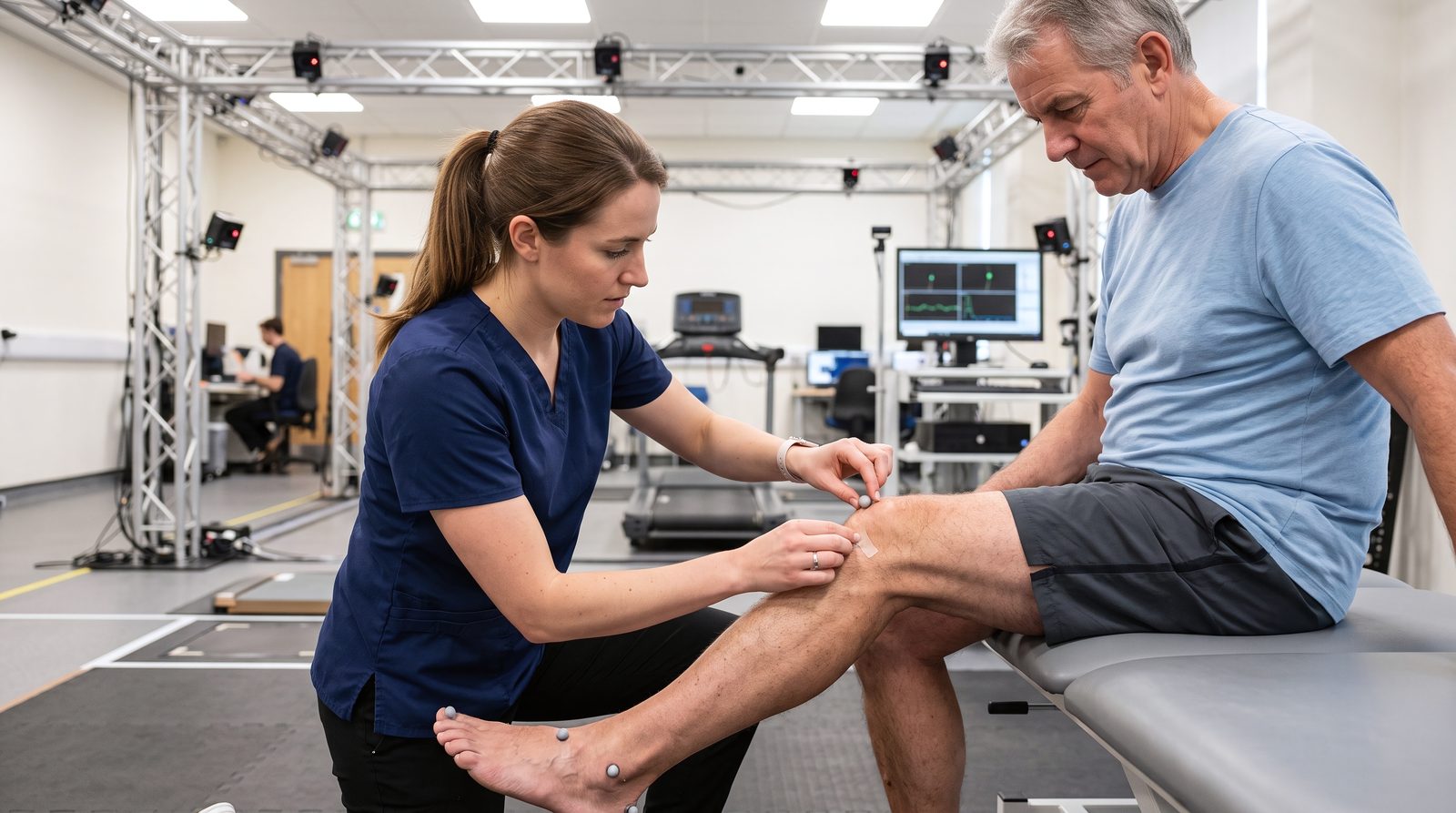
Evidence-Based Practice 202 — at a Glance
| Course: | Documenting Clinical Outcomes · 2 PACE-approved CE hours |
| Faculty: | Monte Horne, DC · Founder and CE Program Director, CCEDseminars |
| Format: | On-demand online video with case walk-throughs and assessment · downloadable handouts · instant certificate |
| Pricing: | $20/hr · automatic 10% off at 6–9 hrs, 20% off at 10+ hrs in one order · no promo codes |
| Approval: | PACE Provider #34015544 · co-sponsored by Texas Chiropractic College · acceptance varies by state |



Board-approved · PACE Provider #34015544 · CE Broker auto-reporting for states served · Instant certificate
“Patient is improving” is not a clinical finding. It is an opinion in a file that will one day be read by someone who does not know you. Medical necessity is proved with measurement — a number at intake, a number at reassessment, and a treatment plan whose goals were written in the same units. Everything else is narrative, and narrative is what auditors discount.
Dr. Monte Horne works the chiropractic record as an instrument: which components withstand audit scrutiny, which standardized outcome assessment tools and measurable physical findings belong at intake, how to write goals that satisfy both the patient’s progress and the payer’s requirements, and how to time and structure the formal reassessments that make improvement visible rather than asserted.
Choose Your Evidence-Based Practice Path — Three Lanes, One Curriculum
The Evidence-Based Practice series is a method curriculum, not a regional one: it runs from how you evaluate a patient, through how you image and document, to how care is delivered and shared. Nine courses, two hours each.
1 · The Clinical Encounter (201–202)
The foundation the rest of the curriculum rests on: how a patient is evaluated, and how that evaluation is recorded so it holds up. You are here: Evidence-Based Practice 202.
201: Patient Evaluation
202: Documenting Clinical Outcomes
2 · Imaging in Clinical Practice (203–204)
Modality selection, red-flag criteria, interpretation and the medicolegal and radiation-safety standards that govern ordering images in a chiropractic setting.
203: Imaging in Clinical Practice I
204: Imaging in Clinical Practice II
3 · Care Delivery and Collaboration (205–209)
Modes of care, collaborative management by region, and the two regional spine files — where evidence-based method becomes an actual treatment plan.
205: Modes of Care
206: Collaborative Care for the Upper Extremities
207: Lower Extremity Collaborative Care
208: Lumbar Spine Management
209: Cervical Spine Management
Every course in the series is 2 PACE-approved CE hours at $40, and the automatic bundle discounts apply across the whole lane.
What You'll Learn in Evidence-Based Practice 202
Build a record that withstands audit. Define the essential components of the evidence-based chiropractic record — the elements a reviewer looks for first, and the omissions that turn a defensible file into a contested one.
Measure both halves of the case. Implement standardized outcome assessment tools for the subjective side and measurable physical findings for the objective side, so change is expressed in numbers that can be compared across visits.
Write goals in the units you will report. Incorporate quantitative clinical goals that drive patient progress and satisfy payer requirements, so the treatment plan and the reassessment speak the same language.
Prove necessity with data. Master the timing and structure of formal reassessments, and use measurable findings to establish a defensible link between findings, diagnosis and the care you delivered.
Your Evidence-Based Practice Faculty
Monte Horne, DC — instructor of this course — leads the Evidence-Based Practice curriculum through evaluation, documentation, imaging, modes of care and collaborative management (201–207). Founder and CE Program Director of CCEDseminars, a Designated Doctor for the Texas Department of Insurance since 1996 and a peer reviewer and expert witness in chiropractic cases, he teaches documentation from the side of the desk where records are judged.
Steve Yeomans, DC, FACO closes the series with the two regional management files, lumbar and cervical spine (208–209), as a Fellow of the Academy of Chiropractic Orthopedists and author of several authoritative texts on clinical outcomes and orthopedic assessment.
Full bios and the complete instructor roster: CCEDseminars faculty page.
Where Evidence-Based Practice Hours Count — State Rules Worth Knowing
Evidence-based practice coursework is clinical subject matter — evaluation, documentation, imaging, modes of care and collaborative management — which is exactly what several state boards ask for. In Iowa, these hours serve the 36-hour clinical case-management minimum; in Rhode Island, they address the 50-of-60 clinical requirement; and in Vermont — where practice-building coursework earns nothing — patient-care education like this counts fully under the clinical-focus rule.
Online-format allowances still vary by state — some accept every hour online, others cap distance learning or require in-person blocks. Check your state's guide in the full state directory before building your renewal plan.
Build Your Evidence-Based Practice Block
Every course in the Evidence-Based Practice series runs 2 hours at $40, so the automatic discounts do the bundling for you: 6–9 hours in one order earns 10% off, and 10 or more earns 20% off — the full nine-course series is 18 hours at roughly $288 instead of $360, with no promo codes. This course completes the clinical encounter lane with 201 Patient Evaluation, which supplies the findings this record has to carry; 203 Imaging in Clinical Practice I and 205 Modes of Care extend the same standard into imaging orders and treatment selection. Browse Evidence-Based Practice Courses
Evidence-Based Practice 202 — Frequently Asked Questions
What does Evidence-Based Practice 202 cover?
This course works the chiropractic record as the instrument that proves medical necessity. Also known as chiropractic documentation training, SOAP note and outcome measure instruction, or defensible record-keeping, it covers the essential components of a record that withstands audit, quantitative subjective and objective measures, goal-oriented treatment planning that satisfies payer requirements, the timing and structure of formal reassessments, and using measurable data to establish medical necessity.
How many CE hours is this course, and what does it cost?
Evidence-Based Practice 202 is a 2-hour, PACE-approved online course priced at $40 — the standard $20 per CE credit hour across the CCEDseminars catalog. It is recorded, self-paced, and includes video and handouts.
My notes keep getting flagged in review — what am I actually missing?
Almost always the measurement. This course moves the record from qualitative description to quantitative data: standardized outcome assessment tools and measurable physical findings at intake, treatment goals written in those same units, and formal reassessments timed and structured so that improvement is demonstrated rather than asserted.
Who teaches Evidence-Based Practice 202?
Monte Horne, DC — founder and CE Program Director of CCEDseminars, a Designated Doctor for the Texas Department of Insurance and a longstanding peer reviewer and expert witness in chiropractic cases. He has spent decades reading other clinicians’ records professionally, which is the perspective this course is taught from.
Will this course count toward my state CE requirement?
CCEDseminars is a PACE-recognized provider (#34015544) and this course is accepted in Texas and 40-plus additional states, with CE Broker auto-reporting where applicable. Requirements vary by board, so confirm your state’s current rules before you enroll.
State Approval and Licensing Reminder
Continuing education requirements — including online-hour caps and clinical-hour minimums — vary by jurisdiction. Review the online chiropractic CE guidelines page and contact CCEDseminars with questions about your specific licensing requirements before registering.
Ready to Enroll in Evidence-Based Practice 202?
2 CE hours · $40 · online & self-paced · instant certificate. Add it to your cart, or pair it with 201 Patient Evaluation to complete the clinical encounter lane.
CCEDseminars · PACE Provider #34015544 · Reviewed by Monte Horne, DC · Last updated September 3, 2026 (CT)