 Login
Login


Home › Online Course Categories › Adjusting & Manual Therapy › 209: Lumbar & Pelvic Techniques
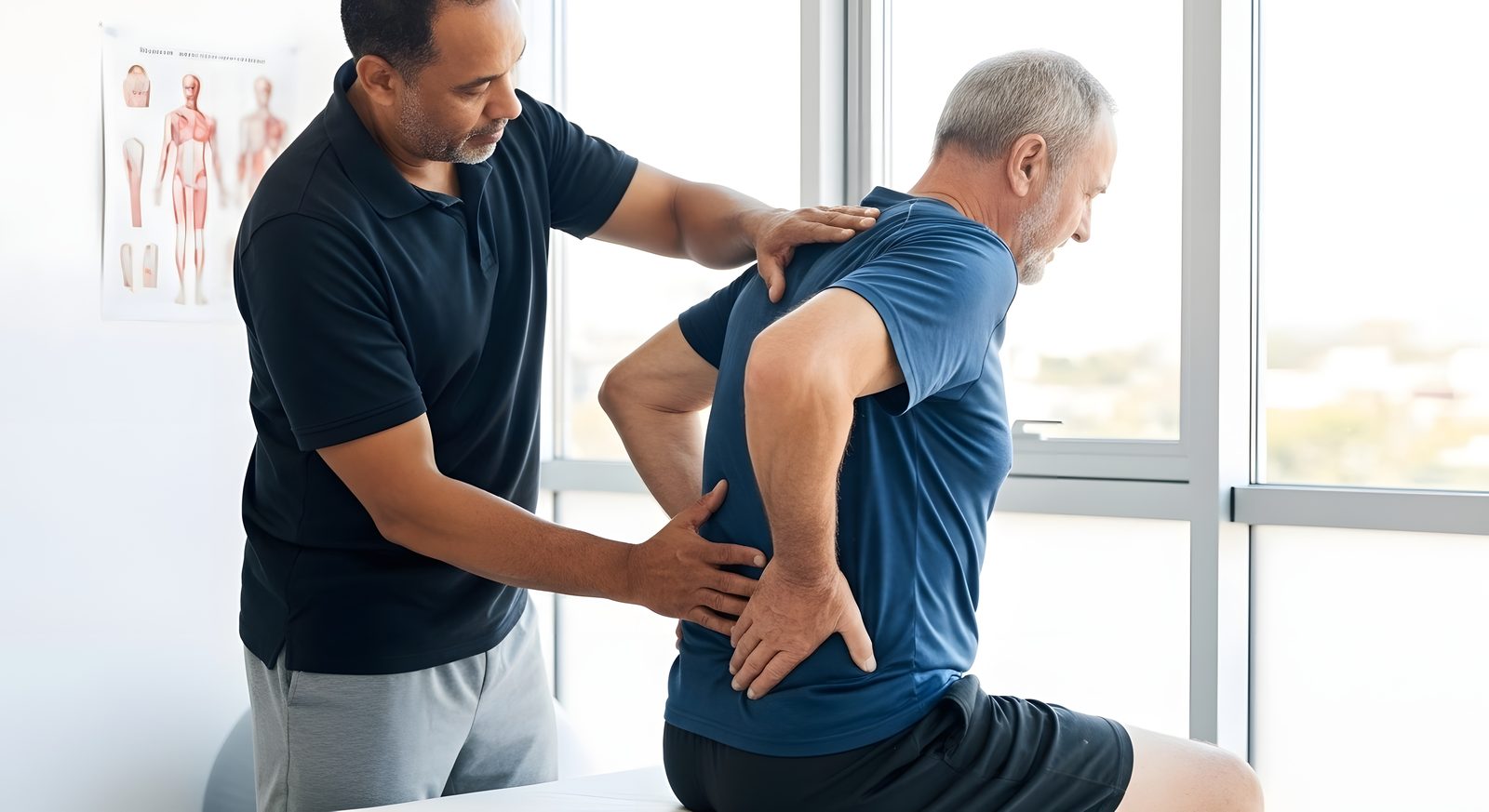
Adjusting & Manual Therapy 209 — at a Glance
| Course: | Lumbar & Pelvic Techniques · 2 CE hours · $40 |
| Faculty: | Donald Ozello, DC, CCN, CCSM · sports-medicine chiropractor and extremity care specialist |
| Format: | On-demand online video with technique demonstrations and assessment · downloadable notes · instant certificate |
| Pricing: | $20/hr · automatic 10% off at 6–9 hrs, 20% off at 10+ hrs in one order · no promo codes |
| Approval: | PACE Provider #34015544 · co-sponsored by Texas Chiropractic College · acceptance varies by state |



Board-approved · PACE Provider #34015544 · CE Broker auto-reporting for states served · Instant certificate
Adjusting & Manual Therapy 209 is a comprehensive, clinically focused exploration of chiropractic care for the lumbar spine and pelvis — the region behind the single most common reason a patient walks into a chiropractic office. Dr. Donald Ozello pairs lumbopelvic biomechanics with step-by-step technique demonstrations: precise chiropractic adjustments for the lumbar spine and sacroiliac joints, targeted muscle therapies for the tissues that hold the segment fixed, and stretching methods that restore function and optimize nerve flow to the lumbar spine, pelvis, and lower extremities.
Low back pain arrives in every form — the acute lift, the chronic desk posture, the sacroiliac joint that has been "out" for years, the sciatic leg that started as a back complaint — and the doctor who can separate traumatic from non-traumatic drivers, find the actual fixation, and treat the soft tissue around it gets results the doctor who adjusts L5 every visit does not. This 2-hour online course is built for exactly that, with in-office protocols that apply the next morning. Every completion generates an instant certificate for your renewal file.
Choose Your Adjusting & Manual Therapy CE Path — Three Lanes, One Curriculum
The catalog is organized as a curriculum, not a pile of hours — eleven 2-hour courses covering the whole kinetic chain from TMJ to toe. Start in the lane that matches your patient mix; the full catalog lives on the Adjusting & Manual Therapy category page.
1 · Spine, Ribs & TMJ
The axial skeleton and its cage — cervical through pelvis, the costals, and the table-assisted delivery that serves all of them. You are here: Adjusting & Manual Therapy 209.
202: Adjusting the Costals
207: Thoracic Spine & Rib Cage
208: Cervical Spine & TMJ
209: Lumbar & Pelvic Techniques
210: Drop Table Technique
2 · Extremities
Shoulder to hand and hip to foot — the appendicular territory most catalogs leave thin.
203: Shoulder Treatment Techniques
204: Lower Extremity Techniques
205: Upper Extremity Techniques
206: Hip, Thigh & Knee
3 · Soft Tissue & Assisted Methods
The work around the adjustment — myofascial reasoning and partner-assisted stretching that make joint corrections last.
201: Myofascial Dysfunction
211: Partner Assisted Stretching
New technique courses are added to these lanes as faculty release them.
What You'll Learn in Adjusting & Manual Therapy 209
• Differentiate traumatic from non-traumatic conditions of the lumbar spine and sacroiliac joints, and select the in-office chiropractic treatment strategy each one calls for.
• Execute chiropractic adjustment techniques for the lumbar spine and pelvis — patient position, contacts, line of drive, and stabilization for each — including sacroiliac joint corrections.
• Apply precise muscle work to enhance lumbar spine and pelvic function and address the myofascial drivers of recurrence.
• Integrate adjusting, muscle work, and effective stretching methods into a single treatment plan that optimizes musculoskeletal function and nerve flow to the lumbar spine, pelvis, and lower extremities.
Your Adjusting & Manual Therapy Faculty
Donald Ozello, DC, CCN, CCSM — instructor of this course — leads nine of the eleven courses in the series (203–211), shoulder through foot, spine, drop table, and partner-assisted stretching. A 1995 graduate of the Los Angeles College of Chiropractic, Navy veteran, and founder of Championship Chiropractic, Dr. Ozello is certified in sports medicine and clinical nutrition and serves as faculty for CCEDseminars and Texas Chiropractic College. He also authors the CCEDseminars Athletic Injuries series, and his clinical philosophy — injury prevention, functional recovery, and long-term performance from elite athletes to aging adults — runs through every technique module he teaches.
Michael Hall, DC, FIACN teaches costal adjusting (202) with a chiropractic neurologist's perspective — rib mechanics, respiratory linkage, and the neurological reasoning behind thoracic cage work. A Fellow of the International Academy of Chiropractic Neurology, Dr. Hall also leads the CCEDseminars Neurology series.
Howard Benedikt, DC, DCBCN opens the series with myofascial dysfunction (201), framing soft-tissue evaluation within whole-patient physiology from his board certification in clinical nutrition.
Full bios and the complete instructor roster: CCEDseminars faculty page.
Where Adjusting & Manual Therapy Hours Count — State Rules Worth Knowing
Technique is core clinical subject matter, which is exactly what several state boards ask for. In Iowa, technique hours feed the 36-hour clinical case-management minimum; in Rhode Island, they serve the 50-of-60 clinical requirement; in Vermont — where practice-management and philosophy coursework earns no credit at all — technique sits squarely inside the clinical-focus rule; and in Montana, where philosophy is capped at 2 of 12 hours, technique fills the clinical balance cleanly.
Online-format allowances still vary by state — some accept every hour online, others cap distance learning or require in-person blocks. Check your state's guide in the full state directory before building your renewal plan.
Build Your Technique Block
Every course in the series is 2 hours at $40, so the automatic discounts do the bundling for you: any three courses (6 hours) earns 10% off, and five or more (10+ hours) in a single order earns 20% off — the full 22-hour series lands at roughly $352 instead of $440, with no promo codes. The natural pairing for this course is 210 Drop Table Technique, which delivers the same lumbar, sacral, and ilium corrections low-force for the patient who cannot tolerate a manual thrust, and 206 Hip, Thigh & Knee continues the chain below the pelvis; the rest of the Spine, Ribs & TMJ lane — 202, 207, and 208 — completes the axial skeleton. Browse Adjusting & Manual Therapy Courses
Adjusting & Manual Therapy 209 — Frequently Asked Questions
What does Adjusting & Manual Therapy 209 cover?
The lumbar spine and pelvis: in-office chiropractic treatment strategies for traumatic and non-traumatic conditions of the lumbar spine and sacroiliac joints, step-by-step adjustment techniques for the lumbar spine and pelvis, precise muscle work to enhance lumbopelvic function, and stretching methods integrated with the adjustment to optimize nerve flow to the lumbar spine, pelvis, and lower extremities. Also known as lumbar adjusting, low back manipulation, pelvic adjusting, sacroiliac joint technique, SI joint adjustment, and lumbopelvic manual therapy for chiropractors.
How many CE hours is Adjusting & Manual Therapy 209, and what is the format?
2 CE hours, fully online and self-paced — step-by-step instructional video modules with technique demonstrations and clinical explanation, followed by knowledge checks. Your certificate is available in your account immediately upon completion, and enrollment includes one year of access.
Does this course address sciatica and sacroiliac joint dysfunction?
Yes. Low back pain, sacroiliac joint syndrome, and sciatic-pattern leg complaints are the presentations the course is built around: it teaches the lumbar and pelvic adjustments, the sacroiliac corrections, the muscle work, and the stretching that go into a conservative treatment plan for each, alongside the evaluation that tells you whether the driver is a lumbar segment, the SI joint, or the soft tissue holding either one fixed.
Is this course accepted for my state's chiropractic license renewal?
Adjusting & Manual Therapy 209 is a PACE Provider #34015544 program co-sponsored by Texas Chiropractic College and is accepted in most U.S. states plus the District of Columbia and Puerto Rico, six Canadian provinces, and more than 50 international jurisdictions. The complete approval list appears at the bottom of this page, and your state's online-hour rules are summarized in its CE guidelines page.
How do discounts and certificates work?
Courses are $20 per credit hour, and discounts apply automatically in a single order — 10% off at 6–9 hours, 20% off at 10 or more. No promo codes. Each completion generates an instant certificate with a permanent copy in your account dashboard, and CE Broker reporting is handled automatically for states served.
State Approval and Licensing Reminder
Continuing education requirements — including online-hour caps and clinical-hour minimums — vary by jurisdiction. Review the online chiropractic CE guidelines page and contact CCEDseminars with questions about your specific licensing requirements before registering.
Ready to Enroll in Adjusting & Manual Therapy 209?
2 CE hours · $40 · online & self-paced · instant certificate. Add it to your cart, or pair it with 210 for the low-force version of the same corrections.
CCEDseminars · PACE Provider #34015544 · Reviewed by Monte Horne, DC · Last updated August 24, 2026 (CT)