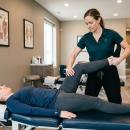
| Catalog: | 11 online courses · 22 total CE hours · 2 hours each |
| Coverage: | TMJ to toe — cervical, thoracic, ribs, lumbar-pelvic, upper & lower extremities, soft tissue, drop table |
| Faculty: | Donald Ozello, DC, CCN, CCSM · Michael Hall, DC, FIACN · Howard Benedikt, DC, DCBCN |
| Format: | On-demand online video with assessment · instant certificate |
| Pricing: | $20/hr ($40/course) · automatic 10% off at 6–9 hrs, 20% off at 10+ hrs |
Check your state's CE guidelines | Meet the faculty
Browse the Adjusting & Manual Therapy Courses ↓


Board-approved · PACE Provider #34015544 · CE Broker auto-reporting for states served · Instant certificate
The CCEDseminars adjusting and manual therapy curriculum covers the working chiropractor's entire technique territory — cervical spine and TMJ, thoracic spine and rib cage, lumbar-pelvic mechanics, both extremities from shoulder to foot, myofascial and partner-assisted soft-tissue methods, and drop table technique. Every course is built around the same three questions: what does the tissue need, what is the safest effective way to deliver it, and how do you document the encounter so the care defends itself.
Adjusting is the center of chiropractic practice — and it's also where assessment discipline matters most: contraindication screening, force and vector selection, patient positioning, and knowing when the plan calls for soft-tissue work, an instrument-assisted approach, or referral rather than a higher-force maneuver. This category treats technique as clinical reasoning made physical. It is refresher-grade for experienced hands and framework-grade for doctors expanding into regions — extremities, TMJ, ribs — that many practices under-serve.
The catalog is organized by body region and method — work a lane end-to-end, or pick the regions your patient mix demands. Each course appears in the grid at the bottom of this page.
The axial skeleton lane — from craniocervical junction and jaw through the rib cage to the pelvis, plus table-assisted delivery.
AMT 202: Adjusting the Costals
AMT 207: Thoracic Spine & Rib Cage
AMT 208: Cervical Spine & TMJ
AMT 209: Lumbar & Pelvic Techniques
AMT 210: Drop Table Technique
The appendicular lane — shoulder girdle through hand, hip through foot; the regions that separate full-body adjusters from spine-only practices.
AMT 203: Shoulder Treatment Techniques
AMT 204: Lower Extremity Techniques
AMT 205: Upper Extremity Techniques
AMT 206: Hip, Thigh & Knee
The hands-on complement to the adjustment — myofascial reasoning and partner-assisted stretching that extend what the visit delivers.
AMT 201: Myofascial Dysfunction
AMT 211: Partner Assisted Stretching
New adjusting and manual therapy courses are added to these lanes as faculty release them — the course grid below always shows the current catalog.
• Region-by-region adjusting technique — setup, patient positioning, contact, vector, and delivery — across the spine, rib cage, TMJ, and both extremities.
• Assessment and clinical decision-making that precede the adjustment: contraindication screening, tissue evaluation, and choosing manual, instrument-assisted, or table-assisted delivery.
• Soft-tissue methods — myofascial evaluation and partner-assisted stretching — that integrate with adjusting in a single care plan.
• Safety, risk management, and documentation habits that make hands-on care defensible — the record that matches the reasoning.
Donald Ozello, DC, CCN, CCSM leads the series — nine of the eleven courses, spanning every extremity region, the full axial spine, drop table technique, and partner-assisted stretching. A certified sports-medicine chiropractor who also authors our Athletic Injuries curriculum, he teaches technique the way it's used on active patients: assessment first, mechanism understood, delivery matched to the tissue.
Michael Hall, DC, FIACN — Fellow of the International Academy of Chiropractic Neurology and lead of our Neurology series — brings the neurologist's lens to costal adjusting: rib mechanics, respiratory linkage, and the neurological reasoning behind thoracic cage work.
Howard Benedikt, DC, DCBCN opens the series with myofascial dysfunction — board-certified in clinical nutrition, he frames soft-tissue evaluation within whole-patient physiology rather than as an isolated modality.
Full bios and the complete instructor roster: CCEDseminars faculty page.
Adjusting and manual therapy coursework is core clinical subject matter — which matters wherever your state splits clinical from non-clinical hours. In Iowa, technique hours feed the 36-hour clinical case-management minimum; in Rhode Island, they serve the 50-of-60 clinical requirement; in Vermont — where practice-management and philosophy coursework earns no credit at all — technique sits squarely inside the clinical-focus rule; and in Montana, where philosophy is capped at 2 of 12 hours, technique fills the clinical balance cleanly.
Online-format allowances still vary by state — some accept every hour online, others cap distance learning or require in-person blocks. Check your state's guide in the full state directory before building your renewal plan.
Every course is 2 hours at $40, so the automatic discounts do the bundling for you: any three courses (6 hours) earns 10% off, and five or more courses (10+ hours) in a single order earns 20% off — a complete lane, or the full 22-hour series at roughly $352 instead of $440. No promo codes, ever; the discount calculates itself at checkout.
The full technique territory of chiropractic practice: cervical spine and TMJ, thoracic spine and rib cage, costal adjusting, lumbar-pelvic techniques, shoulder and upper extremity, hip, thigh, knee and lower extremity, drop table technique, myofascial dysfunction, and partner-assisted stretching — each course pairing hands-on method with the assessment and safety reasoning behind it.
Follow your patient mix. Spine-centered practices typically start in the Spine, Ribs & TMJ lane; doctors expanding whole-body skills start with the Extremities lane — shoulder and lower extremity are the most commonly under-served regions; and the Soft Tissue & Assisted Methods lane complements either path. The pathway map above shows the current course in each lane.
Adjusting and manual therapy is core clinical subject matter, which serves the clinical-hour minimums states like Iowa and Rhode Island impose and fits clinical-focus rules like Vermont's. Online-format allowances still vary by jurisdiction — verify your state's online cap and any in-person requirements in its guide before registering.
Practicing clinician faculty: Donald Ozello, DC, CCN, CCSM — certified in sports medicine and author of our Athletic Injuries series — leads most of the curriculum; Michael Hall, DC, FIACN teaches costal adjusting with a chiropractic neurologist's perspective; and Howard Benedikt, DC, DCBCN opens the series with myofascial dysfunction. All courses are PACE Provider #34015544 programs co-sponsored by Texas Chiropractic College.
Courses are $20 per credit hour, and discounts apply automatically in a single order — 10% off at 6–9 hours, 20% off at 10 or more. Each completion generates an instant PDF certificate with a permanent copy in your account dashboard, ready for renewal submission or audit response. No promo codes.
State Approval and Licensing Reminder
CE requirements — including online-format allowances and any in-person minimums — vary by jurisdiction. Review the online chiropractic CE guidelines page and contact CCEDseminars with questions about your specific licensing requirements before registering.
The cards below are generated live from the CCEDseminars catalog. Select “More Info” for the full course page, or add directly to your cart — discounts calculate automatically.
CCEDseminars · PACE Provider #34015544 · Reviewed by Monte Horne, DC · Last updated August 9, 2026 (CT)









 Login
Login