 Login



Home › Physical Examination CE Courses › Physical Examination 206: Knee and Lower Leg
At a Glance
| Course: | Physical Examination 206: Knee and Lower Leg · 2 CE hours · $40 |
| Faculty: | Dennis O'Hara, DC, DACBSP |
| Format: | Online, on-demand — start immediately |
| Pricing: | $40 ($20/hr) · automatic bundle discounts |
| Approval: | PACE Provider #34015544 · TCC co-sponsored |



PACE Provider #34015544 · Co-sponsored by Texas Chiropractic College · Completions reported to CE Broker
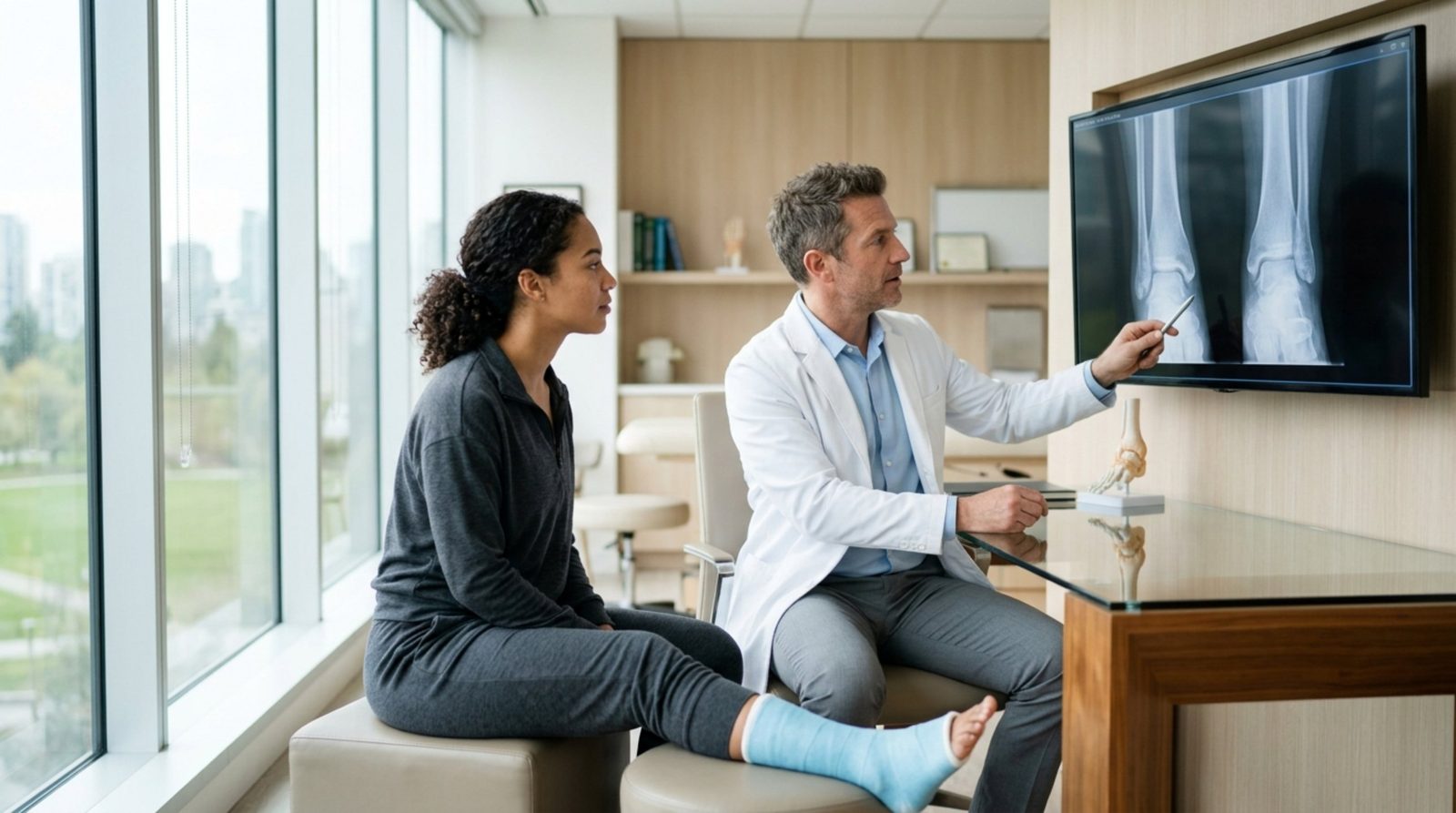
Forty percent of inversion ankle sprains end in chronic instability, and the ACL is the largest problem in orthopedic sports medicine — the lower leg is where a chiropractor's examination most often decides whether a patient rehabilitates or gets referred. Physical Examination 206 is the two-hour course on the conditions of the knee and lower leg, from the ankle up. Dr. Dennis O'Hara opens at the ankle: the lateral inversion sprain and its grading (ATFL, CFL and PTFL involvement), the anterior drawer and talar tilt tests, the talar dome fracture that hides behind a persistent sprain and its four-stage lesion classification, the high ankle sprain with the syndesmosis squeeze test, the deltoid ligament and eversion sprains with Kleiger's external rotation test and the medial malleolar avulsion, and the Ottawa Ankle Rules for deciding when an ankle series is needed.
The lower leg follows: medial tibial stress syndrome — shin splints — with the three compartments, the biomechanical workup, the navicular drop test and the female athlete triad; posterior tibial tendon dysfunction with the "too many toes" sign and single-limb heel rise; tarsal tunnel syndrome; Achilles tendinitis, insertional and noninsertional, the Thompson test for rupture, musculoskeletal ultrasound and MRI, and the Alfredson eccentric protocol; and chronic exertional compartment syndrome with its pressure criteria and the acute compartment emergency. Then the knee: anatomy and the four injury categories, inspection, palpation and graded effusion, the bursae, patellar dislocation and Osgood-Schlatter, the ACL with the Lachman test, valgus collapse and the Q angle, PCL injury and the posterior sag sign, meniscal tears with the Thessaly and McMurray tests, collateral ligament grading, and patellofemoral pain syndrome with its evaluation, rehabilitation and taping. It completes the lower extremity Dr. O'Hara began in Physical Examination 203, which covers the lumbar spine, hip and hamstring.
Where This Course Fits — The Physical Examination Series
The CCEDseminars Physical Examination series is the on-demand catalog for the examination skills a chiropractor uses every day. New titles are released as faculty complete them, and there is no bundle in this category: each course is taken on its own, and the multi-course discount applies automatically in the cart when the hours add up.
Neurological Examination
Physical Examination 201: Current Concepts in Pupillometry (Michael Hall, DC, FIACN · 2 CE · $40)
Regional Orthopedic Examination — you are here
Physical Examination 202: Neck and Upper Extremities (Dennis O'Hara, DC, DACBSP · 2 CE · $40)
Physical Examination 203: Lumbar Spine and Lower Extremity (Dennis O'Hara, DC, DACBSP · 2 CE · $40)
Physical Examination 205: Cervical Spine (Donald Ozello, DC, CCN, CCSM · 2 CE · $40)
Physical Examination 206: Knee and Lower Leg — this course (Dennis O'Hara, DC, DACBSP · 2 CE · $40)
Vascular Risk Screening
Physical Examination 204: Cerebral and Vascular Risks (John H. Riggs III, MBA, DC, DIANM · 2 CE · $40)
The current series, with pricing, lives on the Physical Examination category page.
What You'll Learn
On completing Physical Examination 206 you will be able to:
- Grade lateral and medial ankle sprains, perform the anterior drawer, talar tilt (inversion stress), syndesmosis squeeze and Kleiger's external rotation tests, recognize the talar dome fracture and its lesion stages, and apply the Ottawa Ankle Rules to the imaging decision
- Work up medial tibial stress syndrome — compartment anatomy, extrinsic and intrinsic factors, functional testing, the navicular drop test, footwear and gait — and recognize the female athlete triad as a stress-fracture risk
- Examine the posterior tibial tendon ("too many toes" sign, single-limb heel rise, flexibility and dorsiflexion) and the Achilles tendon (prone inspection and palpation, the Thompson test, ultrasound versus MRI), and distinguish tendinitis from tendinosis in treatment planning
- Recognize chronic exertional compartment syndrome by history and pressure criteria, and the acute anterior compartment syndrome as a medical emergency
- Examine the knee — inspection, palpation of landmarks, graded effusion, bursae and deformities — and perform and interpret the Lachman test, posterior sag sign, Thessaly and McMurray tests, collateral ligament stress grading and the patellofemoral evaluation, with the imaging that confirms each
Course Outline
- Ankle Anatomy and the Lateral Inversion Sprain — ATFL, CFL and PTFL; grades I–III; best diagnostic window (4–5 days); inspection, palpation, ROM and orthopedic testing; anterior drawer test; inversion stress (talar tilt) test
- Talar Dome Fracture and the High Ankle Sprain — talar dome injury on x-ray and MRI; lesion staging grades I–IV (non-surgical versus surgical); syndesmotic mechanism of injury; syndesmosis squeeze test
- Medial Ankle — the four parts of the deltoid ligament; eversion sprains grades I–III with recovery timelines and rehabilitation progression; medial malleolar avulsion and distal fibular fracture (Pott's); Kleiger's external rotation test; the Ottawa Ankle Rules
- Medial Tibial Stress Syndrome (Shin Splints) — anterior, lateral and posterior compartments; involved anatomy; extrinsic and intrinsic factors; signs and symptoms; functional testing and biomechanics; the female athlete triad (vitamin D, DXA, MRI); treatment; the navicular drop test (5–10 mm normal); kinesiotaping
- Posterior Tibial Tendon Dysfunction and Tarsal Tunnel Syndrome — risk factors, symptoms, the "too many toes" sign, single-limb heel rise, flexibility and dorsiflexion; treatment, immobilization and bracing; taping
- Achilles Tendon Injuries — noninsertional and insertional tendinitis, calcification and bone spurs; symptoms; prone physical examination; the Thompson test for rupture; musculoskeletal ultrasound and MRI; tendinitis treatment versus the Alfredson eccentric protocol for tendinosis
- Chronic Exertional Compartment Syndrome — history, pressure criteria (pre- and post-exercise), the four compartments, acute anterior compartment syndrome as an emergency, conservative management and fasciotomy
- The Knee: Anatomy, Overview and Examination — collateral and cruciate ligament function; the four injury categories (ligamentous, intra-articular, anterior, extra-articular); inspection, palpation of landmarks; joint effusion and its differential; graded effusion by condition; bursae; deformities, patellar dislocation and Osgood-Schlatter
- ACL, Functional Valgus and PCL — ACL incidence and function; associated meniscal tears and bone contusions; the Lachman test; valgus collapse, Q angle and depth jumps; PCL mechanisms, the posterior sag sign, stress radiographs and outcomes
- Meniscus, Collateral Ligaments and Patellofemoral Pain — meniscal function, red and white zones, tear types and the bucket-handle tear; history and examination with the Thessaly and McMurray tests; collateral ligament sprain grades, MCL and LCL tears; patellofemoral pain syndrome and chondromalacia, patellar tracking, evaluation, rehabilitation (terminal knee extension, wall squats), McConnell and kinesiotaping, patellar stabilization
Your Physical Examination Faculty
Dennis O'Hara, DC, DACBSP — instructor of this course — is a Diplomate of the American Chiropractic Board of Sports Physicians. A graduate of National University of Health Sciences (BS Human Biology; Doctor of Chiropractic), he served as chiropractor for D.C. United from 1996 to 1998 and as an MMA ringside physician from 2009 to 2015. He teaches the CCEDseminars Sports Injuries, Physical Therapy and Rehabilitation courses and Physical Examination 203: Lumbar Spine and Lower Extremity and 202: Neck and Upper Extremities. Faculty profile »
Donald Ozello, DC, CCN, CCSM — sports medicine — teaches Physical Examination 205: Cervical Spine, the cervical examination procedure demonstrated on video. Faculty profile »
John H. Riggs III, MBA, DC, DIANM teaches Physical Examination 204: Cerebral and Vascular Risks, the vascular screen before cervical manipulation. Faculty profile »
Michael Hall, DC, FIACN — chiropractic neurologist — teaches Physical Examination 201: Current Concepts in Pupillometry. Faculty profile »
Credit, Reporting & State Rules
Physical Examination 206 is a 2-hour on-demand course. Your completion is recorded electronically when you pass the post-course assessment, and your certificate is issued immediately. Completions are reported to CE Broker for the states CCEDseminars serves.
Boards set their own caps on online hours, and some limit hours by category. Before you plan a block of online hours, confirm your board's current rules on the State/Region CEU Approvals page. Texas licensees can verify provider status through the Texas Board of Chiropractic Examiners.
Approved states for this course are listed at the bottom of this page.
What It Costs — and How to Pay Less
Physical Examination 206 is $40 for 2 CE hours — $20 per hour. Multi-course discounts apply automatically in the cart — 10% on 6–9 hours and 20% on 10 or more — with no promo code to enter.
There is no bundle in the Physical Examination category. 206 completes the lower extremity Dr. O'Hara began in 203 Lumbar Spine and Lower Extremity (2 CE · $40) — hip and hamstring there, knee, lower leg and ankle here, $80 for the pair — and adding a third, his 202 Neck and Upper Extremities, Dr. Ozello's 205 Cervical Spine, Dr. Riggs' 204 Cerebral and Vascular Risks or Dr. Hall's 201 Current Concepts in Pupillometry (each 2 CE · $40), makes 6 CE hours, which is where the automatic 10% discount starts: $108 instead of $120, with hours combining across any CCEDseminars category in the same cart.
References
- Lower extremity alignment and medial tibial stress syndrome among non-professional athletes. Sports Med Arthrosc Rehabil Ther Technol. 2009;1(1):11. doi:10.1186/1758-2555-1-11
- Ankle sprain. OrthoBullets, Foot and Ankle. orthobullets.com
- Posterior tibial tendon dysfunction; Achilles tendinitis; Collateral ligament injuries; Patellofemoral pain syndrome. OrthoInfo, American Academy of Orthopaedic Surgeons. orthoinfo.aaos.org
- Navicular drop test. Physiopedia. physio-pedia.com
- Squeeze test (syndesmosis). Special-Tests.com, Ankle and Foot Tests. special-tests.com
- Ottawa Ankle Rules — original 1992 emergency-department validation (100% sensitivity; 36% reduction in radiographs), as cited in the course.
- LaPrade RF, et al. Kneeling stress radiographs for the evaluation of posterior knee laxity. 2008. As cited in the course.
- Nabhan D. Sports medicine lecture material on ankle, lower leg and knee examination, as cited in the course.
Frequently Asked Questions
What does Physical Examination 206 cover?
The conditions of the knee and lower leg a chiropractor examines, from the ankle up: lateral inversion ankle sprains and their grading with the anterior drawer and talar tilt tests; talar dome fractures and their staging; high ankle sprains and the syndesmosis squeeze test; the deltoid ligament, eversion sprains, medial malleolar avulsion and Kleiger's test; the Ottawa Ankle Rules; medial tibial stress syndrome (shin splints) with the navicular drop test and the female athlete triad; posterior tibial tendon dysfunction and tarsal tunnel syndrome; Achilles tendinitis and rupture with the Thompson test, ultrasound and MRI; chronic exertional compartment syndrome; and the knee — effusion, bursae, patellar dislocation, Osgood-Schlatter, the ACL and Lachman test, valgus collapse and Q angle, the PCL and posterior sag sign, meniscal tears with the Thessaly and McMurray tests, collateral ligament grading, and patellofemoral pain syndrome with rehabilitation and taping.
Who teaches the course, and who is it for?
Dennis O'Hara, DC, DACBSP — Diplomate of the American Chiropractic Board of Sports Physicians, former chiropractor for D.C. United and MMA ringside physician — teaches the 2-hour course. It is written for Doctors of Chiropractic who see athletes and active patients with knee, shin and ankle complaints and want a repeatable examination for each: the grading scheme, the orthopedic test with its positive finding, the imaging that confirms it, and the point at which the case is referred.
How does a chiropractor tell an ankle sprain from a fracture?
With the Ottawa Ankle Rules first — the course teaches the tenderness zones and weight-bearing criteria that decide whether an ankle x-ray series is needed, from the original emergency-department study that found the rules 100% sensitive while cutting unnecessary films by about a third. Then by watching the sprain that does not behave: persistent pain after an inversion sprain with joint-line tenderness along the ankle mortise points to a talar dome fracture, which the course stages from a subchondral compression that is negative on x-ray (grade I) to a detached, displaced fragment (grade IV) and confirms on MRI, the most sensitive study. On the medial side, the force needed to tear the deltoid ligament can avulse the medial malleolus and fracture the distal fibula, so a grade III eversion sprain is treated as a possible fracture until imaging says otherwise.
How is the course delivered, and how do I earn the CE credit?
Physical Examination 206 is online and on-demand: you start immediately after checkout and work at your own pace. When you pass the post-course assessment your completion is recorded electronically and your certificate is issued right away. CCEDseminars is PACE Provider #34015544 and the course is co-sponsored by Texas Chiropractic College; completions are reported to CE Broker for the states served. Approved states are listed at the bottom of this page, and confirming your own board's requirements remains your responsibility.
What pairs well with Physical Examination 206?
Dr. O'Hara's Physical Examination 203: Lumbar Spine and Lower Extremity is the companion course — 203 covers the lumbar spine, hip, IT band and hamstring, 206 the knee, lower leg and ankle, so the two together cover the lower extremity from the lumbar spine to the foot for $80. Add a third Physical Examination course — his 202: Neck and Upper Extremities, Dr. Ozello's 205: Cervical Spine, Dr. Riggs' 204: Cerebral and Vascular Risks or Dr. Hall's 201: Current Concepts in Pupillometry — and the three reach 6 CE hours, where the automatic 10% multi-course discount starts ($108 instead of $120). New Physical Examination titles are released as faculty complete them; the current list with pricing lives on the category page.
State approval and licensing reminder. CCEDseminars is PACE Provider #34015544. Approved states for this course are listed at the bottom of this page, and board rules on online hours change — confirming your own board's current requirements before you enroll is your responsibility.
Physical Examination 206: Knee and Lower Leg
2 CE hours · $40 · online, on demand · Dennis O'Hara, DC, DACBSP
CCEDseminars · PACE Provider #34015544 · Reviewed by Monte Horne, DC · Last updated October 23, 2026 (CT)