 Login



Home › Physical Examination CE Courses › Physical Examination 209: Shoulder Complex
At a Glance
| Course: | Physical Examination 209: Shoulder Complex · 2 CE hours · $40 |
| Faculty: | Donald Ozello, DC, CCN, CCSM |
| Format: | Online, on-demand — start immediately |
| Pricing: | $40 ($20/hr) · automatic bundle discounts |
| Approval: | PACE Provider #34015544 · TCC co-sponsored |



PACE Provider #34015544 · Co-sponsored by Texas Chiropractic College · Completions reported to CE Broker
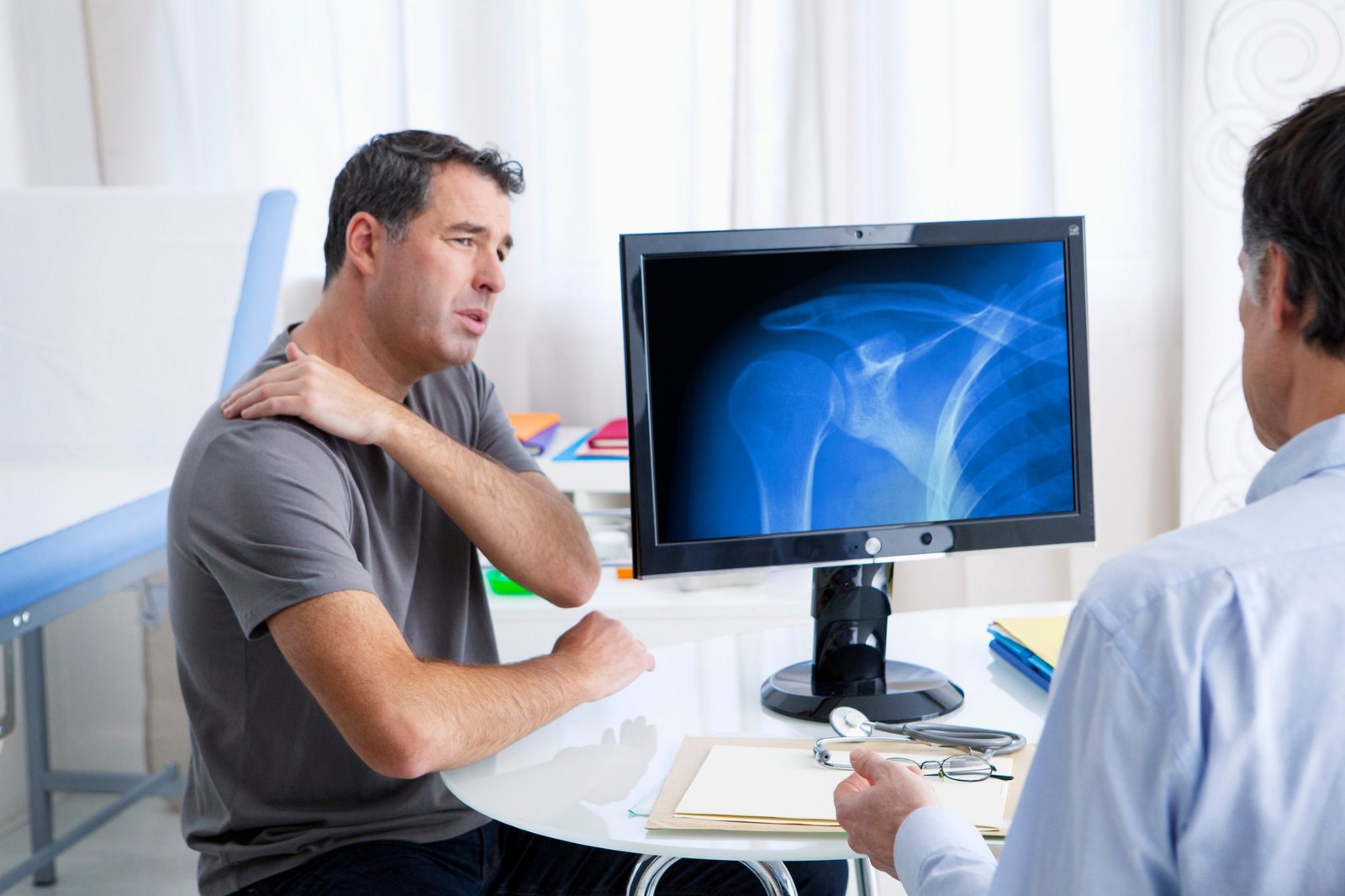
The shoulder is the most mobile joint in the body and the hardest to examine well: the same complaint can come from the glenohumeral joint, the acromioclavicular joint, the rotator cuff, the labrum, the scapula or the neck, and the examination is what tells them apart. Physical Examination 209 is the two-hour course on the examination of the shoulder complex, with the key tests demonstrated on video. Dr. Donald Ozello begins where a good shoulder exam begins — the consultation and history, the purpose of the examination, and clearing the cervical spine with range of motion and Spurling's test before the shoulder itself is examined — then visual inspection, palpation, and active range of motion in abduction, adduction, flexion, extension and external and internal rotation at zero and ninety degrees of abduction.
The tests follow by what they find. For instability: the sulcus sign with its three grades of inferior translation, the hyperabduction test, the apprehension, relocation and anterior release (surprise) tests, and the load and shift test with its grades 0 through 3. For the acromioclavicular joint: separations by degree and mechanism, then the horizontal adduction (crossover) test, the painful arc, the compression test and the AC resisted extension test. For adhesive capsulitis, the order in which range of motion is lost. For impingement and the cuff: internal (posterior internal) versus external impingement, the posterior impingement test, the scapular pinch test for scapular dyskinesis, the anterior slide test for a SLAP tear, Codman's drop arm and the empty can (Jobe's) test for the supraspinatus, the external rotation lag sign for the infraspinatus, Hornblower's sign for the teres minor, the Gerber lift-off test for the subscapularis, the Neer and Hawkins-Kennedy tests and the Kibler scapular retraction test for subacromial impingement, and the bench press maneuver for bench-presser's shoulder — each with position, procedure, positive finding and indication. It closes with manual muscle testing: break and make tests, the 0–5 grading scale, the factors that invalidate a measurement, and the upper, middle and lower trapezius on video. It is the examination companion to Dr. Ozello's Adjusting & Manual Therapy 203: Shoulder Treatment Techniques, and the procedural counterpart to Dr. O'Hara's Physical Examination 202, which covers the neck and upper extremities from the injury-pattern and imaging side.
Where This Course Fits — The Physical Examination Series
The CCEDseminars Physical Examination series is the on-demand catalog for the examination skills a chiropractor uses every day. New titles are released as faculty complete them, and there is no bundle in this category: each course is taken on its own, and the multi-course discount applies automatically in the cart when the hours add up.
Neurological Examination
Physical Examination 201: Current Concepts in Pupillometry (Michael Hall, DC, FIACN · 2 CE · $40)
Regional Orthopedic Examination — you are here
Physical Examination 202: Neck and Upper Extremities (Dennis O'Hara, DC, DACBSP · 2 CE · $40)
Physical Examination 203: Lumbar Spine and Lower Extremity (Dennis O'Hara, DC, DACBSP · 2 CE · $40)
Physical Examination 205: Cervical Spine (Donald Ozello, DC, CCN, CCSM · 2 CE · $40)
Physical Examination 206: Knee and Lower Leg (Dennis O'Hara, DC, DACBSP · 2 CE · $40)
Physical Examination 207: Thoracic Spine and Rib Cage (Donald Ozello, DC, CCN, CCSM · 2 CE · $40)
Physical Examination 208: Lumbar Spine & Sacroiliac Joints (Donald Ozello, DC, CCN, CCSM · 2 CE · $40)
Physical Examination 209: Shoulder Complex — this course (Donald Ozello, DC, CCN, CCSM · 2 CE · $40)
Vascular Risk Screening
Physical Examination 204: Cerebral and Vascular Risks (John H. Riggs III, MBA, DC, DIANM · 2 CE · $40)
The current series, with pricing, lives on the Physical Examination category page.
What You'll Learn
On completing Physical Examination 209 you will be able to:
- Conduct the shoulder consultation and history, state the purpose of the physical examination, clear the cervical spine with range of motion and Spurling's test before examining the shoulder, and perform visual inspection, palpation and active range of motion — abduction, adduction, flexion, extension, and external and internal rotation at zero and ninety degrees
- Perform and grade the glenohumeral instability tests — the sulcus sign (grades I–III), hyperabduction, apprehension, relocation, anterior release (surprise) and load and shift (grades 0–3) — and name the direction of instability each positive finding indicates
- Describe acromioclavicular joint separations by degree and by direct and indirect mechanism, perform the horizontal adduction (crossover), painful arc, compression and AC resisted extension tests, and recognize the range-of-motion pattern of adhesive capsulitis
- Distinguish internal (posterior internal) from external impingement and perform the posterior impingement, scapular pinch, anterior slide, Codman's drop arm, empty can (Jobe's), external rotation lag, Hornblower's, Gerber lift-off, Neer, Hawkins-Kennedy, Kibler scapular retraction and bench press maneuver tests, stating the positive finding and the structure each implicates
- Apply manual muscle testing — break versus make tests, the 0–5 grading scale and the sources of an invalid measurement — to the upper, middle and lower trapezius
Course Outline
- Consultation and Examination — history, description and distribution of symptoms, questionnaires and visual analog scores, mechanism, area of symptoms, prior episodes; the purpose of the physical examination; why the shoulder complex is difficult to examine; clearing the cervical spine with range of motion and Spurling's test before the shoulder exam
- Inspection, Palpation and Range of Motion — visual inspection; palpation; active shoulder range of motion in good posture: abduction, adduction, flexion, extension, and external and internal rotation at zero and ninety degrees of abduction
- Glenohumeral Instability (on video) — sulcus sign and the grades of inferior translation (I under 1 cm, II 1–2 cm, III over 2 cm); hyperabduction test (passive abduction beyond 105°); apprehension test; relocation test; anterior release (surprise) test; load and shift test for anterior and posterior laxity with grades 0–3
- Acromioclavicular Joint Dysfunction (on video) — AC separations described by degree; direct and indirect mechanisms; horizontal adduction stress (crossover) test; active abduction painful arc at 130° and above; compression test; AC resisted extension test
- Adhesive Capsulitis and Impingement Definitions — the order in which range of motion is lost; restriction of active and passive motion in every direction; loss of passive range of motion; internal (posterior internal) impingement versus external impingement
- Impingement, Labrum and Scapula (on video) — posterior (internal) impingement test and its correlation with undersurface rotator cuff and posterior labral tearing; scapular pinch test for scapular dyskinesis and dorsal scapular, long thoracic or spinal accessory nerve involvement; anterior slide test for a SLAP tear
- Rotator Cuff Tests (on video) — Codman's drop arm and empty can (Jobe's) tests for the supraspinatus; external rotation lag sign for the infraspinatus; Hornblower's sign for the teres minor; Gerber lift-off test for the subscapularis
- Subacromial Impingement and the Bench Press (on video) — Neer impingement test; Hawkins-Kennedy test; Kibler scapular retraction test; bench press maneuver for pectoralis minor insertional tendinopathy (bench-presser's shoulder)
- Strength Assessment — manual muscle testing: break and make tests; pain, apprehension and posture as sources of an invalid measurement; palpation of the tested muscle; the 0–5 grading scale; upper, middle and lower trapezius on video
Your Physical Examination Faculty
Donald Ozello, DC, CCN, CCSM — instructor of this course — is a sports chiropractor and the founder of Championship Chiropractic in Las Vegas, Certified Chiropractic Sports Medicine physician, Certified Clinical Nutritionist and NSCA Certified Personal Trainer. He teaches the CCEDseminars Sports Injuries, Athletic Injuries, Rehabilitation, Adjusting & Manual Therapy and Geriatrics series, and Physical Examination 205: Cervical Spine, 207: Thoracic Spine and Rib Cage and 208: Lumbar Spine & Sacroiliac Joints. Faculty profile »
Dennis O'Hara, DC, DACBSP — sports medicine — teaches Physical Examination 202: Neck and Upper Extremities, the injury-pattern and imaging counterpart to this course, and 203: Lumbar Spine and Lower Extremity and 206: Knee and Lower Leg. Faculty profile »
John H. Riggs III, MBA, DC, DIANM teaches Physical Examination 204: Cerebral and Vascular Risks, the vascular screen before cervical manipulation. Faculty profile »
Michael Hall, DC, FIACN — chiropractic neurologist — teaches Physical Examination 201: Current Concepts in Pupillometry. Faculty profile »
Credit, Reporting & State Rules
Physical Examination 209 is a 2-hour on-demand course. Your completion is recorded electronically when you pass the post-course assessment, and your certificate is issued immediately. Completions are reported to CE Broker for the states CCEDseminars serves.
Boards set their own caps on online hours, and some limit hours by category. Before you plan a block of online hours, confirm your board's current rules on the State/Region CEU Approvals page. Texas licensees can verify provider status through the Texas Board of Chiropractic Examiners.
Approved states for this course are listed at the bottom of this page.
What It Costs — and How to Pay Less
Physical Examination 209 is $40 for 2 CE hours — $20 per hour. Multi-course discounts apply automatically in the cart — 10% on 6–9 hours and 20% on 10 or more — with no promo code to enter.
There is no bundle in the Physical Examination category. 209 is the examination half of Dr. Ozello's shoulder pairing — Adjusting & Manual Therapy 203: Shoulder Treatment Techniques is the treatment half — and it follows his 205 Cervical Spine naturally, since the shoulder exam opens by clearing the neck. Add any one of his 207 Thoracic Spine and Rib Cage or 208 Lumbar Spine & Sacroiliac Joints (each 2 CE · $40) and three courses make 6 CE hours, which is where the automatic 10% discount starts — $108 instead of $120. Dr. O'Hara's 202 Neck and Upper Extremities covers the same region from the injury-pattern side, and hours combine across any CCEDseminars category in the same cart.
References
- Lizzio VA, et al. Clinical Evaluation and Physical Exam Findings in Patients with Anterior Shoulder Instability. Curr Rev Musculoskelet Med. 2017;10(4):434–441. doi:10.1007/s12178-017-9434-3
- Manske R, Prohaska D. Current Concepts in Shoulder Examination of the Overhead Athlete. Int J Sports Phys Ther. 2013;8(5):554–578. PMC3811732
- Robb AJ, Howitt S. Conservative management of a type III acromioclavicular separation: a case report and 10-year follow-up. J Chiropr Med. 2011;10(4):261–271. doi:10.1016/j.jcm.2011.01.009
- Saccomanno MF, Milano G. Acromioclavicular joint instability: anatomy, biomechanics and evaluation. Joints. 2014;2(2):87–92. PMC4295671
- St Angelo JM, et al. Adhesive Capsulitis. StatPearls [Internet]. Updated March 28, 2025. ncbi.nlm.nih.gov/books/NBK532955
- Sharrak S, et al. Cervical Disc Herniation. StatPearls [Internet]. Updated August 2, 2025. ncbi.nlm.nih.gov/books/NBK546618
- Mezian K, et al. Frozen Shoulder. StatPearls [Internet]. Updated August 28, 2023. ncbi.nlm.nih.gov/books/NBK482162
- Touma J, et al. Cervical Myofascial Pain. StatPearls [Internet]. Updated July 3, 2023. ncbi.nlm.nih.gov/books/NBK507825
- Corpus KT, et al. Evaluation and treatment of internal impingement of the shoulder in overhead athletes. World J Orthop. 2016;7(12):776–784. doi:10.5312/wjo.v7.i12.776
- Varacallo M, et al. Comprehensive Shoulder Evaluation Strategies. StatPearls [Internet]. Updated August 4, 2023. ncbi.nlm.nih.gov/books/NBK538309
- Manske RC, et al. Shoulder Posterior Internal Impingement in the Overhead Athlete. Int J Sports Phys Ther. 2013;8(2):194–204. PMC3625798
- Varacallo M, et al. Rotator Cuff Syndrome. StatPearls [Internet]. ncbi.nlm.nih.gov/books/NBK531506
- Khazzam M, et al. Diagnostic Accuracy of the Scapular Retraction Test in Assessing the Status of the Rotator Cuff. Orthop J Sports Med. 2018;6(10):2325967118799308. doi:10.1177/2325967118799308
- Jia X, et al. Clinical Evaluation of the Shoulder Shrug Sign. Clin Orthop Relat Res. 2008;466(11):2813–2819. doi:10.1007/s11999-008-0331-3
- Bhatia DN, et al. The “bench-presser's shoulder”: an overuse insertional tendinopathy of the pectoralis minor muscle. Br J Sports Med. 2007;41(8):e1–e4. doi:10.1136/bjsm.2006.032383
- Ciesla N, et al. Manual Muscle Testing: A Method of Measuring Extremity Muscle Strength Applied to Critically Ill Patients. J Vis Exp. 2011;(50):2632. doi:10.3791/2632
Frequently Asked Questions
What does Physical Examination 209 cover?
The examination of the shoulder complex as a chiropractor performs and documents it: consultation and history; clearing the cervical spine with range of motion and Spurling's test; visual inspection, palpation and active range of motion; the glenohumeral instability tests — sulcus sign (grades I–III), hyperabduction, apprehension, relocation, anterior release and load and shift (grades 0–3); acromioclavicular separations by degree and mechanism and the crossover, painful arc, compression and AC resisted extension tests; the range-of-motion pattern of adhesive capsulitis; internal versus external impingement; the posterior impingement, scapular pinch, anterior slide, Codman's drop arm, empty can (Jobe's), external rotation lag, Hornblower's, Gerber lift-off, Neer, Hawkins-Kennedy and Kibler scapular retraction tests and the bench press maneuver — each with position, procedure, positive finding and indication; and manual muscle testing with the 0–5 scale and the trapezius. The key tests are demonstrated on video.
Who teaches the course, and who is it for?
Donald Ozello, DC, CCN, CCSM — sports chiropractor, founder of Championship Chiropractic in Las Vegas and CCEDseminars faculty for the Sports Injuries, Rehabilitation and Adjusting & Manual Therapy series — teaches the 2-hour course. It is written for Doctors of Chiropractic who want a repeatable, documentable shoulder examination: the order of the sequence, the tests grouped by what they find, and for each one the positive finding and the structure it points to.
How does a chiropractor tell whether shoulder pain is impingement, a rotator cuff tear or an unstable joint?
By letting the tests sort it, which is what the course teaches test by test — after the neck has been cleared first, since a cervical problem can masquerade as a shoulder one. Instability shows itself when the humeral head moves more than it should: a visible sulcus below the acromion when the arm is pulled down, apprehension when the arm is taken into abduction and external rotation that eases when the examiner pushes the humeral head back, or excess translation on the load and shift test. Impingement shows itself as pain in a position — pain past ninety degrees on the Neer test, pain with internal rotation on Hawkins-Kennedy, and a Kibler test in which stabilizing the scapula lets the arm go further without pain. A torn rotator cuff tendon shows itself as weakness or a lag: the arm that cannot be lowered slowly from full abduction (Codman's drop arm) or gives way on the empty can test points to the supraspinatus, an arm that drifts back into internal rotation after the examiner lets go points to the infraspinatus (external rotation lag sign) or the teres minor (Hornblower's sign), and the hand that cannot lift away from the lower back points to the subscapularis (Gerber lift-off). Deep posterior pain on the posterior impingement test points to internal impingement, a painful click on the anterior slide test to a SLAP tear, and pain on the crossover test or compression to the acromioclavicular joint. The pattern across the tests, not any one of them, makes the call.
How is the course delivered, and how do I earn the CE credit?
Physical Examination 209 is online and on-demand: you start immediately after checkout and work at your own pace. When you pass the post-course assessment your completion is recorded electronically and your certificate is issued right away. CCEDseminars is PACE Provider #34015544 and the course is co-sponsored by Texas Chiropractic College; completions are reported to CE Broker for the states served. Approved states are listed at the bottom of this page, and confirming your own board's requirements remains your responsibility.
What pairs well with Physical Examination 209?
Dr. Ozello's Adjusting & Manual Therapy 203: Shoulder Treatment Techniques is the treatment half of the same region — 209 is the examination, that course is the adjusting and manual therapy. His Physical Examination 205: Cervical Spine is the natural companion, because the shoulder exam opens by clearing the neck; add his 207: Thoracic Spine and Rib Cage or 208: Lumbar Spine & Sacroiliac Joints and the three courses are 6 CE hours, where the automatic 10% multi-course discount starts ($108 instead of $120). Dr. O'Hara's Physical Examination 202: Neck and Upper Extremities approaches the shoulder from the injury-pattern and imaging side, and many clinicians take both. New Physical Examination titles are released as faculty complete them; the current list with pricing lives on the category page.
State approval and licensing reminder. CCEDseminars is PACE Provider #34015544. Approved states for this course are listed at the bottom of this page, and board rules on online hours change — confirming your own board's current requirements before you enroll is your responsibility.
Physical Examination 209: Shoulder Complex
2 CE hours · $40 · online, on demand · Donald Ozello, DC, CCN, CCSM
CCEDseminars · PACE Provider #34015544 · Reviewed by Monte Horne, DC · Last updated October 26, 2026 (CT)