 Login


Home › Physical Examination CE Courses › Physical Examination 215: The Knee
At a Glance
| Course: | Physical Examination 215: The Knee · 2 CE hours · $40 |
| Faculty: | Donald Ozello, DC, CCN, CCSM |
| Format: | Online, on-demand — start immediately |
| Pricing: | $40 ($20/hr) · automatic bundle discounts |
| Approval: | PACE Provider #34015544 · TCC co-sponsored |


PACE Provider #34015544 · Co-sponsored by Texas Chiropractic College · Completions reported to CE Broker
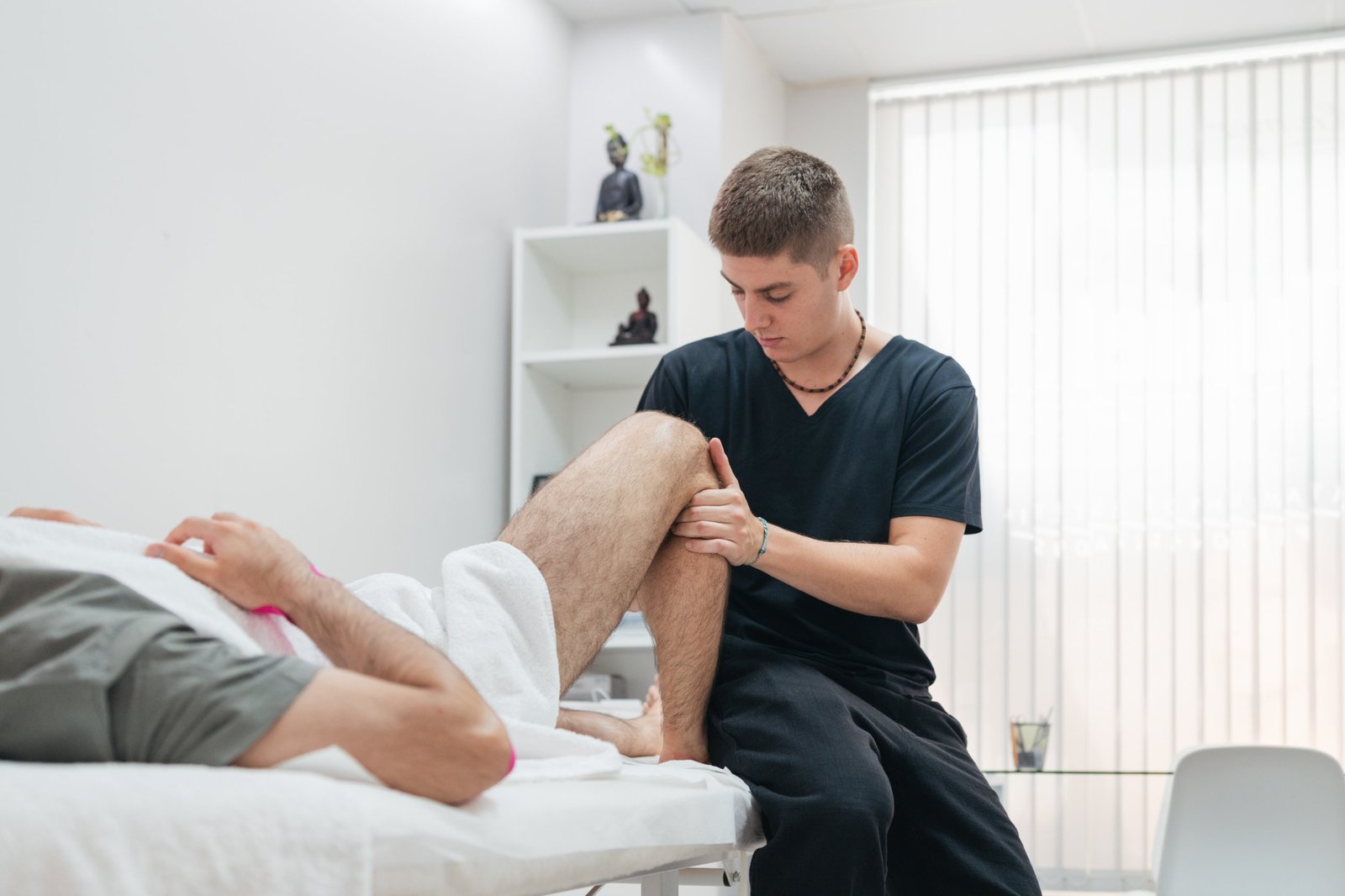
Four ligaments, two menisci, one patella and more than twenty named tests — the knee is the joint where a chiropractor's hands can still out-perform the referral. Physical Examination 215 is Dr. Donald Ozello's two-hour course on the knee alone: anatomy and the Q-angle, the consultation, then the examination region by region — the patellofemoral tests, Wilson's and Hoffa's, Ober's and Noble compression for the iliotibial band, the meniscus battery from McMurray's and Apley's to Thessaly and Ege's, and the ligament tests from Lachman's and the pivot shift to posterior sag and the valgus and varus stress tests.
Each test is demonstrated on video with the positions, the maneuver, the positive finding and what it indicates. It is the deep companion to Dr. O'Hara's Physical Examination 206: Knee and Lower Leg, which runs from the ankle up, and pairs with Dr. Ozello's 208: Lumbar Spine & Sacroiliac Joints on the lower-quarter side.
Where This Course Fits — The Physical Examination Series
The CCEDseminars Physical Examination series is the on-demand catalog for the examination skills a chiropractor uses every day. New titles are released as faculty complete them, and there is no bundle in this category: each course is taken on its own, and the multi-course discount applies automatically in the cart when the hours add up.
Neurological Examination
Physical Examination 201: Current Concepts in Pupillometry (Michael Hall, DC, FIACN · 2 CE · $40)
Regional Orthopedic Examination — you are here
Physical Examination 202: Neck and Upper Extremities (Dennis O'Hara, DC, DACBSP · 2 CE · $40)
Physical Examination 203: Lumbar Spine and Lower Extremity (Dennis O'Hara, DC, DACBSP · 2 CE · $40)
Physical Examination 205: Cervical Spine (Donald Ozello, DC, CCN, CCSM · 2 CE · $40)
Physical Examination 206: Knee and Lower Leg (Dennis O'Hara, DC, DACBSP · 2 CE · $40)
Physical Examination 207: Thoracic Spine and Rib Cage (Donald Ozello, DC, CCN, CCSM · 2 CE · $40)
Physical Examination 208: Lumbar Spine & Sacroiliac Joints (Donald Ozello, DC, CCN, CCSM · 2 CE · $40)
Physical Examination 209: Shoulder Complex (Donald Ozello, DC, CCN, CCSM · 2 CE · $40)
Physical Examination 210: Upper Extremity (Donald Ozello, DC, CCN, CCSM · 2 CE · $40)
Physical Examination 211: Upper Body Nerve Entrapment (Donald Ozello, DC, CCN, CCSM · 2 CE · $40)
Physical Examination 214: Wrist, Hand and Thumb (Donald Ozello, DC, CCN, CCSM · 2 CE · $40)
Physical Examination 215: The Knee — this course (Donald Ozello, DC, CCN, CCSM · 2 CE · $40)
Case-Based Examination
Physical Examination 212: Clinical Pearls in Uncommon Cases (Dennis O'Hara, DC, DACBSP · 2 CE · $40)
Physical Examination 213: The Whiplash Patient (Dennis O'Hara, DC, DACBSP · 2 CE · $40)
Vascular Risk Screening
Physical Examination 204: Cerebral and Vascular Risks (John H. Riggs III, MBA, DC, DIANM · 2 CE · $40)
The current series, with pricing, lives on the Physical Examination category page.
What You'll Learn
On completing Physical Examination 215 you will be able to:
- Describe the bones, cartilage, synovium, four major ligaments and two menisci of the knee, the meniscal blood supply and its role in nutrition and proprioception, and measure and interpret the Q-angle against the normal male and female values and the abnormal threshold
- Take the knee consultation — symptom description, signs, questionnaires and visual analog scores, mechanism of injury, exact location, prior conditions — and examine the patellofemoral joint with the patellar apprehension test, the circle sign, Clarke's test and the Helfet test for the screw-home mechanism and vastus medialis obliquus
- Perform Wilson's test for osteochondritis dissecans, Hoffa's test for infrapatellar fat pad impingement, and Ober's, modified Ober's and the Noble compression test for iliotibial band syndrome
- Examine the menisci with joint-line palpation, McMurray's test for the medial and lateral meniscus, Apley's compression and distraction tests, Payr's test, the bounce home test, the Thessaly test, Ege's weight-bearing test and the duck walk test
- Test the four ligaments — Lachman's, anterior drawer in three rotations and the pivot shift for the ACL; posterior drawer, posterior sag and the quadriceps active test for the PCL; valgus stress at zero and thirty degrees for the MCL and posteromedial corner; varus stress for the LCL — and read the endpoints that separate a rupture from an intact ligament
Course Outline
- Anatomy and Physiology — femur, tibia and patella, articular cartilage and synovium; the ACL, PCL, MCL and LCL; the medial and lateral menisci as wedge-shaped shock absorbers that deepen the tibial plateau, their nutrition and proprioceptive roles and their poor blood supply; the Q-angle — normal values of fourteen degrees in men and seventeen in women, the abnormal threshold above twenty to twenty-five degrees, and how it is measured
- Consultation — the evaluation, description of symptoms, signs, questionnaires and visual analog scores; mechanism of injury, exact location, priors and other conditions; the purpose of the consultation and physical examination
- Patellofemoral Examination — the patellar apprehension test for dislocation and instability (on video); the circle sign of patellofemoral pain syndrome; Clarke's patellar grind test (on video); the Helfet test for the screw-home mechanism of the tibiofemoral and patellofemoral joints, with palpation for vastus medialis obliquus timing (on video)
- Osteochondritis Dissecans and Fat Pad Impingement — Wilson's test with tibial internal and external rotation (on video); Hoffa's test for infrapatellar fat pad impingement comparing thirty degrees of flexion with extension (on video)
- Iliotibial Band Syndrome — palpation and crepitus; Ober's test with the knee flexed ninety degrees and the modified Ober's test with the knee extended; the Noble compression test for pain at the lateral epicondyle at thirty degrees of flexion (all on video)
- Meniscus Injury I — joint-line palpation; McMurray's test for the medial meniscus with external tibial rotation and for the lateral meniscus with internal rotation; Apley's compression test and Apley's distraction test and what each indicates (on video)
- Meniscus Injury II — Payr's test; the bounce home (forced hyperextension) test; the Thessaly test at twenty and five degrees; Ege's weight-bearing McMurray test; the duck walk (Childress) test (all on video)
- Anterior Cruciate Ligament — Lachman's test in extension and at twenty to thirty degrees, hand placement and the meaning of a soft versus hard endpoint; the anterior drawer test in neutral, internal and external rotation; the pivot shift (jerk) test and the mechanics of the shift at thirty degrees (on video)
- Posterior Cruciate Ligament — the posterior drawer test in three rotations; the posterior sag test; the quadriceps active test and how the starting sag decides whether a positive result points to the ACL or the PCL (on video)
- Collateral Ligaments — the valgus stress test at zero and thirty degrees for the MCL and posteromedial corner; the varus stress test at zero and thirty degrees for the LCL (on video)
Your Physical Examination Faculty
Donald Ozello, DC, CCN, CCSM — instructor of this course — is a sports chiropractor and NSCA Certified Personal Trainer who teaches the regional examination courses of this series: Physical Examination 205: Cervical Spine, 207: Thoracic Spine and Rib Cage, 208: Lumbar Spine & Sacroiliac Joints, 209: Shoulder Complex, 210: Upper Extremity, 211: Upper Body Nerve Entrapment and 214: Wrist, Hand and Thumb, and the CCEDseminars Adjusting & Manual Therapy and Sports Injuries series. Faculty profile »
Dennis O'Hara, DC, DACBSP — sports medicine chiropractor and Diplomate of the American Chiropractic Board of Sports Physicians — teaches Physical Examination 202: Neck and Upper Extremities, 203: Lumbar Spine and Lower Extremity, 206: Knee and Lower Leg, 212: Clinical Pearls in Uncommon Cases and 213: The Whiplash Patient. Faculty profile »
John H. Riggs III, MBA, DC, DIANM teaches Physical Examination 204: Cerebral and Vascular Risks, the vascular screen before cervical manipulation. Faculty profile »
Michael Hall, DC, FIACN — chiropractic neurologist — teaches Physical Examination 201: Current Concepts in Pupillometry. Faculty profile »
Credit, Reporting & State Rules
Physical Examination 215 is a 2-hour on-demand course. Your completion is recorded electronically when you pass the post-course assessment, and your certificate is issued immediately. Completions are reported to CE Broker for the states CCEDseminars serves.
Boards set their own caps on online hours, and some limit hours by category. Before you plan a block of online hours, confirm your board's current rules on the State/Region CEU Approvals page. Texas licensees can verify provider status through the Texas Board of Chiropractic Examiners.
Approved states for this course are listed at the bottom of this page.
What It Costs — and How to Pay Less
Physical Examination 215 is $40 for 2 CE hours — $20 per hour. Multi-course discounts apply automatically in the cart — 10% on 6–9 hours and 20% on 10 or more — with no promo code to enter.
There is no bundle in the Physical Examination category. 215 pairs with Dr. O'Hara's 206: Knee and Lower Leg for the ankle-to-knee picture and with Dr. Ozello's 208: Lumbar Spine & Sacroiliac Joints for the rest of the lower quarter (each 2 CE · $40); any three Physical Examination courses make 6 CE hours, which is where the automatic 10% discount starts: $108 instead of $120. Dr. Ozello's eight regional titles — 205, 207, 208, 209, 210, 211, 214 and 215 — are 16 CE hours together, which crosses the 20% threshold: $256 instead of $320. Hours combine across any CCEDseminars category in the same cart.
References
- Jarosz BS, Ames RA. Chiropractic management of a medial meniscus tear in a patient with tibiofemoral degeneration: a case report. J Chiropr Med. 2010;9(4):200–208. doi:10.1016/j.jcm.2010.07.008
- Gupton M, et al. Anatomy, Bony Pelvis and Lower Limb, Knee. StatPearls. NBK500017
- Shahrokhi M, Asuncion RMD. Neurologic Exam. StatPearls. NBK557589
- Hadeed A, Tapscott DC. Iliotibial Band Friction Syndrome. StatPearls. NBK542185
- Halabchi F, Abolhasani M, Mirshahi M, Alizadeh Z. Patellofemoral pain in athletes: clinical perspectives. Open Access J Sports Med. 2017;8:189–203. doi:10.2147/OAJSM.S127359
- Raj MA, Bubnis MA. Knee Meniscal Tears. StatPearls. NBK431067
- Agresti D, et al. Apley Grind Test. StatPearls. NBK470549
- Touma J, et al. Cervical Myofascial Pain. StatPearls. NBK507825
- Coffey R, Bordoni B. Lachman Test. StatPearls. NBK554415
- Evans J, Mabrouk A, Nielson JL. Anterior Cruciate Ligament Knee Injury. StatPearls. NBK499848
- Yaras RJ, et al. Lateral Collateral Ligament Knee Injury. StatPearls. NBK560847
- Naqvi U, Sherman AL. Medial Collateral Ligament Knee Injury. StatPearls. NBK431095
- Raj MA, et al. Posterior Cruciate Ligament Knee Injuries. StatPearls. NBK430726
- Chivers MD, Howitt SD. Anatomy and physical examination of the knee menisci: a narrative review of the orthopedic literature. J Can Chiropr Assoc. 2009;53(4):319–333. PMC2796951
- DuBose M, Taqi M. Hoffa Pad Impingement Syndrome. StatPearls. NBK589637
- Mohr B, Mabrouk A, Baldea JD. Osteochondritis Dissecans of the Knee. StatPearls. NBK538194
- Mabrouk A, Kaiser K. Patellofemoral Arthritis. StatPearls. NBK513242
- Wolfe S, et al. Patellar Instability. StatPearls. NBK482427
- Habusta SF, et al. Chondromalacia Patella. StatPearls. NBK459195
Frequently Asked Questions
What does Physical Examination 215 cover?
The knee, and only the knee, taken test by test on video. It opens with the anatomy — bones, cartilage, synovium, the four major ligaments, the menisci and their blood supply — and the Q-angle with its normal values and abnormal threshold, then the consultation. The examination runs through the patellofemoral joint (patellar apprehension, the circle sign, Clarke's grind test, the Helfet screw-home test), osteochondritis dissecans (Wilson's test) and fat pad impingement (Hoffa's test), the iliotibial band (Ober's, modified Ober's, Noble compression), the menisci (joint-line palpation, McMurray's for each meniscus, Apley's compression and distraction, Payr's, bounce home, Thessaly, Ege's and the duck walk), and the four ligaments: Lachman's, anterior drawer and pivot shift for the ACL; posterior drawer, posterior sag and the quadriceps active test for the PCL; valgus stress for the MCL and posteromedial corner; varus stress for the LCL.
Who teaches the course, and who is it for?
Donald Ozello, DC, CCN, CCSM — sports chiropractor and NSCA Certified Personal Trainer — teaches the 2-hour course. It is written for Doctors of Chiropractic who want a complete, repeatable knee examination: the weekend athlete who heard a pop, the runner with lateral knee pain at thirty degrees, the patient whose knee locks or gives way. Each test is shown on video with the patient and doctor positions, the hand placements, the positive finding and what it indicates.
How do you tell an ACL tear from a PCL tear on examination?
By which way the tibia moves and what the endpoint feels like, and the course spends four tests on each ligament. For the ACL, Lachman's test is the workhorse — the knee held between twenty and thirty degrees, one hand on the distal femur and the other pulling the proximal tibia forward — and the finding is increased anterior translation compared with the other side; a soft endpoint is highly predictive of rupture, a hard stop suggests an intact ligament even with extra translation, and the test is especially useful in the first days after injury when the knee is swollen and painful. The anterior drawer test repeats the pull at ninety degrees in neutral, internal and external rotation, and the pivot shift test reproduces the rotatory instability — a slight, uncomfortable shift with an isolated ACL rupture, a large visible jerk only when the posterolateral corner is involved. For the PCL the direction reverses: the posterior drawer test looks for increased posterior translation with a soft endpoint, the posterior sag test compares the resting position of the two tibiae with hips and knees at ninety degrees, and the quadriceps active test resolves the ambiguity — if the tibia starts sagged and shifts forward on quadriceps contraction, the PCL is injured; if there was no sag to begin with, an anterior shift points to the ACL.
How is the course delivered, and how do I earn the CE credit?
Physical Examination 215 is online and on-demand: you start immediately after checkout and work at your own pace. When you pass the post-course assessment your completion is recorded electronically and your certificate is issued right away. CCEDseminars is PACE Provider #34015544 and the course is co-sponsored by Texas Chiropractic College; completions are reported to CE Broker for the states served. Approved states are listed at the bottom of this page, and confirming your own board's requirements remains your responsibility.
What pairs well with Physical Examination 215?
Physical Examination 206: Knee and Lower Leg, Dr. O'Hara's course that runs from the ankle up and covers the knee's headline tests, so the two together give the whole lower leg; and Dr. Ozello's 208: Lumbar Spine & Sacroiliac Joints for the rest of the lower quarter. Any three Physical Examination courses are 6 CE hours, where the automatic 10% multi-course discount starts ($108 instead of $120), and Dr. Ozello's eight regional titles together are 16 CE hours at the 20% tier ($256 instead of $320). New Physical Examination titles are released as faculty complete them; the current list with pricing lives on the category page.
State approval and licensing reminder. CCEDseminars is PACE Provider #34015544. Approved states for this course are listed at the bottom of this page, and board rules on online hours change — confirming your own board's current requirements before you enroll is your responsibility.
Physical Examination 215: The Knee
2 CE hours · $40 · online, on demand · Donald Ozello, DC, CCN, CCSM
CCEDseminars · PACE Provider #34015544 · Reviewed by Monte Horne, DC · Last updated October 29, 2026 (CT)