 Login


Home › Physical Examination CE Courses › Physical Examination 214: Wrist, Hand and Thumb
At a Glance
| Course: | Physical Examination 214: Wrist, Hand and Thumb · 2 CE hours · $40 |
| Faculty: | Donald Ozello, DC, CCN, CCSM |
| Format: | Online, on-demand — start immediately |
| Pricing: | $40 ($20/hr) · automatic bundle discounts |
| Approval: | PACE Provider #34015544 · TCC co-sponsored |



PACE Provider #34015544 · Co-sponsored by Texas Chiropractic College · Completions reported to CE Broker
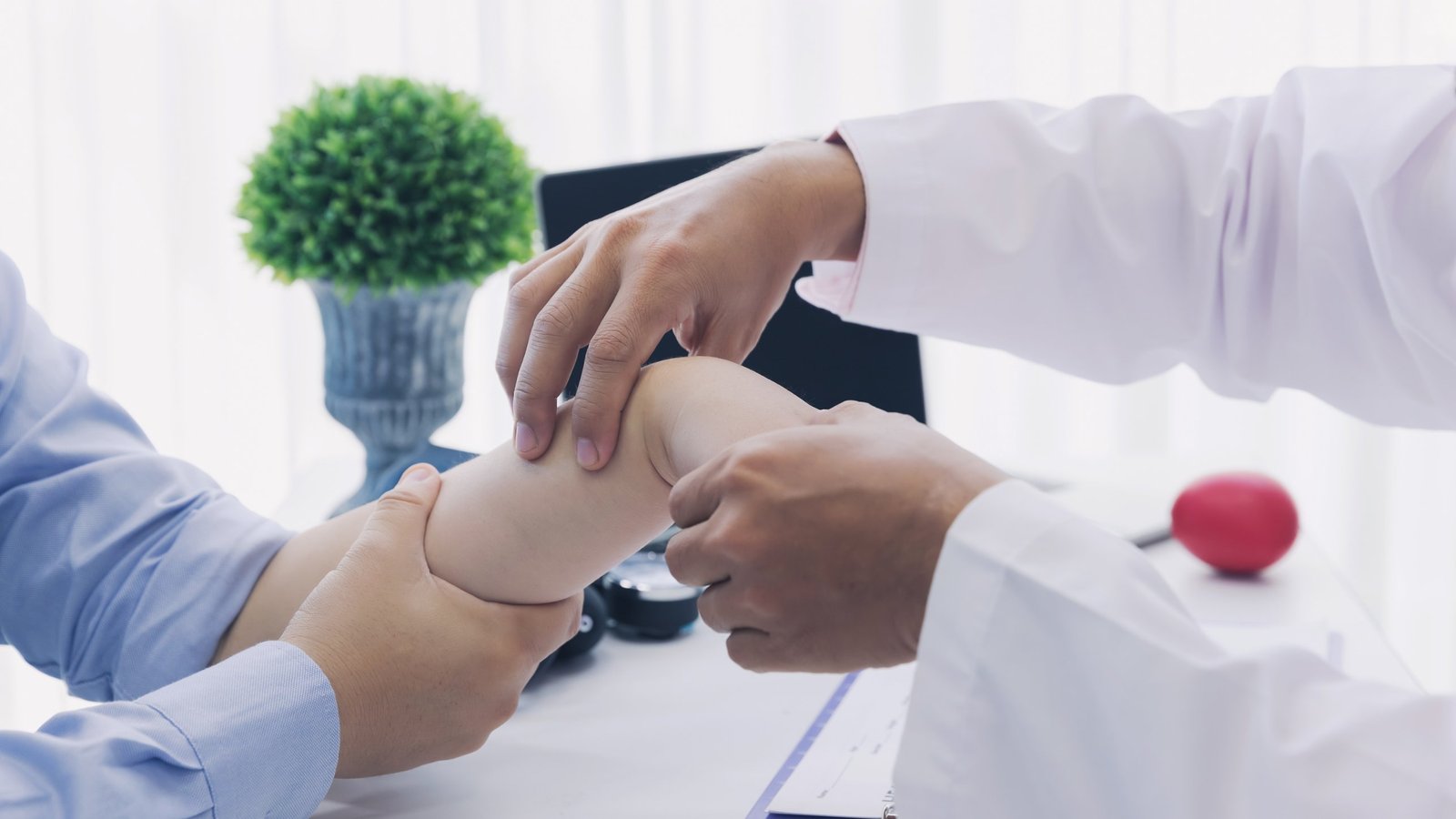
Twenty-seven bones, a tunnel, a canal and three nerves — the wrist and hand pack more examinable structures into less space than any other region, and most of the tests take under a minute once you know them. Physical Examination 214 is Dr. Donald Ozello's two-hour course on examining the wrist, hand and thumb: the ulnar collateral ligament and thumb grind tests, Eichhoff's and Finkelstein's tests for De Quervain tenosynovitis, the hook of hamate pull test, Elson and Bunnell-Littler tests for the fingers, the Watson scaphoid shift and TFCC compression tests, and the carpal tunnel battery from Tinel's to reverse Phalen's.
It also covers intersection syndrome, arthritis of the hand, the four nerve-palsy hand postures, pronator teres syndrome versus carpal tunnel, and the Wartenberg and Froment's signs for Guyon's canal. Each test is demonstrated on video. It completes his upper-quarter set with Physical Examination 209, 210 and 211.
Where This Course Fits — The Physical Examination Series
The CCEDseminars Physical Examination series is the on-demand catalog for the examination skills a chiropractor uses every day. New titles are released as faculty complete them, and there is no bundle in this category: each course is taken on its own, and the multi-course discount applies automatically in the cart when the hours add up.
Neurological Examination
Physical Examination 201: Current Concepts in Pupillometry (Michael Hall, DC, FIACN · 2 CE · $40)
Regional Orthopedic Examination — you are here
Physical Examination 202: Neck and Upper Extremities (Dennis O'Hara, DC, DACBSP · 2 CE · $40)
Physical Examination 203: Lumbar Spine and Lower Extremity (Dennis O'Hara, DC, DACBSP · 2 CE · $40)
Physical Examination 205: Cervical Spine (Donald Ozello, DC, CCN, CCSM · 2 CE · $40)
Physical Examination 206: Knee and Lower Leg (Dennis O'Hara, DC, DACBSP · 2 CE · $40)
Physical Examination 207: Thoracic Spine and Rib Cage (Donald Ozello, DC, CCN, CCSM · 2 CE · $40)
Physical Examination 208: Lumbar Spine & Sacroiliac Joints (Donald Ozello, DC, CCN, CCSM · 2 CE · $40)
Physical Examination 209: Shoulder Complex (Donald Ozello, DC, CCN, CCSM · 2 CE · $40)
Physical Examination 210: Upper Extremity (Donald Ozello, DC, CCN, CCSM · 2 CE · $40)
Physical Examination 211: Upper Body Nerve Entrapment (Donald Ozello, DC, CCN, CCSM · 2 CE · $40)
Physical Examination 214: Wrist, Hand and Thumb — this course (Donald Ozello, DC, CCN, CCSM · 2 CE · $40)
Case-Based Examination
Physical Examination 212: Clinical Pearls in Uncommon Cases (Dennis O'Hara, DC, DACBSP · 2 CE · $40)
Physical Examination 213: The Whiplash Patient (Dennis O'Hara, DC, DACBSP · 2 CE · $40)
Vascular Risk Screening
Physical Examination 204: Cerebral and Vascular Risks (John H. Riggs III, MBA, DC, DIANM · 2 CE · $40)
The current series, with pricing, lives on the Physical Examination category page.
What You'll Learn
On completing Physical Examination 214 you will be able to:
- Name the seven thumb motions and perform the thumb examinations: the Gamekeeper's (Skier's) test for ulnar collateral ligament rupture of the first metacarpophalangeal joint and the thumb grind test for carpometacarpal osteoarthritis
- Recognize De Quervain tenosynovitis by mechanism and symptoms and perform the active and passive Eichhoff's tests and the three-step Finkelstein's test; distinguish it from intersection syndrome by the location of pain and crepitus and by resisted pronation, wrist extension and thumb extension
- Perform the hook of hamate pull test and know when radiographs, CT or MRI are indicated; perform the Elson test for central slip rupture, the Bunnell-Littler test for swan neck deformity, the Watson scaphoid shift test for scapholunate ligament rupture and the TFCC compression test
- Identify osteoarthritis and rheumatoid arthritis of the hand on examination — the five clinical criteria for osteoarthritis, and the swan neck, boutonniere and ulnar-deviation findings of rheumatoid disease — and read the four nerve-palsy hand postures: drop wrist (radial), claw hand and benediction sign (ulnar), ape hand (median)
- Examine for carpal tunnel syndrome with Tinel's sign, the Durkan compression test, the modified compression test, Phalen's and reverse Phalen's tests; recognize pronator teres syndrome and separate it from carpal tunnel syndrome; and test for Guyon's canal syndrome with the Wartenberg and Froment's signs
Course Outline
- Thumb Anatomy and Motion — adduction, abduction, flexion, extension, opposition, circumduction and retropulsion of the thumb, demonstrated on video
- Ulnar Collateral Ligament of the Thumb — injury of the first metacarpophalangeal joint by extreme abduction or hyperextension in falls and sport; the Gamekeeper's (Skier's) test on video; the thumb grind test for carpometacarpal osteoarthritis on video
- De Quervain Tenosynovitis — repetitive ulnar and radial deviation and thumb extension thickening the abductor pollicis longus and extensor pollicis brevis tendons; radial-sided wrist pain worse with pinch grasp; Eichhoff's test in active and passive versions and the three-step Finkelstein's test from gravity-assisted deviation to passive thumb flexion, all on video
- Hook of Hamate Fracture — the grounded golf club mechanism, hypothenar pain and ulnar paresthesia; hamate anatomy and the hook as attachment point and flexor pulley; radiographs, CT and MRI; the hook of hamate pull test on video
- Finger and Carpal Tests — the Elson test for central slip rupture; the Bunnell-Littler (Finochietto-Bunnell) test separating capsular restriction from intrinsic tightness in swan neck deformity; the Watson scaphoid shift test for scapholunate ligament rupture; the TFCC compression test — all on video
- Arthritis of the Hand — osteoarthritis examination findings and the five clinical criteria (pain pattern, age over 45, morning stiffness under 30 minutes, bony enlargement, limited range); rheumatoid arthritis as small-joint polyarthritis with swan neck, boutonniere and ulnar deviation deformities
- Intersection Syndrome — tenosynovitis at the crossover of the first and second dorsal compartments from repetitive wrist extension-flexion; pain and crepitus proximal to the radial styloid; resisted pronation, wrist extension and thumb extension
- Nerve-Palsy Hand Postures — drop wrist and the radial nerve; claw hand (Duchenne sign) and the benediction sign with the ulnar nerve and the intrinsic muscle mechanics behind each; ape hand and the median nerve
- Carpal Tunnel Syndrome — Tinel's sign, the Durkan carpal tunnel compression test, the modified two-thumb compression test, Phalen's and reverse Phalen's tests, each on video with positive findings along the median nerve distribution
- Pronator Teres and Guyon's Canal Syndromes — pronator teres symptoms, the compression test and the resisted-pronation test on video, Tinel's at the pronator and the thenar sensory loss that separates pronator syndrome from carpal tunnel; Wartenberg sign and Froment's sign on video for Guyon's canal syndrome
Your Physical Examination Faculty
Donald Ozello, DC, CCN, CCSM — instructor of this course — is a sports chiropractor and NSCA Certified Personal Trainer who teaches the regional examination courses of this series: Physical Examination 205: Cervical Spine, 207: Thoracic Spine and Rib Cage, 208: Lumbar Spine & Sacroiliac Joints, 209: Shoulder Complex, 210: Upper Extremity and 211: Upper Body Nerve Entrapment, and the CCEDseminars Adjusting & Manual Therapy and Sports Injuries series. Faculty profile »
Dennis O'Hara, DC, DACBSP — sports medicine chiropractor and Diplomate of the American Chiropractic Board of Sports Physicians — teaches Physical Examination 202: Neck and Upper Extremities, 203: Lumbar Spine and Lower Extremity, 206: Knee and Lower Leg, 212: Clinical Pearls in Uncommon Cases and 213: The Whiplash Patient. Faculty profile »
John H. Riggs III, MBA, DC, DIANM teaches Physical Examination 204: Cerebral and Vascular Risks, the vascular screen before cervical manipulation. Faculty profile »
Michael Hall, DC, FIACN — chiropractic neurologist — teaches Physical Examination 201: Current Concepts in Pupillometry. Faculty profile »
Credit, Reporting & State Rules
Physical Examination 214 is a 2-hour on-demand course. Your completion is recorded electronically when you pass the post-course assessment, and your certificate is issued immediately. Completions are reported to CE Broker for the states CCEDseminars serves.
Boards set their own caps on online hours, and some limit hours by category. Before you plan a block of online hours, confirm your board's current rules on the State/Region CEU Approvals page. Texas licensees can verify provider status through the Texas Board of Chiropractic Examiners.
Approved states for this course are listed at the bottom of this page.
What It Costs — and How to Pay Less
Physical Examination 214 is $40 for 2 CE hours — $20 per hour. Multi-course discounts apply automatically in the cart — 10% on 6–9 hours and 20% on 10 or more — with no promo code to enter.
There is no bundle in the Physical Examination category. 214 completes Dr. Ozello's upper-quarter set with 209: Shoulder Complex, 210: Upper Extremity and 211: Upper Body Nerve Entrapment (each 2 CE · $40), and any three of the four make 6 CE hours, which is where the automatic 10% discount starts: $108 instead of $120. The treatment side of the same region is his Adjusting & Manual Therapy 205: Upper Extremity Techniques, and the nerve entrapments move to the injury side in Sports Injuries 239 and 242: Upper Extremity Nerve Entrapments. Hours combine across any CCEDseminars category in the same cart.
References
- Tang A, Varacallo M. Anatomy, Shoulder and Upper Limb, Hand Carpal Bones. StatPearls. NBK535382
- Abrego MO, De Cicco FL. Hamate Fractures. StatPearls. NBK544314
- Ueda T. Stress Fracture of the Hamate Hook in a Water Polo Player. Case Rep Orthop. 2019;2019:2483142. doi:10.1155/2019/2483142
- Hallett MG, Ashurst JV. Anatomy, Shoulder and Upper Limb, Hand Anatomical Snuff Box. StatPearls. NBK482228
- Som A, Singh S. Finkelstein Sign. StatPearls. NBK539768
- Avery DM, Rodner CM, Edgar CM. Sports-related wrist and hand injuries: a review. J Orthop Surg Res. 2016;11:99. doi:10.1186/s13018-016-0432-8
- Lutter C, et al. Pulling Harder than the Hamate Tolerates: Evaluation of Hamate Injuries in Rock Climbing and Bouldering. Wilderness Environ Med. 2016;27(4):492–499. sciencedirect.com
- Mohseni M, et al. Ulnar Collateral Ligament Injury (Gamekeeper's Thumb). StatPearls. NBK482383
- Kiel J, Kaiser K. Golfers Elbow. StatPearls. NBK519000
- Pursley H, Collins C. Finger Dislocation. StatPearls. NBK551508
- Binstead JT, Tafti D, Hatcher JD. Boutonniere Deformity. StatPearls. NBK470323
- Michols NJ, Kiel J. Intersection Syndrome. StatPearls. NBK430899
- Sen R, Hurley JA. Osteoarthritis. StatPearls. NBK482326
- Dididze M, Tafti D, Sherman AL. Pronator Teres Syndrome. StatPearls. NBK526090
- Cass SP. Upper Extremity Nerve Entrapment Syndromes in Sports: an Update. Curr Sports Med Rep. 2014;13(1):16–21. doi:10.1249/JSR.0000000000000025
- Chauhan K, et al. Rheumatoid Arthritis. StatPearls. NBK441999
- DeCastro A, Keefe P. Wrist Drop. StatPearls. NBK532993
- Alsaffar MM, Hameed S. Benediction Hand (Benediction Sign, Preachers Hand). StatPearls. NBK554458
- Lane R, Nallamothu SV. Claw Hand. StatPearls. NBK507781
- Dydyk AM, Negrete G, Cascella M. Median Nerve Injury. StatPearls. NBK553109
- Sharrak S, Das JM. Hand Nerve Compression Syndromes. StatPearls. NBK547683
- Sevy JO, Sina RE, Varacallo M. Carpal Tunnel Syndrome. StatPearls. NBK448179
Frequently Asked Questions
What does Physical Examination 214 cover?
The orthopedic and neurologic examination of the wrist, hand and thumb, test by test and on video. The thumb first: its seven motions, the Gamekeeper's (Skier's) test for ulnar collateral ligament rupture and the grind test for carpometacarpal osteoarthritis. Then De Quervain tenosynovitis with Eichhoff's active and passive tests and the three-step Finkelstein's test; the hook of hamate pull test and when to image; the Elson, Bunnell-Littler, Watson scaphoid shift and TFCC compression tests; the examination findings and clinical criteria for osteoarthritis and the hand deformities of rheumatoid arthritis; intersection syndrome; the drop wrist, claw hand, benediction and ape hand postures and the nerve behind each; the carpal tunnel battery of Tinel's, Durkan compression, modified compression, Phalen's and reverse Phalen's; pronator teres syndrome and how to tell it from carpal tunnel; and the Wartenberg and Froment's signs for Guyon's canal syndrome.
Who teaches the course, and who is it for?
Donald Ozello, DC, CCN, CCSM — sports chiropractor and NSCA Certified Personal Trainer — teaches the 2-hour course. It is written for Doctors of Chiropractic who see hands: the athlete with a jammed thumb or a sore hypothenar eminence, the patient with radial wrist pain who pinches for a living, the night-time numbness that may or may not be carpal tunnel. Each test is shown on video with the patient and doctor positions, the maneuver, the positive finding and what it indicates.
How do you test for De Quervain tenosynovitis?
With Eichhoff's test and Finkelstein's test, and the course shows both on video. For Eichhoff's, the patient makes a fist with the thumb tucked inside and either actively ulnar-deviates the wrist or the doctor does it passively; radial-sided wrist pain is positive. Finkelstein's test is taught in three steps so it can be graded to the patient's irritability: first the patient lets gravity carry the wrist into ulnar deviation, which is suitable in the acute phase; second the doctor very gently ulnar-deviates the wrist passively; third the doctor very gently flexes the thumb. Pain over the radial wrist at any step is positive for De Quervain tenosynovitis, a thickening of the abductor pollicis longus and extensor pollicis brevis tendons from repetitive deviation and thumb extension, typically worse with pinch grasp. The course also teaches the look-alike to rule out — intersection syndrome, where the pain and a palpable crepitus sit a few centimeters proximal to the radial styloid at the crossover of the first and second dorsal compartments, and resisted pronation, wrist extension and thumb extension reproduce it.
How is the course delivered, and how do I earn the CE credit?
Physical Examination 214 is online and on-demand: you start immediately after checkout and work at your own pace. When you pass the post-course assessment your completion is recorded electronically and your certificate is issued right away. CCEDseminars is PACE Provider #34015544 and the course is co-sponsored by Texas Chiropractic College; completions are reported to CE Broker for the states served. Approved states are listed at the bottom of this page, and confirming your own board's requirements remains your responsibility.
What pairs well with Physical Examination 214?
Dr. Ozello's other upper-quarter examinations — Physical Examination 209: Shoulder Complex, 210: Upper Extremity and 211: Upper Body Nerve Entrapment — complete the arm from shoulder girdle to fingertips, and any three of the four courses are 6 CE hours, where the automatic 10% multi-course discount starts ($108 instead of $120). The treatment side of the same region is his Adjusting & Manual Therapy 205: Upper Extremity Techniques, and carpal tunnel, Guyon's canal and pronator syndromes continue on the injury side in Sports Injuries 239 and 242: Upper Extremity Nerve Entrapments. New Physical Examination titles are released as faculty complete them; the current list with pricing lives on the category page.
State approval and licensing reminder. CCEDseminars is PACE Provider #34015544. Approved states for this course are listed at the bottom of this page, and board rules on online hours change — confirming your own board's current requirements before you enroll is your responsibility.
Physical Examination 214: Wrist, Hand and Thumb
2 CE hours · $40 · online, on demand · Donald Ozello, DC, CCN, CCSM
CCEDseminars · PACE Provider #34015544 · Reviewed by Monte Horne, DC · Last updated October 29, 2026 (CT)