<< Back to online CE course category
| Course | Cervicovagopathy — Ortho/Neuro Perspective · 2 CE Hours |
| Faculty | Michael Hall, DC, FIACN |
| Format | Online, on-demand — start immediately |
| Pricing | $40 ($20/hr) · automatic bundle discounts |
| Approval | PACE Provider #34015544 · TCC co-sponsored |

 Board-approved · PACE Provider #34015544 · CE Broker auto-reporting · Instant certificate
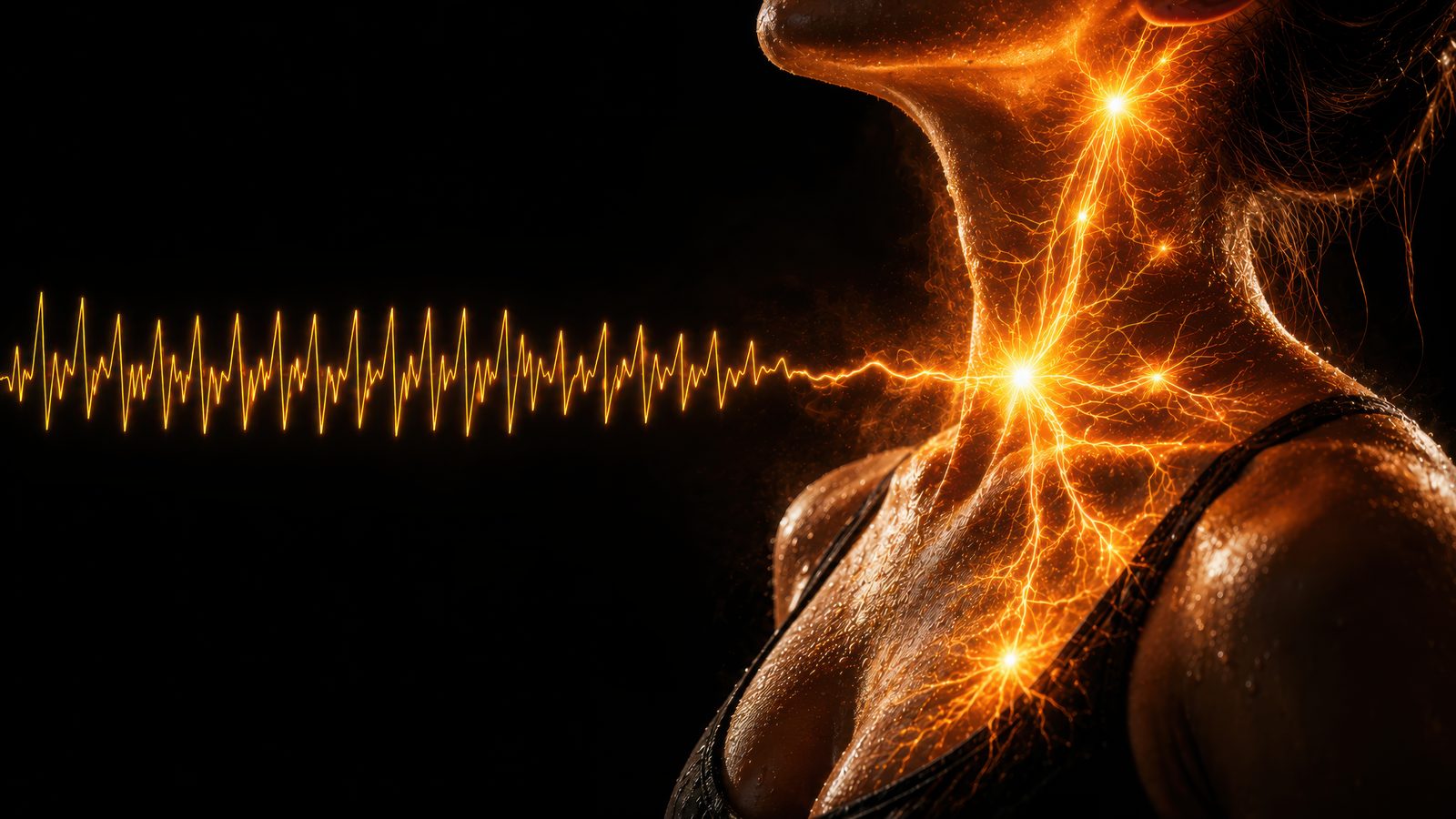
The vagus nerve — cranial nerve X — is arguably the most clinically significant nerve in the body for chiropractors to understand. The longest and most wide-reaching cranial nerve, it governs autonomic regulation, visceral function, immune modulation, and social engagement. Its anatomical course through the cervical spine alongside the carotid sheath places it squarely within the chiropractic scope of evaluation — and when cervical spine biomechanics compromise vagal function, the clinical consequences can be far-reaching and easy to miss.
In Orthopedics 220, Michael Hall, DC, FIACN bridges orthopedic and neurological thinking: vagus nerve neuroanatomy from the medulla oblongata through the jugular foramen and its three functional branches; Stephen Porges' Polyvagal theory and the hierarchy of autonomic states; Neurovisceral Integration theory with heart rate variability as the window on vagal tone and the gut-brain axis; and the clinical payoff — how vagal neuropraxia and cervical compression occur, how to assess cervicovagal dysfunction, and evidence-informed vagal rehabilitation you can implement in an office setting, from manual therapy and cervical adjusting to breathing protocols, HRV biofeedback, and lifestyle interventions.
The CCED Orthopedics series — 26 courses, 52 CE hours — organizes into three working lanes. Trace the nerve, evaluate the joint, and catch the presentations that change management:
1 · Nerve Entrapment Syndromes
201: Upper Extremity Entrapments · 202: Trunk & Upper Extremity · 203: Pelvis & Lower Extremities · 221: Burner Syndrome
2 · Joint by Joint — Shoulder to Foot
204: Rotator Cuff Syndrome · 206: Frozen Shoulder · 212: The Neck & Shoulder · 215: Foot & Ankle Conditions · 216: Plica Syndrome · 217: Achilles Tendinitis · 218: The Floppy Ankle · 219: The Hip · 225: Stress Fracture
3 · Spine, Stability & Red Flags
205: Cervical Spine Instability · 207: Finger to Floor & Sit-n-Reach · 208: Managing Chronic Pain · 209: The Romberg Sign · 210: Inflammatory Disc Disease · 211: Cervical Position Sense · 213: Coronal Plane Movement & Neuroplasticity · 214: Cauda Equina & Lumbar Radiculopathy · You are here » 220: Cervicovagopathy · 222: Dropped Head Syndrome · 223: Inflammation & Relationships · 224: Breathe & Mouth Breathing · 226: Gait & the Lumbar Spine
All courses in Orthopedics 201–224 count toward the 48-hour Clinical Chiropractic Orthopedics Certification (CCO). Browse the full Orthopedics category.

Michael Hall, DC, FIACN is a Fellow of the International Academy of Chiropractic Neurology with over 30 years of clinical and academic expertise. A 1990 honors graduate of Parker College of Chiropractic and Diplomate of the American Board of Chiropractic Neurology (1993), Dr. Hall is the founder of BrainDC.org and a leading voice in functional neurology, concussion management, and global chiropractic education.
CCEDseminars is PACE Provider #34015544, recognized by the Federation of Chiropractic Licensing Boards (FCLB). Orthopedics coursework is clinical subject matter — examination, diagnosis, and case management — and Orthopedics 220 is accepted in 40+ U.S. states, Canadian provinces, and international jurisdictions. The complete approval list for this course appears at the bottom of this page, and completions auto-report to CE Broker for participating states.
Not sure what your board requires? Check your state's rules on the CE guidelines hub.
Online courses are $20 per credit hour. Buy 6–9 hours and 10% comes off automatically at checkout; 10+ hours takes 20% off. No promo codes — the discount calculates itself.
Pair Orthopedics 220 with 211: Cervical Position Sense Testing, 222: Dropped Head Syndrome, and 224: Breathe — Mouth Breathing and Health — Dr. Hall's cervical ortho/neuro block — or take the whole track: the CCO Certification Bundle delivers all 24 courses (Orthopedics 201–224, 48 hours) in one $960 purchase toward the Clinical Chiropractic Orthopedics certification.
Orthopedics 220 is a 2-hour online chiropractic CE course on the vagus nerve from an integrated orthopedic and neurologic perspective. It covers vagus nerve neuroanatomy and its three functional branches, Polyvagal theory and neuroception, Neurovisceral Integration theory including heart rate variability and the gut-brain axis, the mechanisms of cervicovagopathy — vagal neuropraxia and cervical compression — and evidence-informed vagal rehabilitation strategies for chiropractic practice. Chiropractors may search for it as a vagus nerve course, polyvagal CE, or a vagal tone course.
Yes. CCEDseminars is PACE Provider #34015544, recognized by the Federation of Chiropractic Licensing Boards (FCLB), with courses accepted in 40+ U.S. states, Canadian provinces, and international jurisdictions. Completions auto-report to CE Broker for states served. The full approval list for this course appears at the bottom of the page.
Yes — that interaction is what cervicovagopathy describes. The vagus nerve descends through the cervical region alongside the carotid sheath, and cervical spine joint dysfunction, muscular hypertonia, or structural compression can impair vagal conduction, producing autonomic and visceral consequences that are easy to miss without a neurology-informed framework. Orthopedics 220 teaches the anatomy, the assessment of cervicovagal dysfunction, and the rehabilitation strategies to address it.
Orthopedics 220 awards 2 chiropractic CE hours. Your certificate is issued electronically the moment you complete the course and quiz, and is available in your CCEDseminars account. Completions auto-report to CE Broker for participating states.
Doctors who take Orthopedics 220 often add Orthopedics 211: Cervical Position Sense Testing, 222: Dropped Head Syndrome, and 224: Breathe — Mouth Breathing and Health — Dr. Hall's cervical ortho/neuro block. All Orthopedics 201–224 courses also count toward the 48-hour CCO certification.
Good to know: the course title in your account is your access link — no software installation, any modern browser, desktop or mobile. Pause and restart anytime from your account, and print your certificate the moment you finish.
Online. On demand. PACE-approved. $40 — add vagal neuroscience to your clinical toolkit.
CCEDseminars · PACE Provider #34015544 · Reviewed by Monte Horne, DC · Last updated September 25, 2026 (CT)
Alaska, Colorado, Connecticut, Delaware, District Of Columbia, Idaho, Illinois, Indiana, Iowa, Kansas, Maine, Maryland, Massachusetts, Michigan, Minnesota, Missouri, Montana, Nebraska, Nevada, New Hampshire, New Jersey, New York, North Carolina, North Dakota, Ohio, Oregon, Puerto Rico, Rhode Island, South Carolina, South Dakota, Tennessee, Texas, Utah, Vermont, Virginia, Washington, West Virginia, Wyoming,
British Columbia, Manitoba, New Brunswick, Nova Scotia, Ontario, Yukon,
Argentina, Australia, Bahamas, Belgium, Bolivia, Cayman Islands, Chile, Colombia, Costa Rica, Cyprus, Denmark, Dominican Republic, Ecuador, Fiji, Finland, Greece, Guam, Hong Kong, Hungary, Iceland, Iran, Israel, Italy, Jamaica, Japan, Jordan, Korea, Lebanon, Libya, Liechtenstein, Malaysia, Mexico, Namibia, New Zealand, Northern Ireland, Norway, Panama, Peru, Philippines, Saint Kitts & Nevis, Saudi Arabia, Singapore, Spain, Sweden, Switzerland, Taiwan, Thailand, Trinidad & Tobago, United Arab Emirates, United Kingdom, Venezuela, Virgin Island, Zimbabwe,
 Login
Login